


Mechanical Properties and Bioactivity of Poly(Lactic Acid) Composites Containing Poly(Glycolic Acid) Fiber and Hydroxyapatite Particles
- PMID: 33477735
- PMCID: PMC7832325
- DOI: 10.3390/nano11010249
Mechanical Properties and Bioactivity of Poly(Lactic Acid) Composites Containing Poly(Glycolic Acid) Fiber and Hydroxyapatite Particles
Abstract
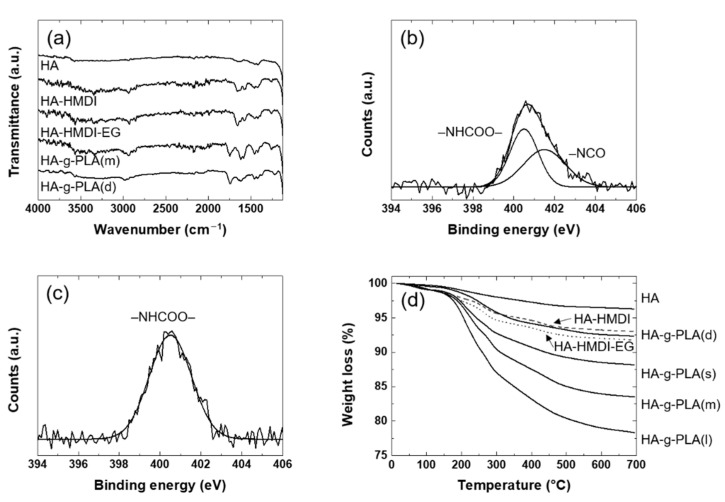
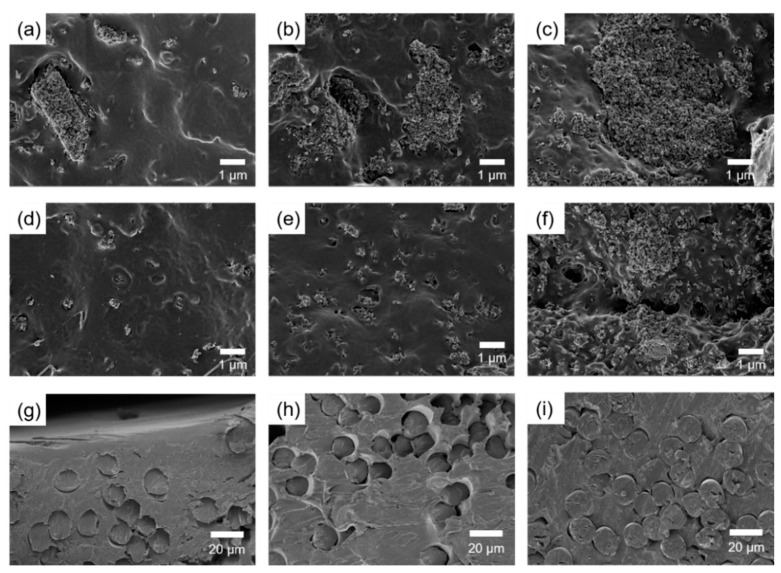
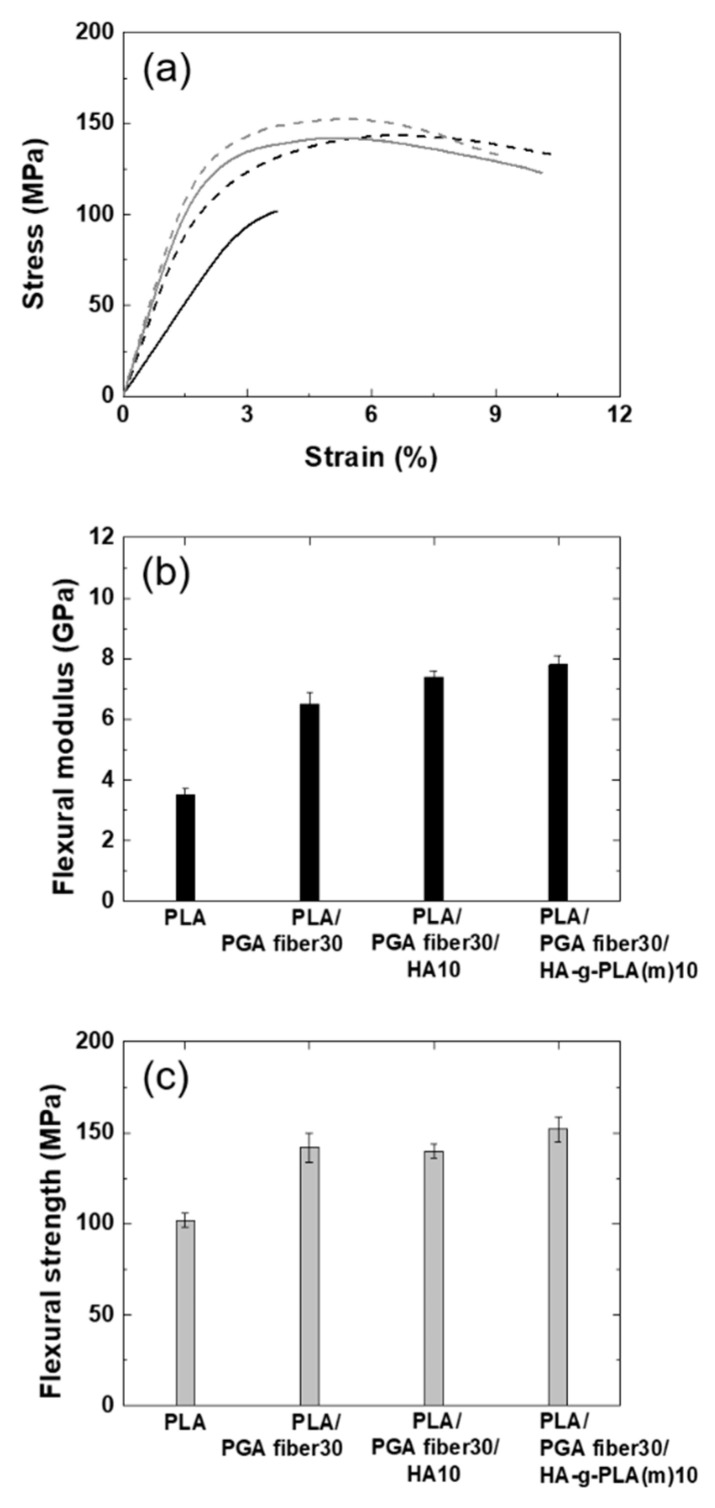
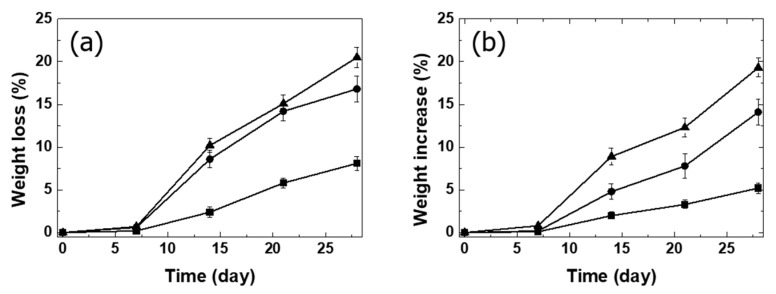
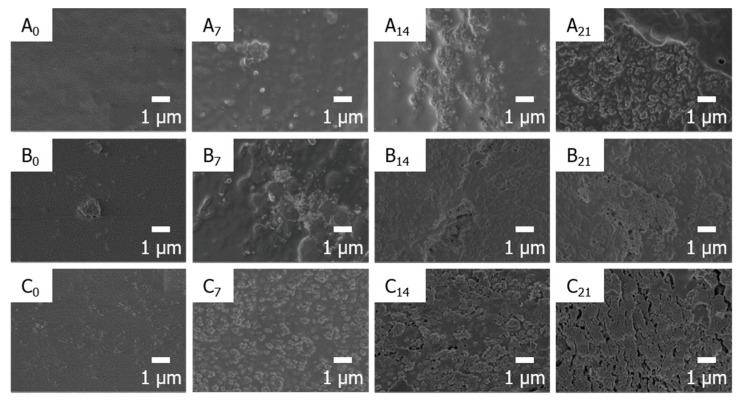
To enhance the mechanical strength and bioactivity of poly(lactic acid) (PLA) to the level that can be used as a material for spinal implants, poly(glycolic acid) (PGA) fibers and hydroxyapatite (HA) were introduced as fillers to PLA composites. To improve the poor interface between HA and PLA, HA was grafted by PLA to form HA-g-PLA through coupling reactions, and mixed with PLA. The size of the HA particles in the PLA matrix was observed to be reduced from several micrometers to sub-micrometer by grafting PLA onto HA. The tensile and flexural strength of PLA/HA-g-PLA composites were increased compared with those of PLA/HA, apparently due to the better dispersion of HA and stronger interfacial adhesion between the HA and PLA matrix. We also examined the effects of the length and frequency of grafted PLA chains on the tensile strength of the composites. By the addition of unidirectionally aligned PGA fibers, the flexural strength of the composites was greatly improved to a level comparable with human compact bone. In the bioactivity tests, the growth of apatite on the surface was fastest and most uniform in the PLA/PGA fiber/HA-g-PLA composite.
Keywords: hydroxyapatite; mechanical properties; poly(glycolic acid) fiber; poly(lactic acid); polymer composite; polymer grafting.
Conflict of interest statement
The authors declare no conflict of interest.
Figures
References
-
- Ridzwan M.I.Z., Shuib S., Hassan A.Y., Shokri A.A., Ibrahim M.N.M., Mohammad Ibrahim M.N. Problem of stress shielding and improvement to the hip implant designs: A review. J. Med. Sci. 2007;7:460–467. doi: 10.3923/jms.2007.460.467. - DOI
-
- Garlotta D. A Literature Review of Poly(Lactic Acid) J. Polym. Environ. 2001;9:63–84. doi: 10.1023/A:1020200822435. - DOI
-
- Naghieh S., Foroozmehr E., Badrossamay M., Kharaziha M. Combinational processing of 3D printing and electrospinning of hierarchical poly(lactic acid)/gelatin-forsterite scaffolds as a biocomposite: Mechanical and biological assessment. Mater. Des. 2017;133:128–135. doi: 10.1016/j.matdes.2017.07.051. - DOI
-
- Van de Velde K., Kiekens P. Biopolymers: Overview of several properties and consequences on their applications. Polym. Test. 2002;21:433–442. doi: 10.1016/S0142-9418(01)00107-6. - DOI
-
- Sabir M.I., Xu X., Li L. A review on biodegradable polymeric materials for bone tissue engineering applications. J. Mater. Sci. 2009;44:5713–5724. doi: 10.1007/s10853-009-3770-7. - DOI
LinkOut - more resources
Full Text Sources
Other Literature Sources
