


Exosomes: A Key Piece in Asthmatic Inflammation
- PMID: 33478047
- PMCID: PMC7835850
- DOI: 10.3390/ijms22020963
Exosomes: A Key Piece in Asthmatic Inflammation
Abstract
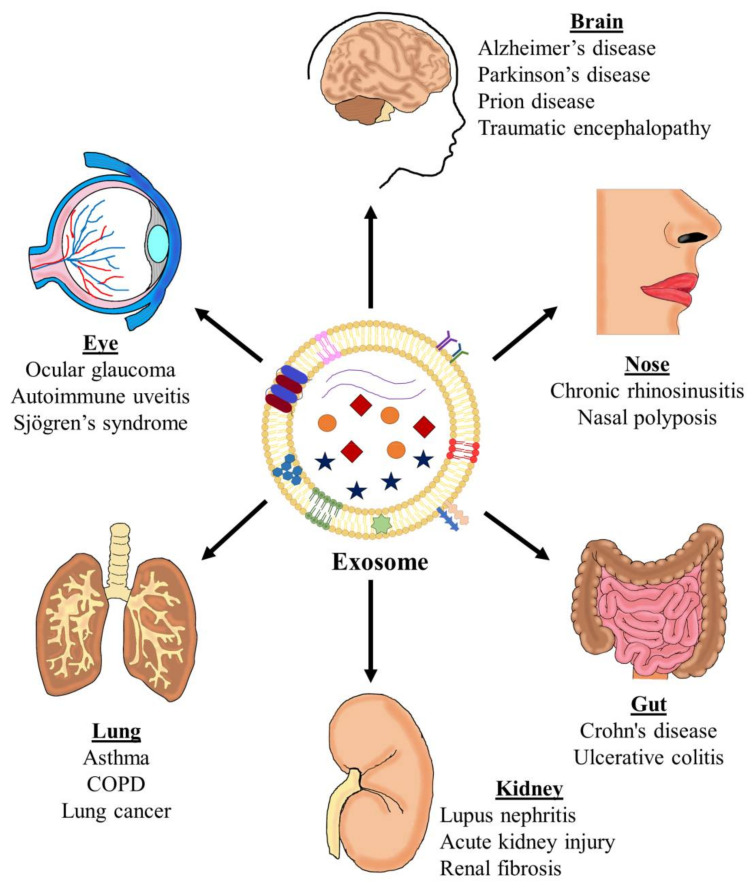
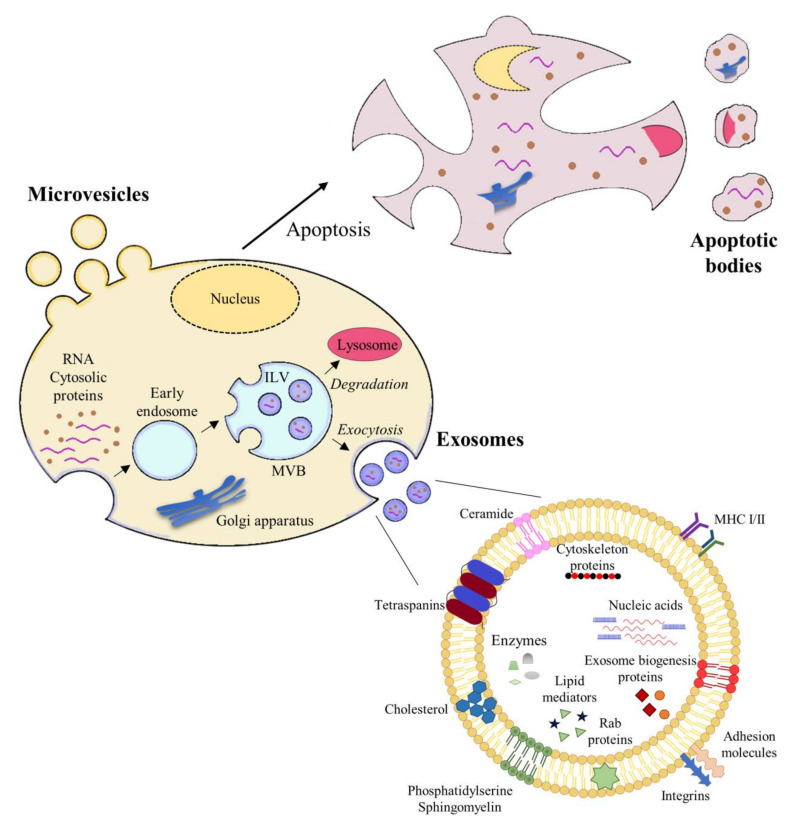
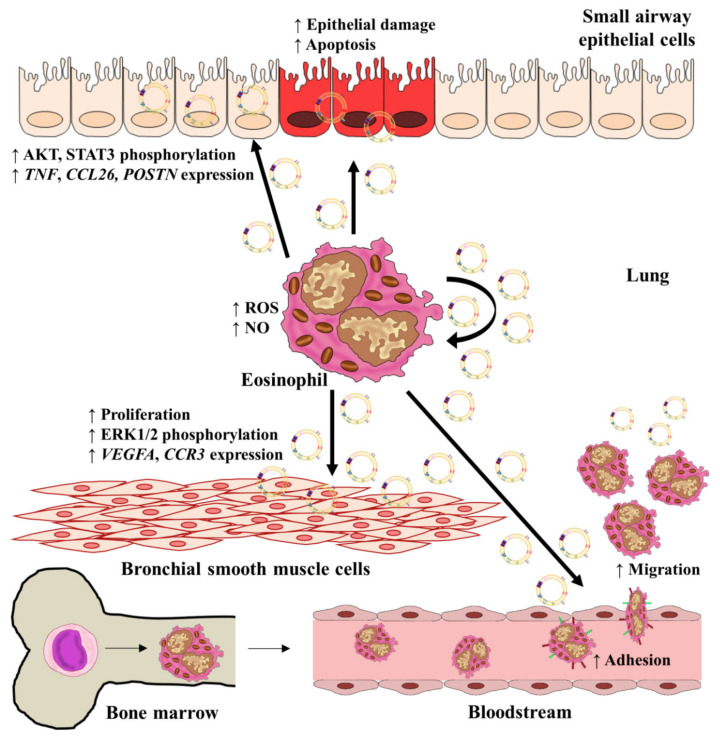
Asthma is a chronic disease of the airways that has an important inflammatory component. Multiple cells are implicated in asthma pathogenesis (lymphocytes, eosinophils, mast cells, basophils, neutrophils), releasing a wide variety of cytokines. These cells can exert their inflammatory functions throughout extracellular vesicles (EVs), which are small vesicles released by donor cells into the extracellular microenvironment that can be taken up by recipient cells. Depending on their size, EVs can be classified as microvesicles, exosomes, or apoptotic bodies. EVs are heterogeneous spherical structures secreted by almost all cell types. One of their main functions is to act as transporters of a wide range of molecules, such as proteins, lipids, and microRNAs (miRNAs), which are single-stranded RNAs of approximately 22 nucleotides in length. Therefore, exosomes could influence several physiological and pathological processes, including those involved in asthma. They can be detected in multiple cell types and biofluids, providing a wealth of information about the processes that take account in a pathological scenario. This review thus summarizes the most recent insights concerning the role of exosomes from different sources (several cell populations and biofluids) in one of the most prevalent respiratory diseases, asthma.
Keywords: asthma; biofluids; eosinophils; exosomes; extracellular vesicles; miRNAs.
Conflict of interest statement
V.d.P. has received honoraria (advisory board, speaker) and/or institutional grant/research support from Astra-Zeneca and GSK. The rest of the authors declare no conflicts of interest.
Figures
References
Publication types
MeSH terms
Grants and funding
LinkOut - more resources
Full Text Sources
Other Literature Sources
Medical
