


Rose Flowers-A Delicate Perfume or a Natural Healer?
- PMID: 33478154
- PMCID: PMC7835869
- DOI: 10.3390/biom11010127
Rose Flowers-A Delicate Perfume or a Natural Healer?
Abstract
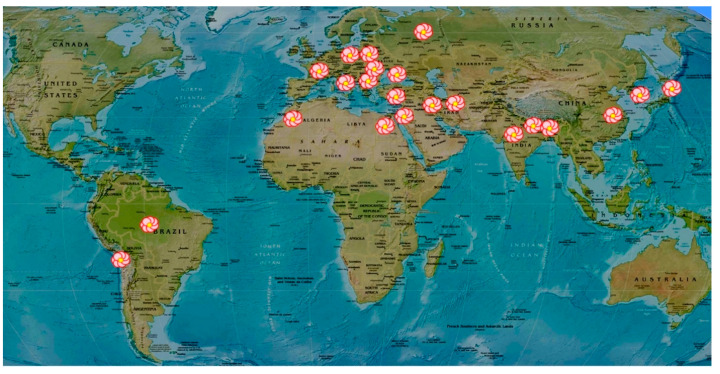
Plants from the Rosacea family are rich in natural molecules with beneficial biological properties, and they are widely appreciated and used in the food industry, perfumery, and cosmetics. In this review, we are considering Rosa damascena Mill., Rosa alba L., Rosa centifolia L., and Rosa gallica L. as raw materials important for producing commercial products, analyzing and comparing the main biological activities of their essential oils, hydrolates, and extracts. A literature search was performed to find materials describing (i) botanical characteristics; (ii) the phytochemical profile; and (iii) biological properties of the essential oil sand extracts of these so called "old roses" that are cultivated in Bulgaria, Turkey, India, and the Middle East. The information used is from databases PubMed, Science Direct, and Google Scholar. Roses have beneficial healing properties due to their richness of beneficial components, the secondary metabolites as flavonoids (e.g., flavones, flavonols, anthocyanins), fragrant components (essential oils, e.g., monoterpenes, sesquiterpenes), and hydrolysable and condensed tannins. Rose essential oils and extracts with their therapeutic properties-as respiratory antiseptics, anti-inflammatories, mucolytics, expectorants, decongestants, and antioxidants-are able to act as symptomatic prophylactics and drugs, and in this way alleviate dramatic sufferings during severe diseases.
Keywords: Rosa alba L.; Rosa centifolia L.; Rosa damascena Mill.; Rosa gallica L.; antimutagenic potential; antineoplastic effect; antioxidant properties; antiviral activity; essential oils; water and alcohol extracts.
Conflict of interest statement
The authors declare no conflict of interest.
Figures
References
-
- Baser K., Altintas A., Kurkcuoglu M. Turkish rose: A review of the history, ethnobotany and modern uses of rose petals, rose oil, rose water and other rose products. HerbalGram. 2012;96:40–53.
-
- Labban L., Thallaj N. The medicinal and pharmacological properties of Damascene Rose (Rosa damascena): A review. Int. J. Herb. Med. 2020;8:33–37.
-
- Nazarenko L., Minkov B., Mustyatse G., Murin A. Culture Oil-Bearing Rose. Pulisher Shtinitsa; Kishinev, Moldova: 1983. (In Russian)
Publication types
MeSH terms
Substances
LinkOut - more resources
Full Text Sources
Other Literature Sources
Medical
Miscellaneous
