


Detailed characterization of plant-based burgers
- PMID: 33479456
- PMCID: PMC7820238
- DOI: 10.1038/s41598-021-81684-9
Detailed characterization of plant-based burgers
Abstract
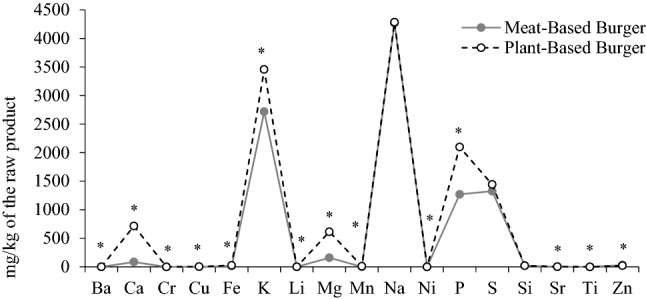
Flexitarians have reduced their meat consumption showing a rising interest in plant-based meat alternatives with 'meaty' characteristics, and we are witnessing an unprecedented growth of meat substitutes in the Western market. However, to our knowledge, no information regarding the 'simulated beef burgers' nutritional profile compared to similar meat products has been published yet. Here we show that, whilst both plant-based and meat-based burgers have similar protein profile and saturated fat content, the former are richer in minerals and polyunsaturated fatty acids. We found that the most abundant minerals in both categories were Na, K, P, S, Ca, and Mg; being Na and S content similar between groups. Only six amino acids differed between categories, being hydroxyproline exclusively in meat-based burgers. Plant-based burgers revealed fourfold greater content of n-6 than meat-based burgers, and greater short-chain fatty acids proportion. Our results demonstrate how 'simulated beef' products may be authenticated based on some specific nutrients and are a good source of minerals. We believe that there is a need to provide complete and unbiased nutritional information on these 'new' vegan products so that consumers can adjust their diet to nutritional needs.
Conflict of interest statement
The authors declare no competing interests.
Figures
References
-
- Wild F, et al. The evolution of a plant-based alternative to meat: From niche markets to widely accepted meat alternatives. Agro Food Ind. High. Tech. 2014;25:45–49.
Publication types
LinkOut - more resources
Full Text Sources
Other Literature Sources
