


The impact of pipeline changes and temperature increase in a hospital historically colonised with Legionella
- PMID: 33479467
- PMCID: PMC7820426
- DOI: 10.1038/s41598-021-81625-6
The impact of pipeline changes and temperature increase in a hospital historically colonised with Legionella
Abstract
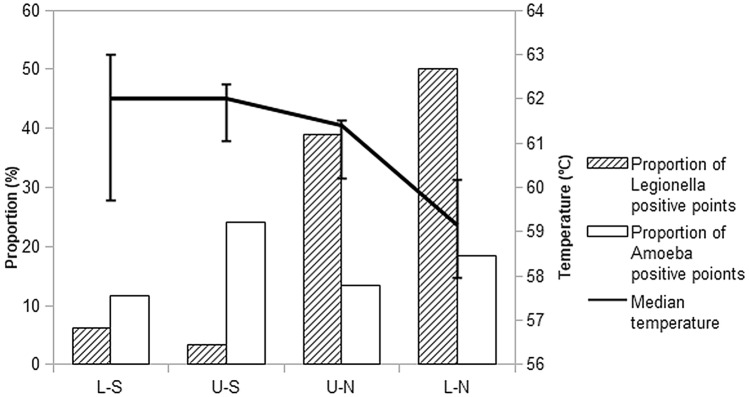
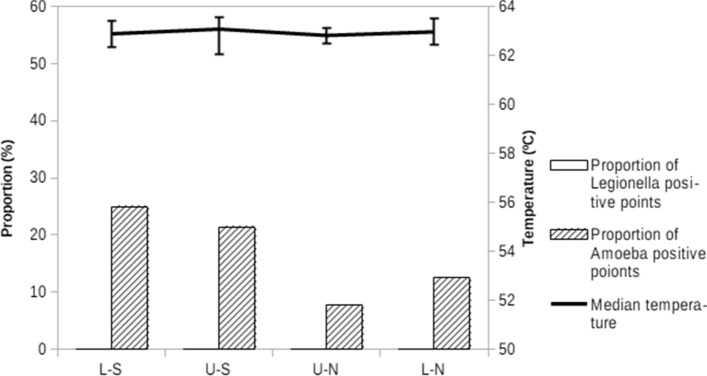
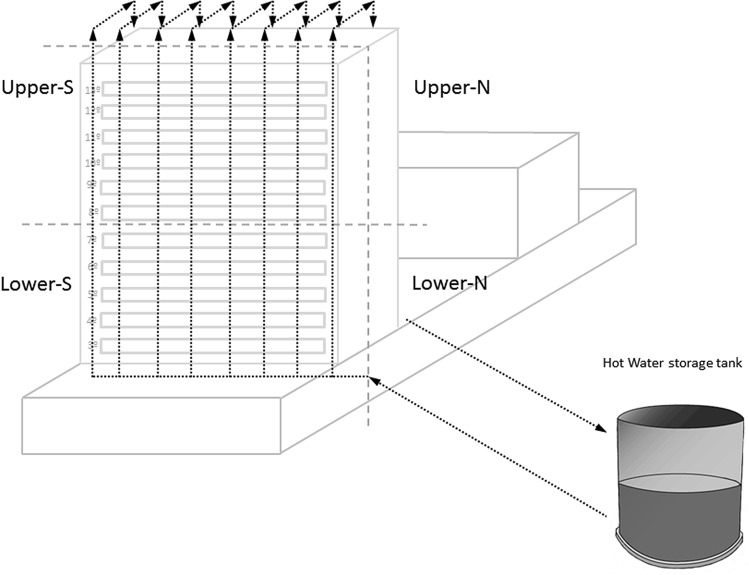
Healthcare-related Legionnaires' disease has a devastating impact on high risk patients, with a case fatality rate of 30-50%. Legionella prevention and control in hospitals is therefore crucial. To control Legionella water colonisation in a hospital setting we evaluated the effect of pipeline improvements and temperature increase, analysing 237 samples over a 2-year period (first year: 129, second year: 108). In the first year, 25.58% of samples were positive for Legionella and 16.67% for amoeba. Assessing the distance of the points analysed from the hot water tank, the most distal points presented higher proportion of Legionella colonisation and lower temperatures (nearest points: 6.4% colonised, and temperature 61.4 °C; most distal points: 50% and temperature 59.1 °C). After the first year, the hot water system was repaired and the temperature stabilised. This led to a dramatic reduction in Legionella colonisation, which was negative in all the samples analysed; however, amoeba colonisation remained stable. This study shows the importance of keeping the temperature stable throughout the circuit, at around 60 °C. Special attention should be paid to the most distal points of the circuit; a fall in temperature at these weak points would favour the colonisation and spread of Legionella, because amoeba (the main Legionella reservoir) are not affected by temperature.
Conflict of interest statement
The authors declare no competing interests.
Figures
References
Publication types
MeSH terms
LinkOut - more resources
Full Text Sources
Other Literature Sources
Medical
