. 2021 Jan 22;16(1):e0244966.
doi: 10.1371/journal.pone.0244966. eCollection 2021.

Clinical and pharmacokinetic/dynamic outcomes of prolonged infusions of beta-lactam antimicrobials: An overview of systematic reviews

Affiliations

Clinical and pharmacokinetic/dynamic outcomes of prolonged infusions of beta-lactam antimicrobials: An overview of systematic reviews

Pierre Thabet et al. PLoS One. .

Abstract

Objective: This overview of reviews aims to map and compare of objectives, methods, and findings of existing systematic reviews to develop a greater understanding of the information available about prolonged beta-lactam infusions in hospitalized patients with infection.

Design: Overview of systematic reviews.

Data sources: Medline, Embase, PROSPERO and the Cochrane Library were systematically searched from January, 1990 to June, 2019 using a peer reviewed search strategy. Grey literature was also searched for relevant reviews.

Eligibility criteria for selecting reviews: Systematic reviews were sought that compared two or more infusion strategies for intravenous beta-lactam antimicrobials and report clinical cure or mortality. Populations of included reviews were restricted to hospitalized patients with infection, without restrictions on age, infection type, or disease.

Data extraction and analysis: Abstract screening, data extraction, quality and risk of bias assessment were conducted by two independent reviewers. Overlap between reviews was assessed using a modified corrected covered area. Overview findings are reported in accordance with Cochrane's recommendation for overview conduct. Clinical outcomes extracted included survival, clinical cure, treatment failure, microbiological cure, length of stay, adverse events, cost, and emergence of resistance.

Results: The search strategy identified 3327 unique citations from which 21 eligible reviews were included. Reviews varied by population, intervention and outcomes studied. Between reviews, overlap of primary studies was generally high, methodologic quality generally low and risk of bias variable. Nine of 14 reviews that quantitatively evaluated mortality and clinical cure identified a benefit with prolonged infusions of beta lactams when compared with intermittent infusions. Evidence of mortality and clinical cure benefit was greater among critically ill patients when compared to less sick patients and lower in randomized controlled trials when compared with observational studies.

Conclusions: Findings from our review demonstrate a consistent and reproducible lack of harm with prolonged infusions of beta-lactam antibiotics with variability in effect size and significance of benefits. Despite 21 systematic reviews addressing prolonged infusions of beta-lactams, this overview supports the continued need for a definitive systematic review given variability in populations, interventions and outcomes in the current systematic reviews. Subsequent systematic reviews should have more rigorous and transparent methods, only include RCTs and evaluate the proposed benefits found in various subgroup-analyses-i.e. high risk of mortality.

Trial registration: Prospero registry, CRD42019117118.


Conflict of interest statement

The authors have declared that no competing interests exist.

Figures
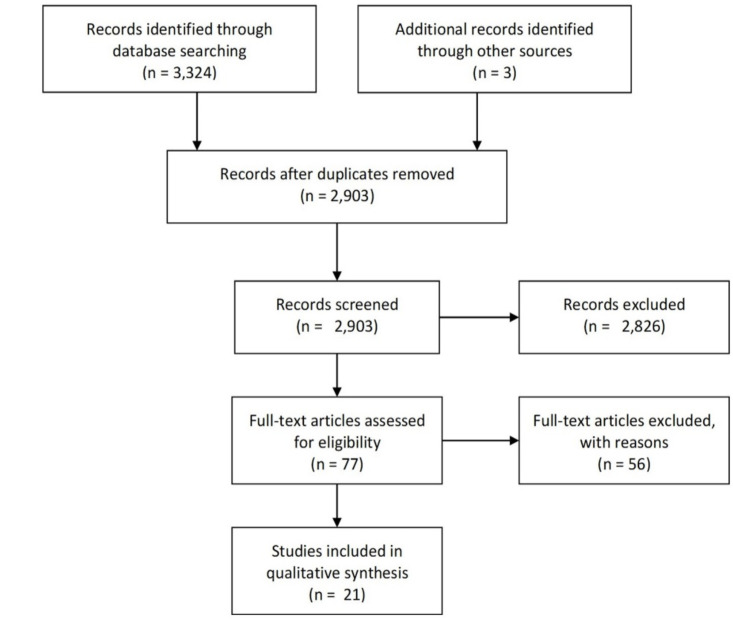
Fig 1
Fig 1. Study flow diagram.
Results of systematic review identification, screening, and inclusion.
Fig 2
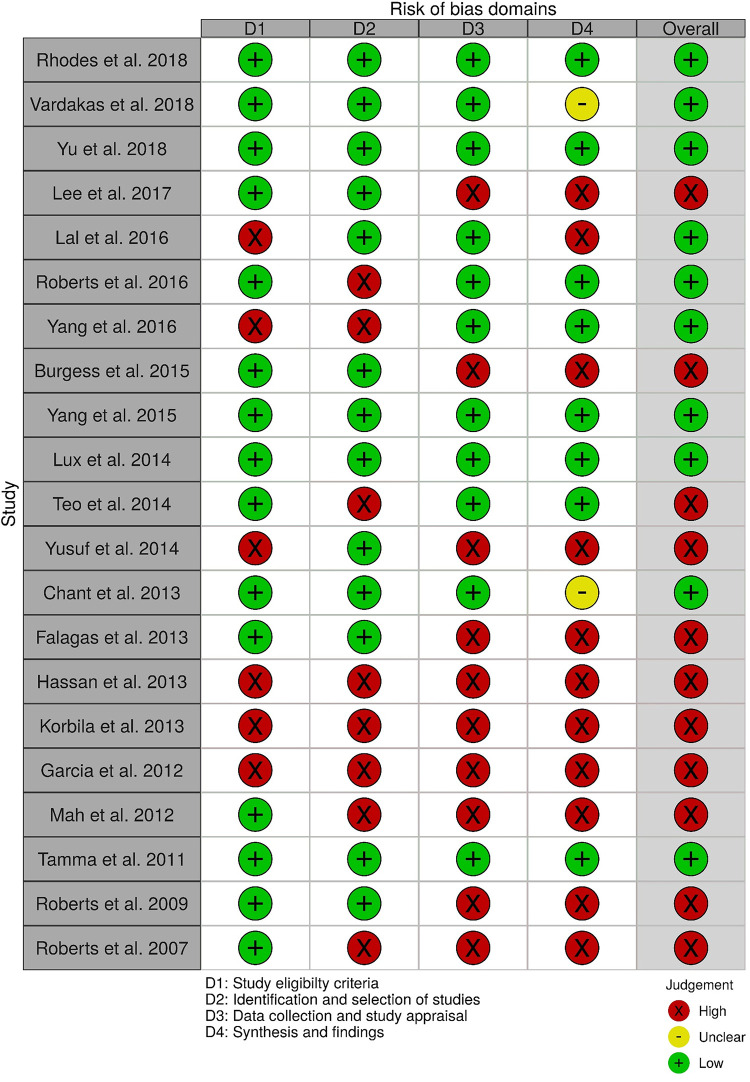
Fig 2. ROBIS.
Results of the risk of bias evaluation of included systematic reviews using the ROBIS tool (Risk of Bias in Systematic Reviews), categorized per its four domains; D1 -study eligibility criteria, D2 –identification and selection of studies, D3 –data collection and study appraisal, D4 –Synthesis and findings.
Fig 3
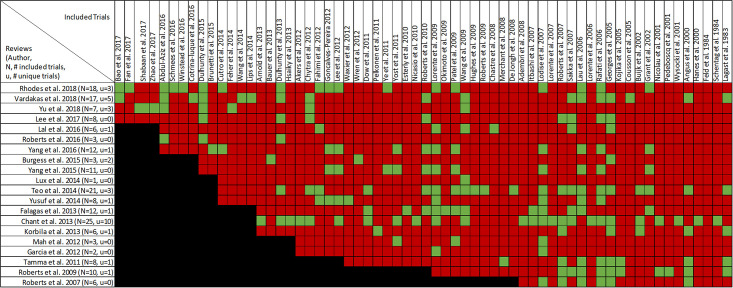
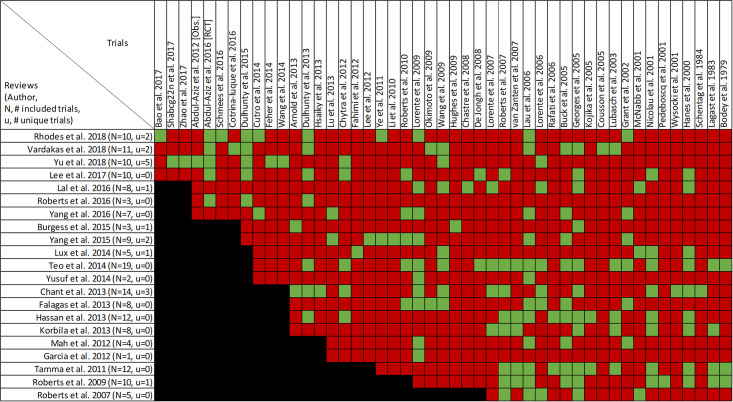
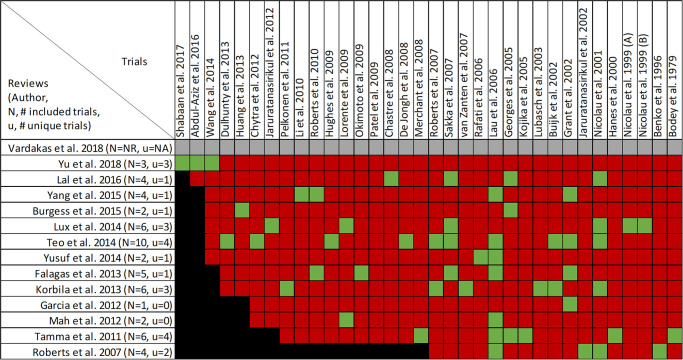
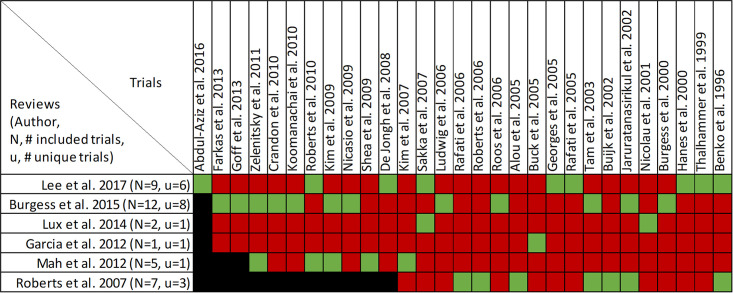
Fig 3. Citation matrix for reviews reporting mortality of prolonged infusions versus intermittent infusions of beta-lactams.
Green—primary studies included in systematic review, Red—primary study not included in systematic review, Black—primary studies published after systematic review and therefore ineligible for possible inclusion.
Fig 4
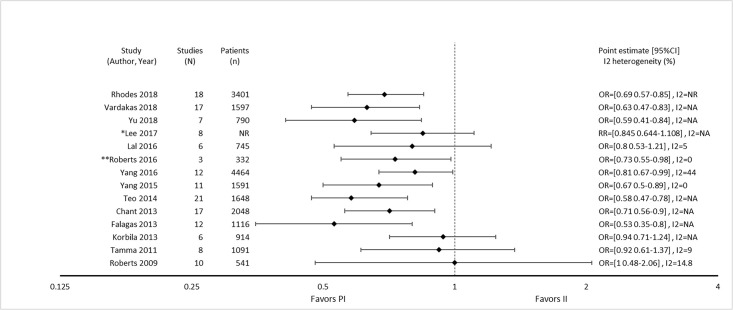
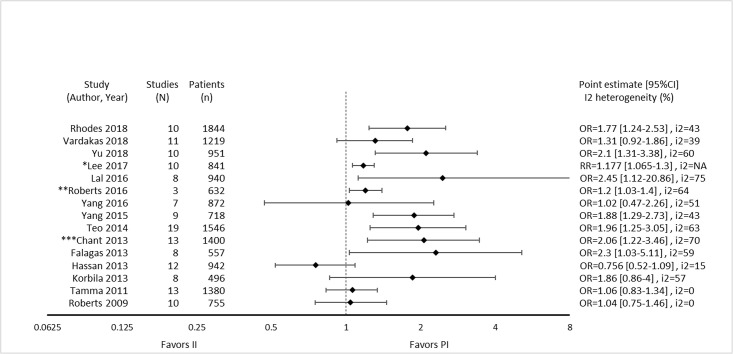
Fig 4. Effect of prolonged versus intermittent infusions of beta-lactam antimicrobials on mortality.
*Lee 2017 –Did not report event rates. RR was therefore not converted to OR. **Roberts 2016 –individual patient data analysis.
Fig 5
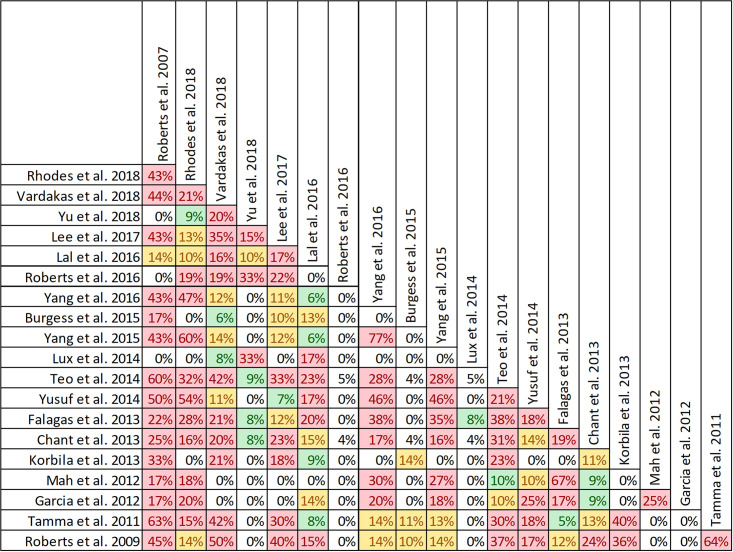
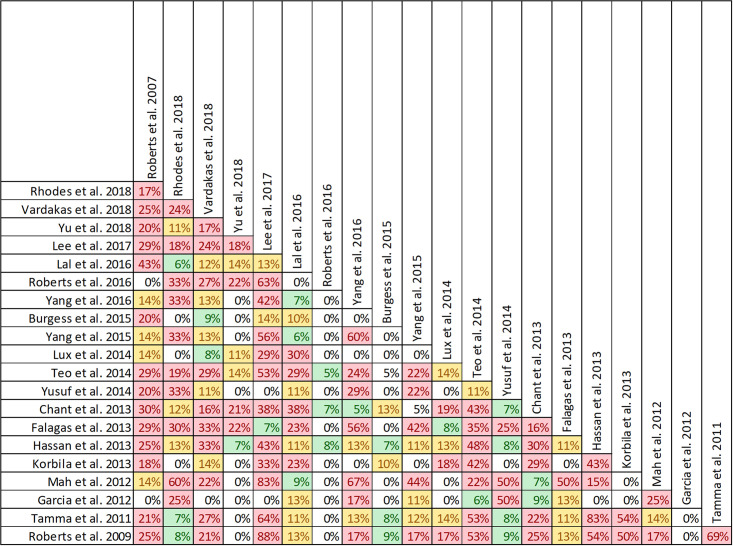
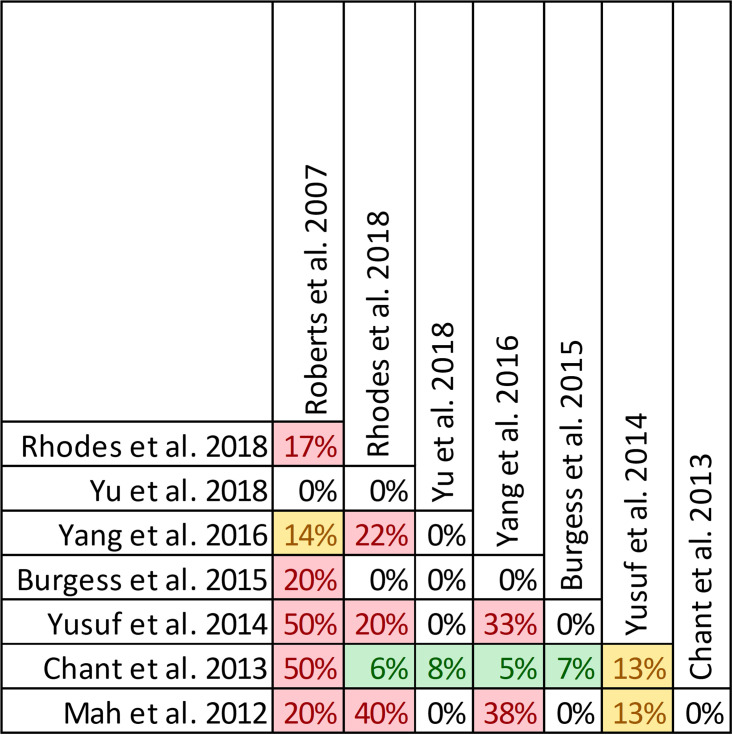
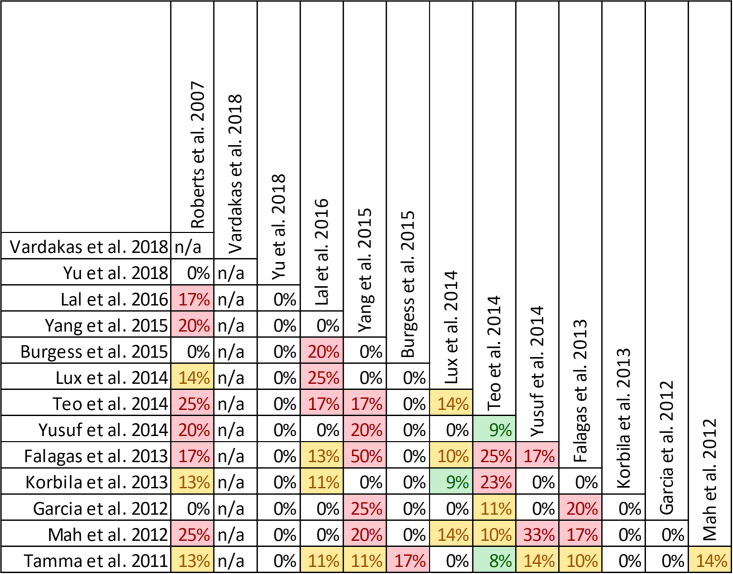
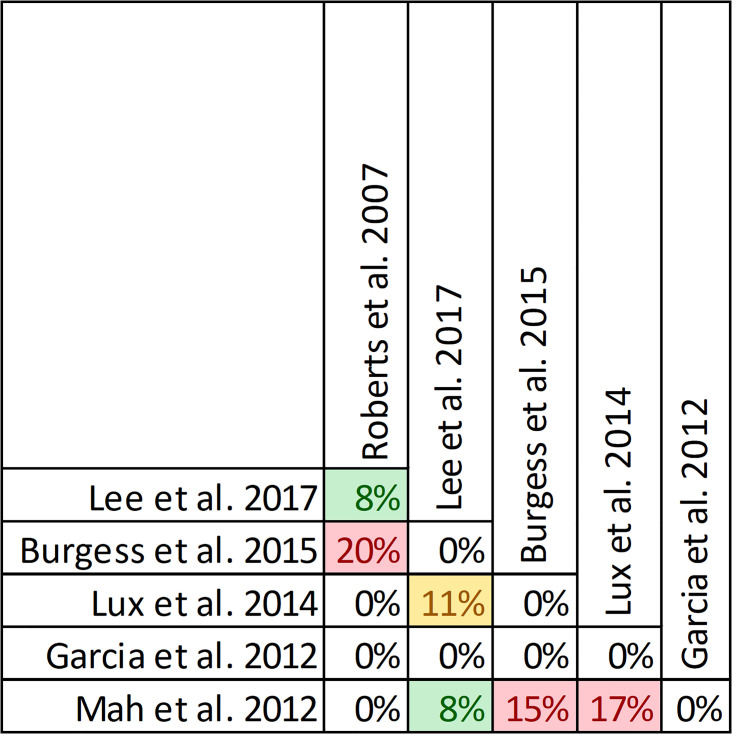
Fig 5. Pairwise CCA for reviews reporting mortality of prolonged vs. intermittent infusions of beta-lactams.
Colors indicate degree of overlap, as calculated with CCA, for visual clarity. White = ≤5%, green 5.1–9.9%, yellow 10–14.9%, red ≥15%.
Fig 6
Fig 6. Citation matrix for reviews reporting clinical cure of prolonged infusions versus intermittent infusions of beta-lactams.
Green—primary studies included in systematic review, Red—primary study not included in systematic review, Black—primary studies published after systematic review and therefore ineligible for possible inclusion.
Fig 7
Fig 7. Effect of prolonged versus intermittent infusions of beta-lactam antimicrobials on clinical cure.
*Lee 2017 –Did not report event rates. RR was therefore not converted to OR. **Roberts 2016 –individual patient data meta-analysis. ***Chant 2013 –reported treatment failure. RR = 0.60 [0.40–0.87], I2 = 69%. Results were inverted to represent clinical cure or success.
Fig 8
Fig 8. Pairwise CCA of reviews reporting clinical cure of prolonged versus intermittent infusions of beta-lactams.
Colors indicate degree of overlap, as calculated with CCA, for visual clarity. White = ≤5%, green 5.1–9.9%, yellow 10–14.9%, red ≥15%.
Fig 9
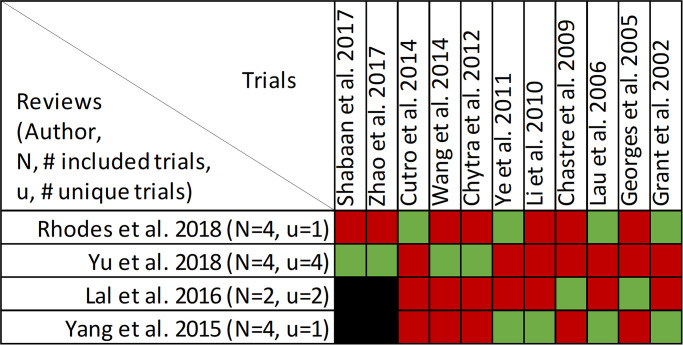
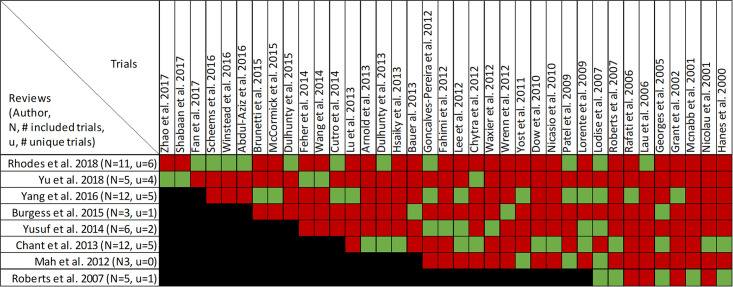
Fig 9. Citation matrix for reviews reporting microbiologic cure of prolonged infusions.
Green—primary studies included in systematic review, Red—primary study not included in systematic review, Black—primary studies published after systematic review and therefore ineligible for possible inclusion.
Fig 10
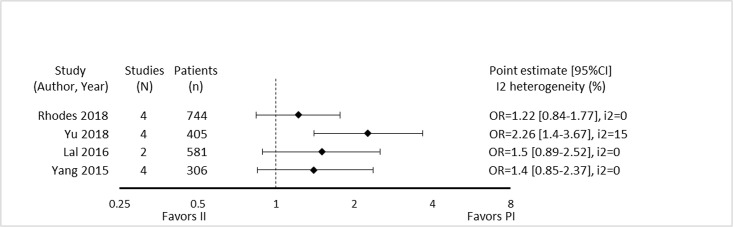
Fig 10. Effect of prolonged infusions versus intermittent infusions of beta-lactam antimicrobials on microbiologic cure.
Fig 11
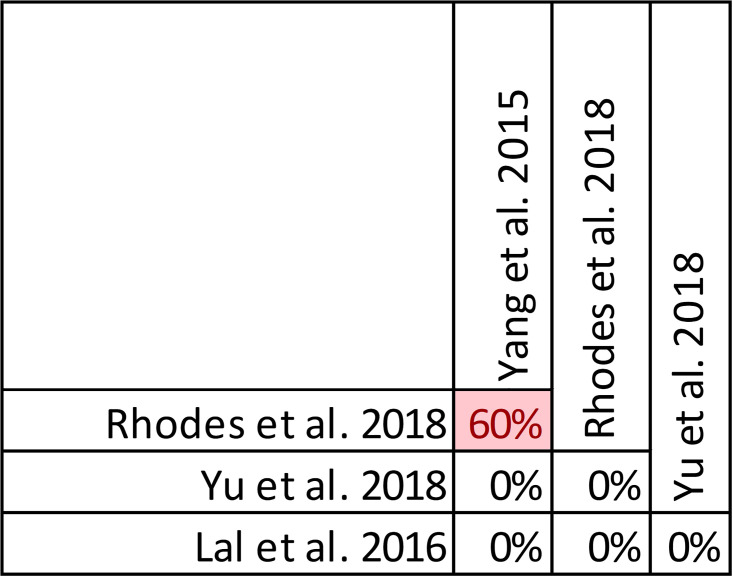
Fig 11. Pairwise CCA for reviews reporting microbiologic cure of prolonged versus intermittent beta-lactam infusions.
Colors indicate degree of overlap, as calculated with CCA, for visual clarity. White = ≤5%, green 5.1–9.9%, yellow 10–14.9%, red ≥15%.
Fig 12
Fig 12. Citation matrix for reviews reporting length of stay of prolonged infusions versus intermittent infusions of beta-lactams.
Green—primary studies included in systematic review, Red—primary study not included in systematic review, Black—primary studies published after systematic review and therefore ineligible for possible inclusion.
Fig 13
Fig 13. Pairwise CCA for reviews reporting length of stay of prolonged versus intermittent infusions of beta-lactams.
Colors indicate degree of overlap, as calculated with CCA, for visual clarity. White = ≤5%, green 5.1–9.9%, yellow 10–14.9%, red ≥15%.
Fig 14
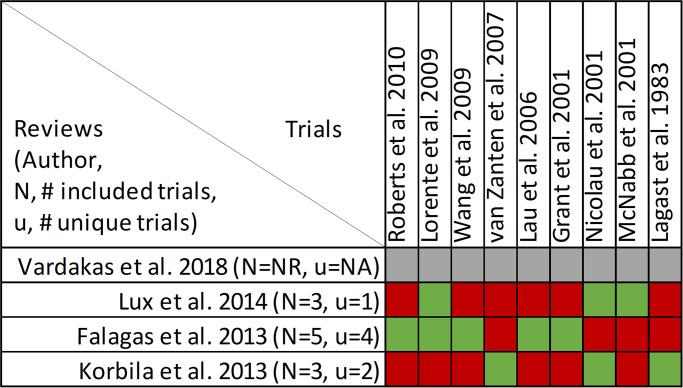
Fig 14. Citation matrix for review reporting adverse events of prolonged infusions versus intermittent infusions of beta-lactams.
Green—primary studies included in systematic review, Red—primary study not included in systematic review, Black—primary studies published after systematic review and therefore ineligible for possible inclusion, Grey—included primary studies not reported for the specified outcome.
Fig 15
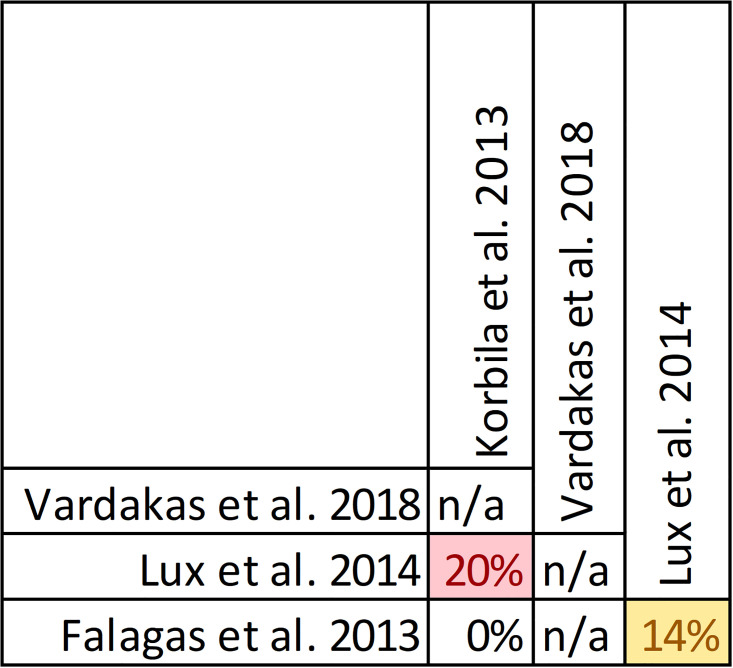
Fig 15. Pairwise CCA for reviews reporting adverse events or prolonged versus intermittent infusions of beta-lactams.
Colors indicate degree of overlap, as calculated with CCA, for visual clarity. White = ≤5%, green 5.1–9.9%, yellow 10–14.9%, red ≥15%. N/A indicated where primary studies included were not reported by systematic review.
Fig 16
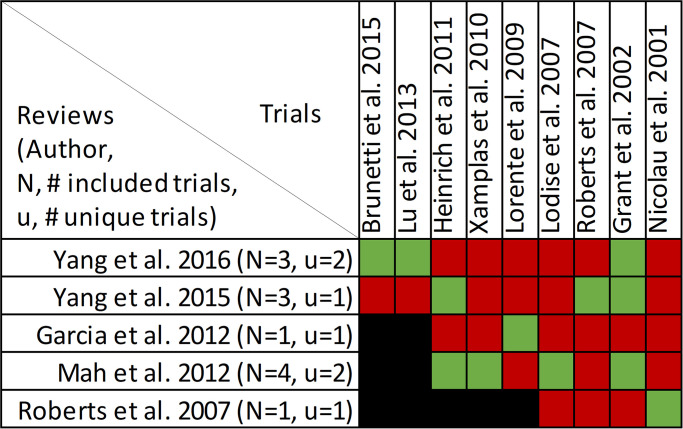
Fig 16. Citation matrix for reviews reporting cost of prolonged versus intermittent infusions of beta-lactams.
Green—primary studies included in systematic review, Red—primary study not included in systematic review, Black—primary studies published after systematic review and therefore ineligible for possible inclusion.
Fig 17
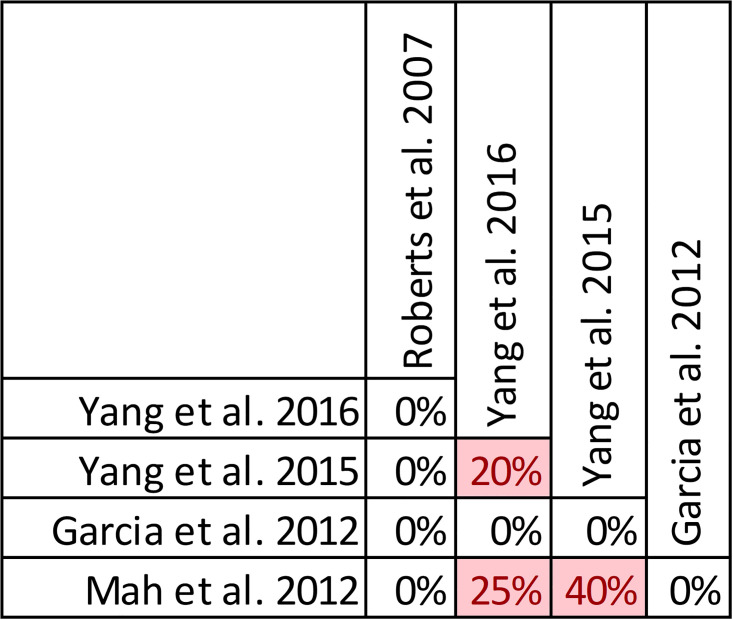
Fig 17. Pairwise CCA for reviews reporting cost of prolonged versus intermittent infusions of beta-lactams.
Colors indicate degree of overlap, as calculated with CCA, for visual clarity. White = ≤5%, green 5.1–9.9%, yellow 10–14.9%, red ≥15%. N/A indicated where primary studies included were not reported by systematic review.
Fig 18
Fig 18. Citation matrix for reviews reporting emergence of resistance of prolonged versus intermittent infusion of beta-lactams.
Green—primary studies included in systematic review, Red—primary study not included in systematic review, Black—primary studies published after systematic review and therefore ineligible for possible inclusion, Grey—included primary studies not reported for the specified outcome.
Fig 19
Fig 19. Pairwise CCA for reviews reporting emergence of resistance of prolonged versus intermittent infusion of beta-lactams.
Colors indicate degree of overlap, as calculated with CCA, for visual clarity. White = ≤5%, green 5.1–9.9%, yellow 10–14.9%, red ≥15%. N/A indicated where primary studies included were not reported by systematic review.
Fig 20
Fig 20. Citation matrix for reviews reporting PK/PD outcomes of prolonged versus intermittent infusions of beta-lactams.
Green—primary studies included in systematic review, Red—primary study not included in systematic review, Black—primary studies published after systematic review and therefore ineligible for possible inclusion.
Fig 21
Fig 21. Pairwise CCA for reviews reporting PK/PD outcomes of prolonged versus intermittent infusion of beta-lactams.
Colors indicate degree of overlap, as calculated with CCA, for visual clarity. White = ≤5%, green 5.1–9.9%, yellow 10–14.9%, red ≥15%. N/A indicated where primary studies included were not reported by systematic review.

References

    1. Angus DC, Linde-Zwirble WT, Lidicker J, Clermont G, Carcillo J, Pinsky MR. Epidemiology of severe sepsis in the United States: analysis of incidence, outcome, and associated costs of care. Crit Care Med. 2001;29(7):1303–10. 10.1097/00003246-200107000-00002 - DOI - PubMed
    1. Polat G, Ugan RA, Cadirci E, Halici Z. Sepsis and Septic Shock: Current Treatment Strategies and New Approaches. Eurasian J Med. 2017;49(1):53–8. 10.5152/eurasianjmed.2017.17062 - DOI - PMC - PubMed
    1. Gao H, Evans TW, Finney SJ. Bench-to-bedside review: sepsis, severe sepsis and septic shock—does the nature of the infecting organism matter? Crit Care. 2008;12(3):213 10.1186/cc6862 - DOI - PMC - PubMed
    1. Vincent JL, Abraham E. The last 100 years of sepsis. Am J Respir Crit Care Med. 2006;173(3):256–63. 10.1164/rccm.200510-1604OE - DOI - PubMed
    1. Rhodes A, Evans LE, Alhazzani W, Levy MM, Antonelli M, Ferrer R, et al. Surviving Sepsis Campaign: International Guidelines for Management of Sepsis and Septic Shock: 2016. Crit Care Med. 2017;45(3):486–552. 10.1097/CCM.0000000000002255 - DOI - PubMed

MeSH terms