


Parental Psychosocial Distress in Pediatric Sickle Cell Disease and Chronic Pain
- PMID: 33484135
- PMCID: PMC8502425
- DOI: 10.1093/jpepsy/jsaa130
Parental Psychosocial Distress in Pediatric Sickle Cell Disease and Chronic Pain
Abstract
Background: Pediatric sickle cell disease (SCD) management can result in considerable caregiver distress. Parents of youth with chronic SCD pain may face the additional challenge of managing children's chronic pain and chronic illness. This study examined associations between parent psychological distress and child functioning and the moderating role of chronic pain among youth with SCD.
Methods: Youth presenting to pediatric outpatient comprehensive SCD clinics and their primary caregivers completed a battery of questionnaires. Parents reported on parenting stress, parent mental and physical health, and family functioning. Children completed measures of pain characteristics, depressive symptoms, catastrophic thinking, functional disability, and quality of life.
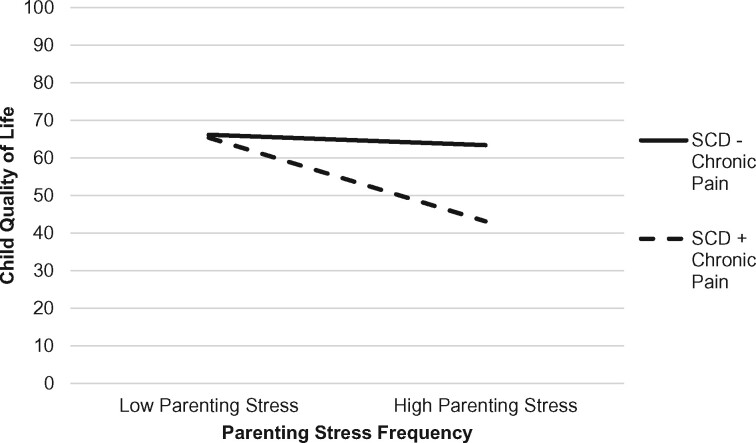
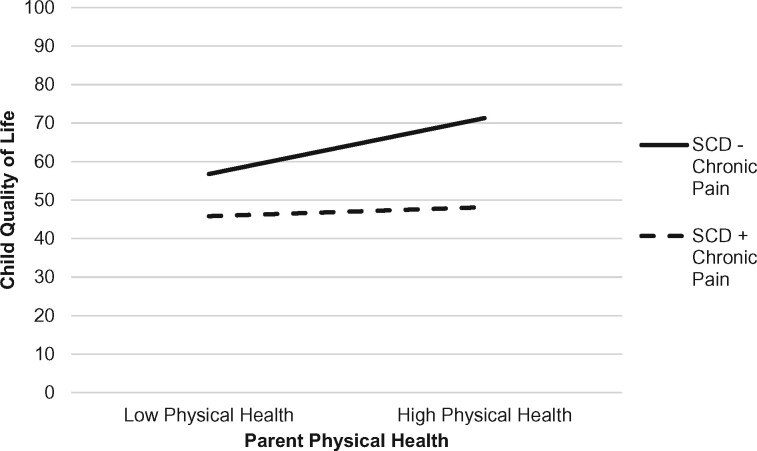
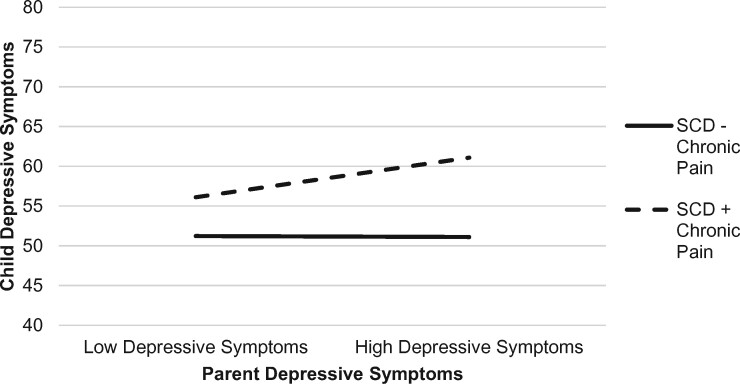
Results: Patients (N = 73, Mage = 14.2 years, 57% female) and their caregivers (Mage = 41.1 years, 88% mothers, 88% Black) participated. Worse parent functioning was associated with worse child pain, functioning, quality of life, and depressive symptoms. Beyond the effects of SCD, chronic SCD pain magnified the negative associations between parenting stress frequency and child quality of life, parent physical health and child quality of life, and parent depressive symptoms and child depressive symptoms.
Conclusions: Chronic pain may exacerbate the relations between parent and child functioning beyond the effects of SCD alone. The management of both SCD and chronic pain may present additional challenges for parents that limit their psychosocial functioning. Family-focused interventions to support parents and youth with chronic SCD pain are warranted to optimize health outcomes.
Keywords: chronic and recurrent pain; parent psychosocial functioning; parenting stress sickle cell disease.
© The Author(s) 2021. Published by Oxford University Press on behalf of the Society of Pediatric Psychology. All rights reserved. For permissions, please e-mail: journals.permissions@oup.com.
Figures
References
-
- Alderfer M. A., Fiese B. H., Gold J. I., Cutuli J. J., Holmbeck G. N., Goldbeck L., Chambers C. T., Abad M., Spetter D., Patterson J. (2008). Evidence-based Assessment in Pediatric Psychology: Family Measures. Journal of Pediatric Psychology, 33(9), 1046–1061. 10.1093/jpepsy/jsm083 - DOI - PMC - PubMed
-
- Armistead L., Klein K., Forehand R. (1995). Parental physical illness and child functioning. Clinical Psychology Review, 15(5), 409–422. 10.1016/0272-7358(95)00023-I - DOI
-
- Barakat L., Patterson C., Tarazi R. A., Ely E. (2007a). Disease-related parenting stress in two sickle cell disease caregiver samples: Preschool and adolescent. Families, Systems, & Health, 25(2), 147–161. 10.1037/1091-7527.25.2.147 - DOI
-
- Barakat L., Patterson C., Weinberger B. S., Simon K., Gonzalez E. R., Dampier C. (2007b). A prospective study of the role of coping and family functioning in health outcomes for adolescents with sickle cell disease. Journal of Pediatric Hematology/Oncology, 29(11), 752–760. 10.1097/MPH.0b013e318157fdac - DOI - PubMed
Publication types
MeSH terms
Grants and funding
LinkOut - more resources
Full Text Sources
Other Literature Sources
Medical
Research Materials
