


RNA architecture influences plant biology
- PMID: 33484251
- PMCID: PMC8130982
- DOI: 10.1093/jxb/erab030
RNA architecture influences plant biology
Abstract
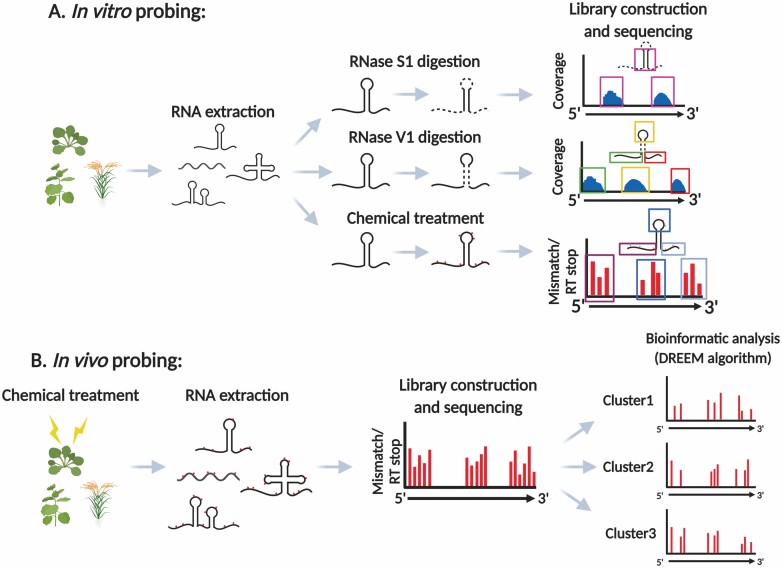
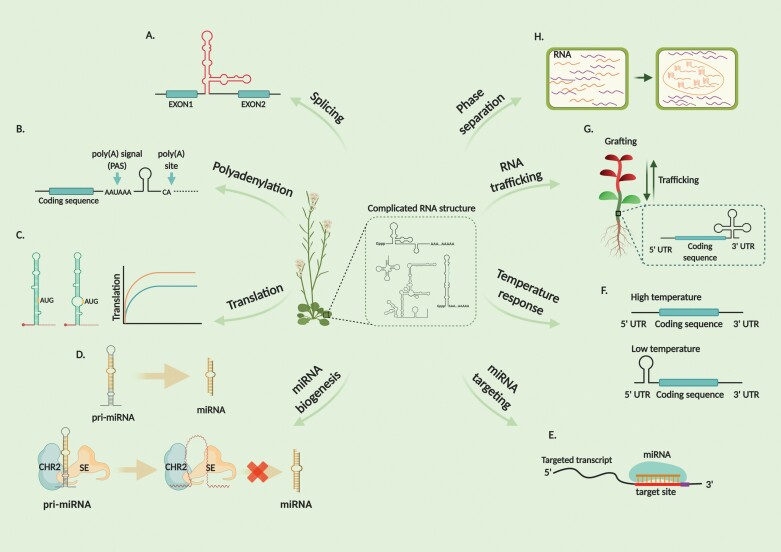
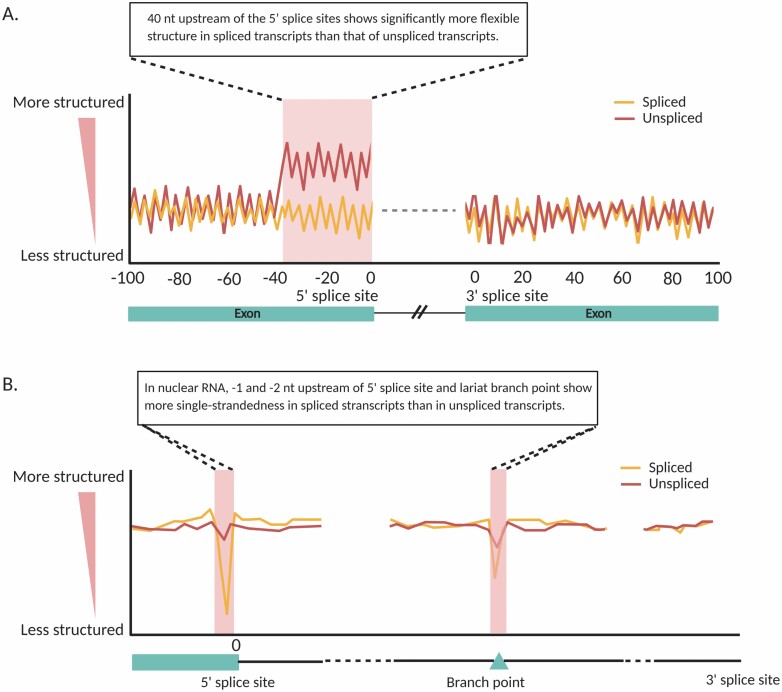
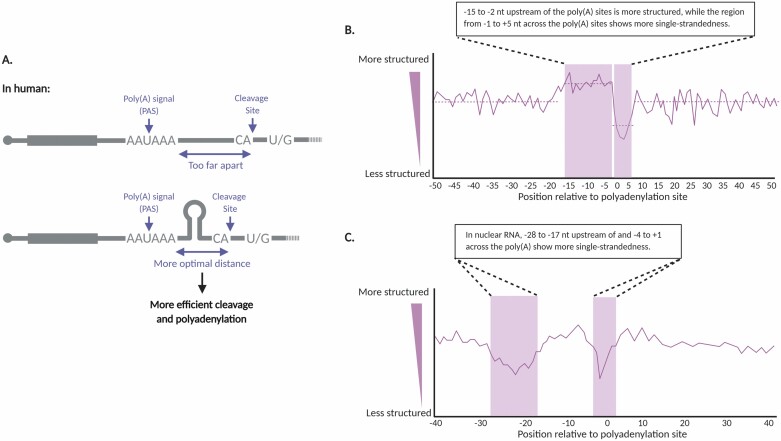
The majority of the genome is transcribed to RNA in living organisms. RNA transcripts can form astonishing arrays of secondary and tertiary structures via Watson-Crick, Hoogsteen, or wobble base pairing. In vivo, RNA folding is not a simple thermodynamic event of minimizing free energy. Instead, the process is constrained by transcription, RNA-binding proteins, steric factors, and the microenvironment. RNA secondary structure (RSS) plays myriad roles in numerous biological processes, such as RNA processing, stability, transportation, and translation in prokaryotes and eukaryotes. Emerging evidence has also implicated RSS in RNA trafficking, liquid-liquid phase separation, and plant responses to environmental variations such as temperature and salinity. At molecular level, RSS is correlated with splicing, polyadenylation, protein synthesis, and miRNA biogenesis and functions. In this review, we summarize newly reported methods for probing RSS in vivo and functions and mechanisms of RSS in plant physiology.
Keywords: RNA secondary structure; RNA trafficking; miRNA; phase separation; polyadenylation; salinity stress; splicing; translation.
© The Author(s) 2021. Published by Oxford University Press on behalf of the Society for Experimental Biology. All rights reserved. For permissions, please email: journals.permissions@oup.com.
Figures
References
-
- Anderson SJ, Kramer MC, Gosai SJ, et al. . 2018. N6-methyladenosine inhibits local ribonucleolytic cleavage to stabilize mRNAs in Arabidopsis. Cell Reports 25, 1146–1157. - PubMed
-
- Aw JGA, Lim SW, Wang JX, et al. . 2020. Determination of isoform-specific RNA structure with nanopore long reads. Nature Biotechnology. - PubMed
Publication types
MeSH terms
Substances
Grants and funding
LinkOut - more resources
Full Text Sources
Other Literature Sources
