


Pollen sterols are associated with phylogeny and environment but not with pollinator guilds
- PMID: 33484583
- PMCID: PMC8653887
- DOI: 10.1111/nph.17227
Pollen sterols are associated with phylogeny and environment but not with pollinator guilds
Abstract
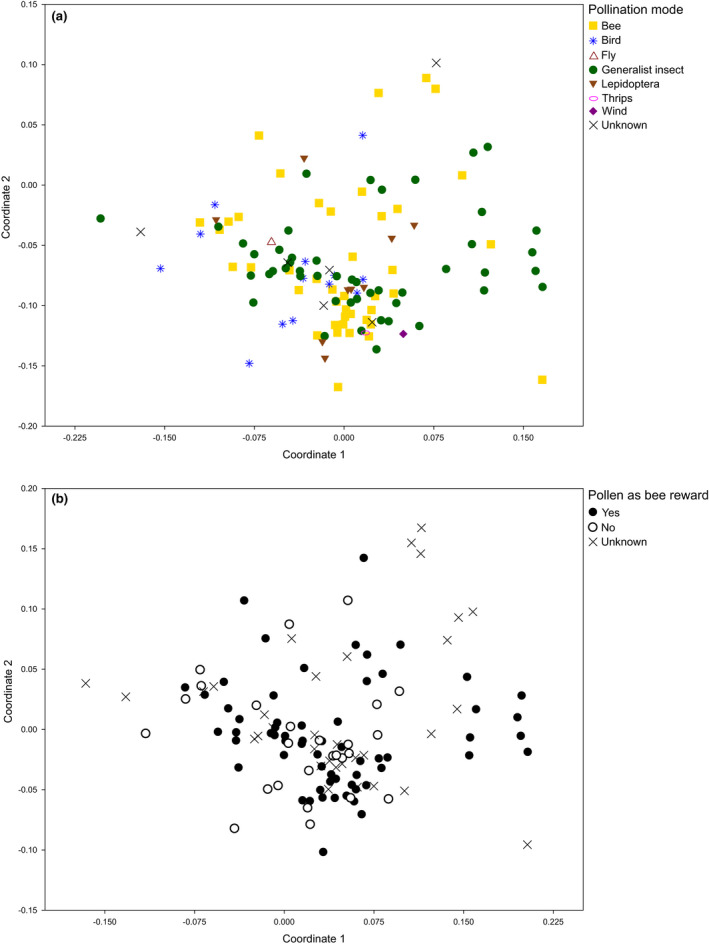
Phytosterols are primary plant metabolites that have fundamental structural and regulatory functions. They are also essential nutrients for phytophagous insects, including pollinators, that cannot synthesize sterols. Despite the well-described composition and diversity in vegetative plant tissues, few studies have examined phytosterol diversity in pollen. We quantified 25 pollen phytosterols in 122 plant species (105 genera, 51 families) to determine their composition and diversity across plant taxa. We searched literature and databases for plant phylogeny, environmental conditions, and pollinator guilds of the species to examine the relationships with pollen sterols. 24-methylenecholesterol, sitosterol and isofucosterol were the most common and abundant pollen sterols. We found phylogenetic clustering of twelve individual sterols, total sterol content and sterol diversity, and of sterol groupings that reflect their underlying biosynthesis pathway (C-24 alkylation, ring B desaturation). Plants originating in tropical-like climates (higher mean annual temperature, lower temperature seasonality, higher precipitation in wettest quarter) were more likely to record higher pollen sterol content. However, pollen sterol composition and content showed no clear relationship with pollinator guilds. Our study is the first to show that pollen sterol diversity is phylogenetically clustered and that pollen sterol content may adapt to environmental conditions.
Keywords: chemical ecology; chemotaxonomy; environmental factors; phylogeny; phytosterol diversity; plant-insect interactions; pollen nutrients; pollinator guild.
© 2021 The Authors New Phytologist © 2021 New Phytologist Foundation.
Figures
References
-
- Akihisa T, Kokke WCMC, Tamura T. 1991. Naturally occurring sterols and related compounds from plants. In: Patterson GW, Nes WD, eds. Physiology and biochemistry of sterols. Champaign, IL, USA: AOCS Press, 172–228.
-
- Amar S, Becker HC, Möllers C. 2008. Genetic variation and genotype× environment interactions of phytosterol content in three doubled haploid populations of winter rapeseed. Crop Science 48: 1000–1006.
-
- Arnold SEJ, Peralta Idrovo ME, Lomas Arias LJ, Belmain SR, Stevenson PC. 2014. Herbivore defence compounds occur in pollen and reduce bumblebee colony fitness. Journal of Chemical Ecology 40: 878–881. - PubMed
-
- Behmer ST, Elias DO. 1999. The nutritional significance of sterol metabolic constraints in the generalist grasshopper Schistocerca americana . Journal of Insect Physiology 45: 339–348. - PubMed
-
- Behmer ST, Elias DO. 2000. Sterol metabolic constraints as a factor contributing to the maintenance of diet mixing in grasshoppers (Orthoptera: Acrididae). Physiological and Biochemical Zoology 73: 219–230. - PubMed
Publication types
MeSH terms
Substances
Grants and funding
- BB/M011224/1/BB_/Biotechnology and Biological Sciences Research Council/United Kingdom
- BB/P005276/1/BB_/Biotechnology and Biological Sciences Research Council/United Kingdom
- BB/S004653/1/BB_/Biotechnology and Biological Sciences Research Council/United Kingdom
- BB/P007449/1/BB_/Biotechnology and Biological Sciences Research Council/United Kingdom
LinkOut - more resources
Full Text Sources
Other Literature Sources
Research Materials
