


Targeting drug delivery with light: A highly focused approach
- PMID: 33486009
- PMCID: PMC8127392
- DOI: 10.1016/j.addr.2021.01.009
Targeting drug delivery with light: A highly focused approach
Abstract
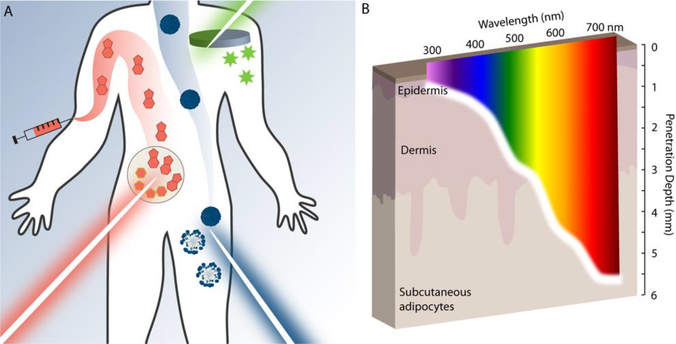
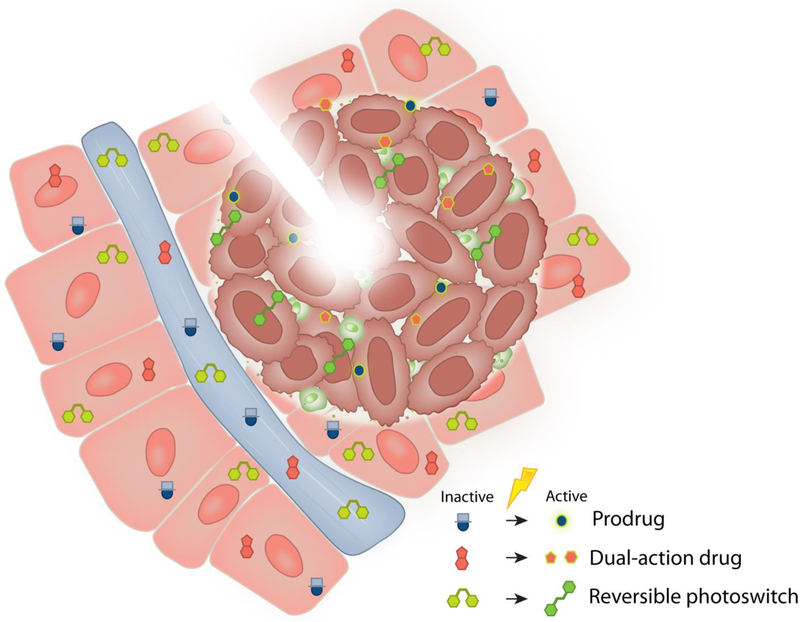
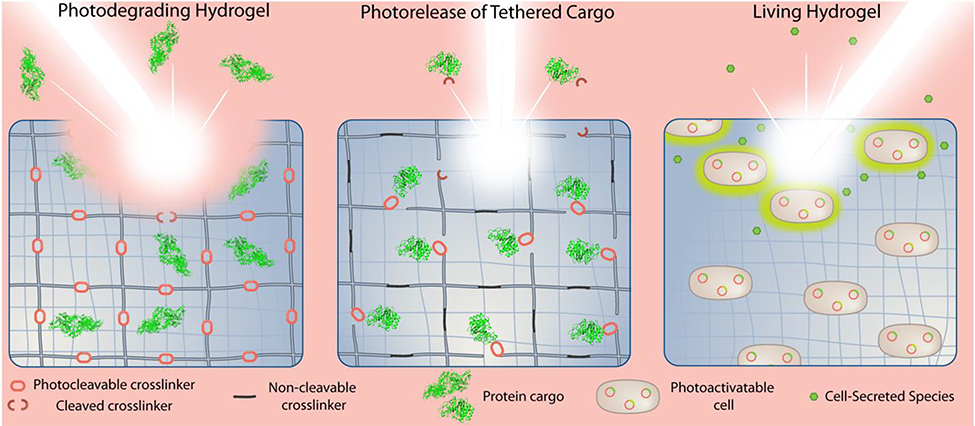
Light is a uniquely powerful tool for controlling molecular events in biology. No other external input (e.g., heat, ultrasound, magnetic field) can be so tightly focused or so highly regulated as a clinical laser. Drug delivery vehicles that can be photonically activated have been developed across many platforms, from the simplest "caging" of therapeutics in a prodrug form, to more complex micelles and circulating liposomes that improve drug uptake and efficacy, to large-scale hydrogel platforms that can be used to protect and deliver macromolecular agents including full-length proteins. In this Review, we discuss recent innovations in photosensitive drug delivery and highlight future opportunities to engineer and exploit such light-responsive technologies in the clinical setting.
Keywords: Dual-action; In vivo drug delivery; Light-mediated delivery; Photoactivated; Photochemistry; Photodegradable hydrogels; Photoresponsive nanoparticles; Photoswitches; Prodrugs.
Copyright © 2021 Elsevier B.V. All rights reserved.
Figures
References
-
- Stochel G, Wanat A, Kuliś E, Stasicka Z, Light and metal complexes in medicine, Coord. Chem. Rev. 171 (1998) 203–220. 10.1016/s0010-8545(98)90033-9. - DOI
-
- Avci P, Gupta A, Sadasivam M, Vecchio D, Pam Z, Pam N, Hamblin MR, Low-level laser (light) therapy (LLLT) in skin: Stimulating, healing, restoring, Semin. Cutan. Med. Surg. 32 (2013) 41–52. https://www.ncbi.nlm.nih.gov/pmc/articles/PMC4126803/ (accessed September 28, 2020). - PMC - PubMed
Publication types
MeSH terms
Substances
Grants and funding
LinkOut - more resources
Full Text Sources
Other Literature Sources
