


Drugs acting on the renin-angiotensin system and SARS-CoV-2
- PMID: 33486116
- PMCID: PMC7825840
- DOI: 10.1016/j.drudis.2021.01.010
Drugs acting on the renin-angiotensin system and SARS-CoV-2
Abstract
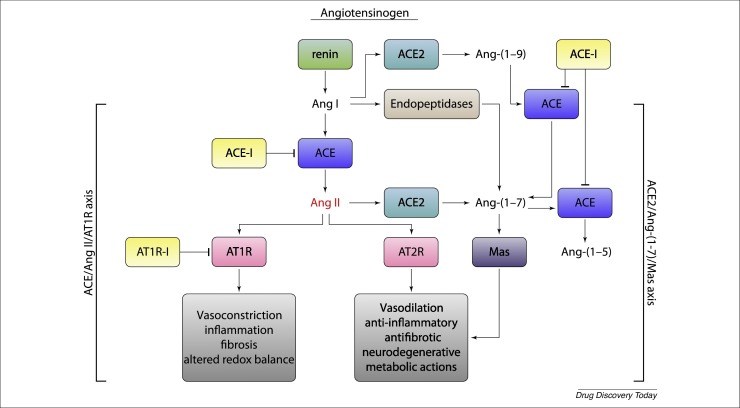
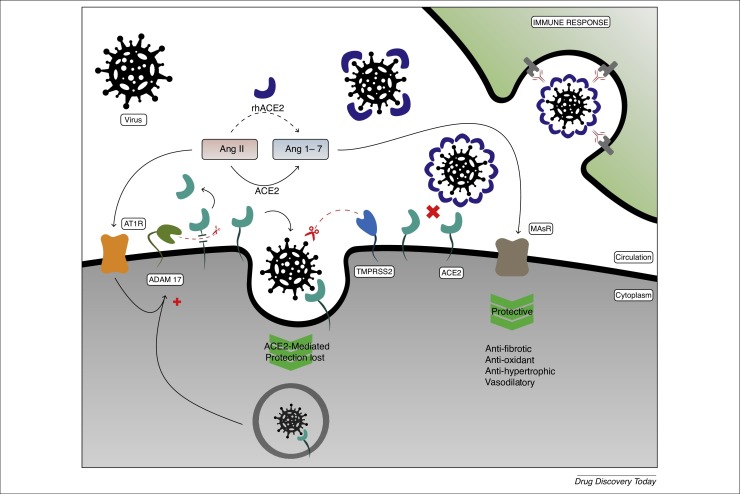
Severe acute respiratory syndrome coronavirus 2 (SARS-CoV-2) is responsible for the ongoing global Coronavirus 2019 (COVID-19) pandemic, resulting in thousands of deaths worldwide and representing a health challenge with few precedents in human history. Angiotensin-converting enzyme 2 (ACE-2) facilitates the access of SARS-CoV-2 to cells. Therapeutic agents acting on the renin-angiotensin system (RAS) might be able to modulate the concentration of ACE-2 and the various components of the system. Here, we discuss current pharmacological, molecular, and clinical evidence to investigate whether drugs acting on RAS with modulation of the ACE-2 concentration have added value in combating SARS-CoV-2 infection. We also highlight the possible deleterious action of the ACE/Ang-II/AT-1r axis and possible beneficial role of the ACE-2/Ang 1-7/MasR axis in acute respiratory distress syndrome (ARDS) caused by SARS-CoV-2, discussing the possibility of addressing the various RAS components with drug treatments to improve clinical outcomes.
Copyright © 2021 Elsevier Ltd. All rights reserved.
Conflict of interest statement
The authors declare no conflict of interest.
Figures
References
-
- Baig A.M., et al. Evidence of the COVID-19 virus targeting the CNS: tissue distribution, host-virus interaction, and proposed neurotropic mechanisms. ACS Chem. Neurosci. 2020;11:995–998. - PubMed
-
- Cascella M., et al. StatPearls; 2020. Features, Evaluation and Treatment Coronavirus (COVID-19) - PubMed
Publication types
MeSH terms
Substances
LinkOut - more resources
Full Text Sources
Other Literature Sources
Miscellaneous
