


Evidence of SARS-CoV2 Entry Protein ACE2 in the Human Nose and Olfactory Bulb
- PMID: 33486479
- PMCID: PMC7900466
- DOI: 10.1159/000513040
Evidence of SARS-CoV2 Entry Protein ACE2 in the Human Nose and Olfactory Bulb
Abstract
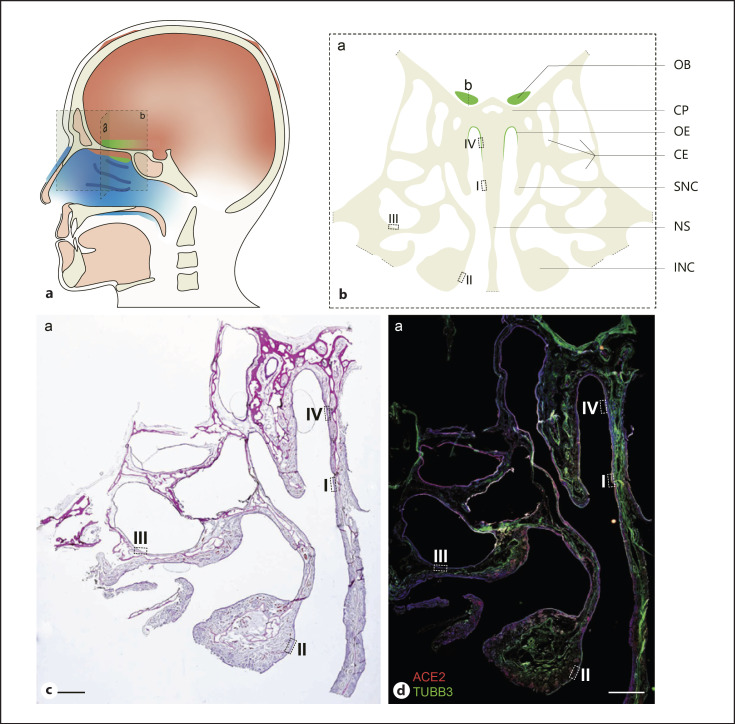
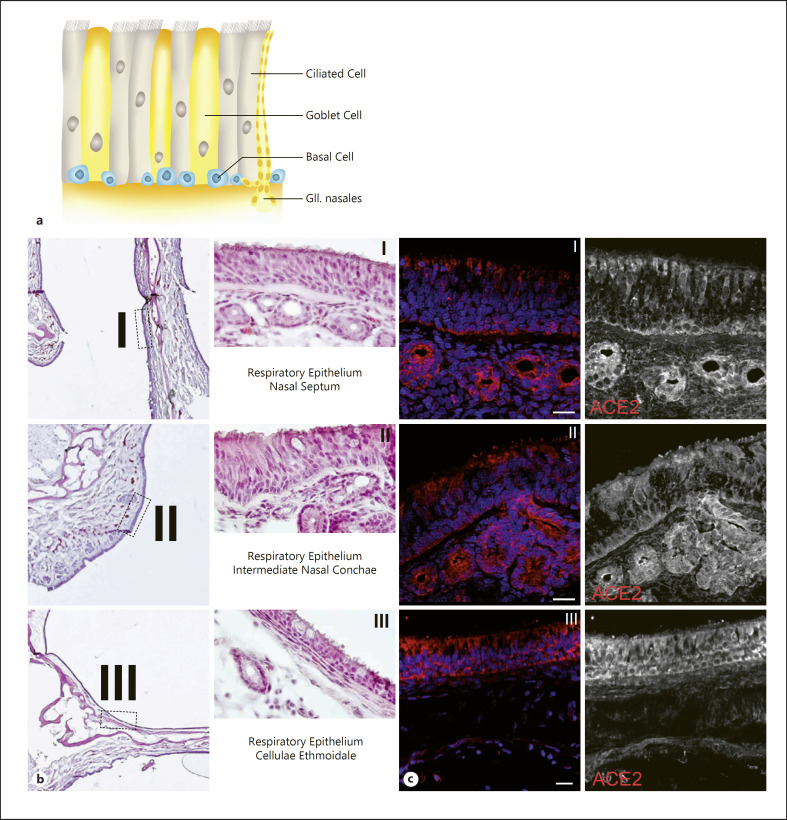
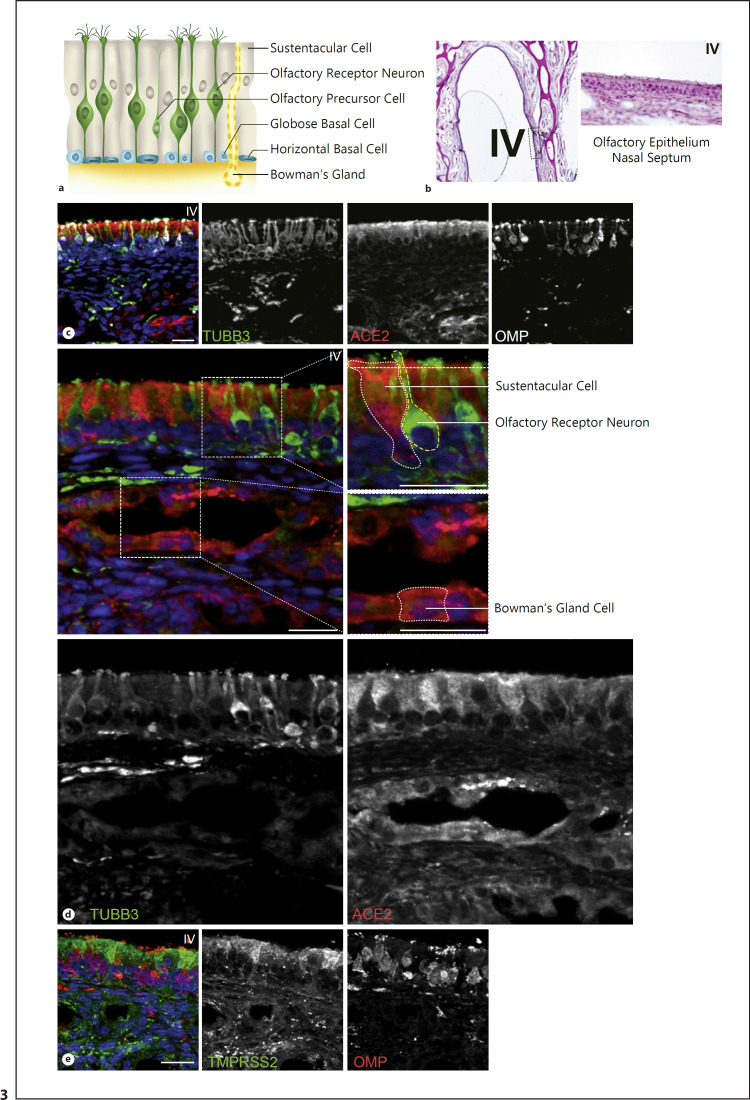
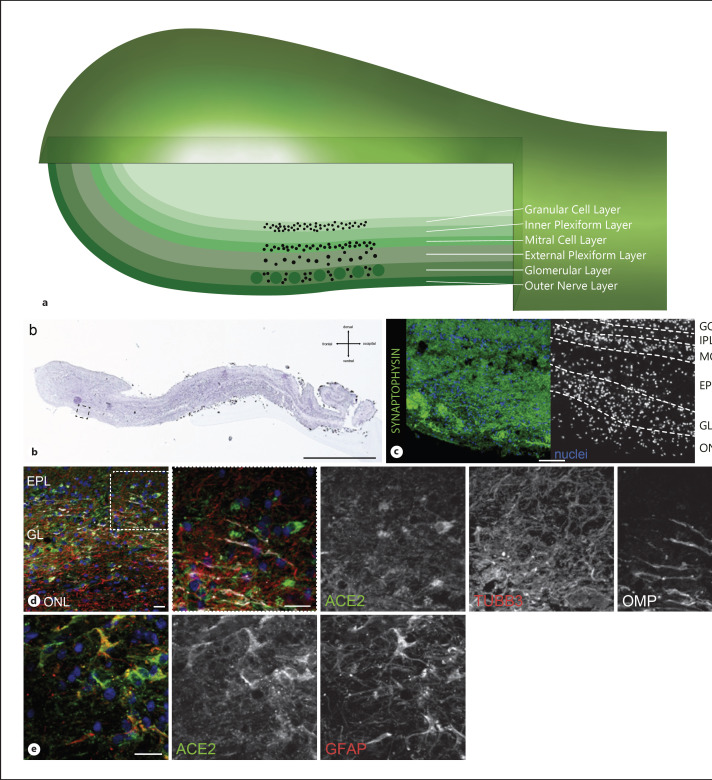
Usually, pandemic COVID-19 disease, caused by SARS-CoV2, presents with mild respiratory symptoms such as fever, cough, but frequently also with anosmia and neurological symptoms. Virus-cell fusion is mediated by angiotensin-converting enzyme 2 (ACE2) and transmembrane serine protease 2 (TMPRSS2) with their organ expression pattern determining viral tropism. Clinical presentation suggests rapid viral dissemination to the central nervous system leading frequently to severe symptoms including viral meningitis. Here, we provide a comprehensive expression landscape of ACE2 and TMPRSS2 proteins across human postmortem nasal and olfactory tissue. Sagittal sections through the human nose complemented with immunolabelling of respective cell types represent different anatomically defined regions including olfactory epithelium, respiratory epithelium of the nasal conchae and the paranasal sinuses along with the hardly accessible human olfactory bulb. ACE2 can be detected in the olfactory epithelium as well as in the respiratory epithelium of the nasal septum, the nasal conchae, and the paranasal sinuses. ACE2 is located in the sustentacular cells and in the glandular cells in the olfactory epithelium as well as in the basal cells, glandular cells, and epithelial cells of the respiratory epithelium. Intriguingly, ACE2 is not expressed in mature or immature olfactory receptor neurons and basal cells in the olfactory epithelium. Similarly, ACE2 is not localized in the olfactory receptor neurons albeit the olfactory bulb is positive. Vice versa, TMPRSS2 can also be detected in the sustentacular cells and the glandular cells of the olfactory epithelium. Our findings provide the basic anatomical evidence for the expression of ACE2 and TMPRSS2 in the human nose, olfactory epithelium, and olfactory bulb. Thus, they are substantial for future studies that aim to elucidate the symptom of SARS-CoV2 induced anosmia via the olfactory pathway.
Keywords: ACE2; Human; Olfactory bulb; Olfactory epithelium; SARS-CoV2.
© 2021 S. Karger AG, Basel.
Conflict of interest statement
The authors have no conflicts of interest to declare.
Figures
References
-
- Au WW, Treloar HB, Greer CA. Sublaminar organization of the mouse olfactory bulb nerve layer. J Comp Neurol. 2002;446((1)):68–80. - PubMed
-
- Caggiano M, Kauer JS, Hunter DD. Globose basal cells are neuronal progenitors in the olfactory epithelium: a lineage analysis using a replication-incompetent retrovirus. Neuron. 1994;13((2)):339–52. - PubMed
MeSH terms
Substances
LinkOut - more resources
Full Text Sources
Other Literature Sources
Medical
Miscellaneous
