


High prevalence of Coxiella burnetii infection in humans and livestock in Assiut, Egypt: A serological and molecular survey
- PMID: 33487974
- PMCID: PMC7811535
- DOI: 10.14202/vetworld.2020.2578-2586
High prevalence of Coxiella burnetii infection in humans and livestock in Assiut, Egypt: A serological and molecular survey
Abstract
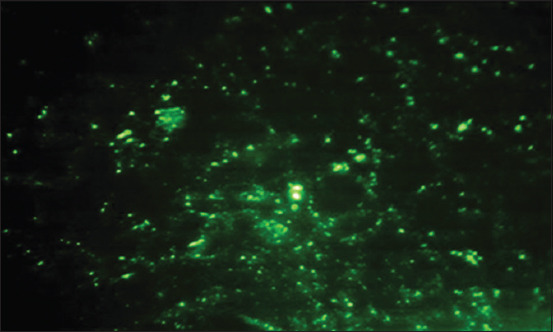
Background and aim: Q fever is considered a neglected zoonotic disease and is caused by Coxiella burnetii. Very little information is available on C. burnetii infections in cattle, sheep, and goat populations in Egypt. The aim of this study was to identify the seroprevalence of C. burnetii in humans and livestock and to test for the presence of C. burnetii DNA in sera from seropositive animals and humans.
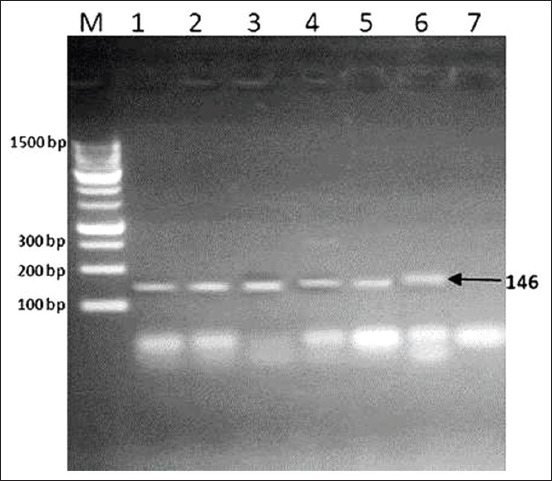
Materials and methods: Blood samples were collected from 160 apparently healthy farm animals and 120 patients from three hospitals of the Assiut Governorate throughout 2017/2018. These populations were tested for antibodies against C. burnetii phase II antigen by immunofluorescence assay [IFA] and enzyme-linked immunosorbent assay (ELISA). Seropositive samples were subjected to real-time quantitative polymerase chain reaction (RT-qPCR).
Results: The results of the IFA revealed C. burnetii seroprevalence rates of 45.3%, 56.0%, 45.7%, and 53.3% in cattle, sheep, goats, and humans, respectively. In humans, the seroprevalence rates were 52.1%, 30.4%, 37.5%, 74.1%, and 62.5% in patients with fever of unknown origin, influenza, kidney dialysis, hepatitis C virus, and hepatitis B virus, respectively. Likewise, by ELISA, the seroprevalence in bovine was 50.7%; sheep, 60.0%; goats, 51.4%; and humans, 55.0% (54.3%, 30.4%, 37.5%, 77.8%, and 62.5% in patients with fever of unknown origin, influenza, kidney dialysis, hepatitis C virus, and hepatitis B virus, respectively). RT-qPCR targeting the repetitive element IS1111 confirmed the presence of C. burnetii DNA.
Conclusion: These results proved that apparently healthy cattle, sheep, and goats may be very important reservoirs of C. burnetii infection. In light of these data, the effect of Q fever on the replication of hepatitis virus remains unclear. Although hepatitis is one of the main aspects of acute Q fever, the influence of hepatitis on Q fever remains to be investigated. Q fever is not a reportable disease in Egypt, and clinical cases may rarely be recognized by the health-care system. Additional information on the epidemiology of C. burnetii in Egypt is warranted, including other associated problems such as the distribution of infections, pathologic hallmarks, and molecular typing.
Keywords: Coxiella burnetii; Q fever; apparently healthy farm animals and humans; enzyme-linked immunosorbent assay; hepatitis C and B; immunofluorescence assay; real-time quantitative polymerase chain reaction.
Copyright: © Abbass, et al.
Figures
References
-
- El-Mahallawy H.S, Abou-Eisha A, Fadel H. Coxiella burnetii infections among small ruminants in Ismailia Governorate. SCVMJ. 2012;17:39–50.
-
- Yin M.Y, Qin S.Y, Tan Q.D, Feng S.Y, Liu G.X, Zhou D.H, Zhu X.Q. First report of Coxiella burnetii seroprevalence in Tibetan sheep in China. Vector Borne Zoonotic Dis. 2015;15(7):419–422. - PubMed
LinkOut - more resources
Full Text Sources