


Characterization of multicomponent antioxidants from Haloferax alexandrinus GUSF-1 (KF796625)
- PMID: 33489677
- PMCID: PMC7801588
- DOI: 10.1007/s13205-020-02584-9
Characterization of multicomponent antioxidants from Haloferax alexandrinus GUSF-1 (KF796625)
Abstract
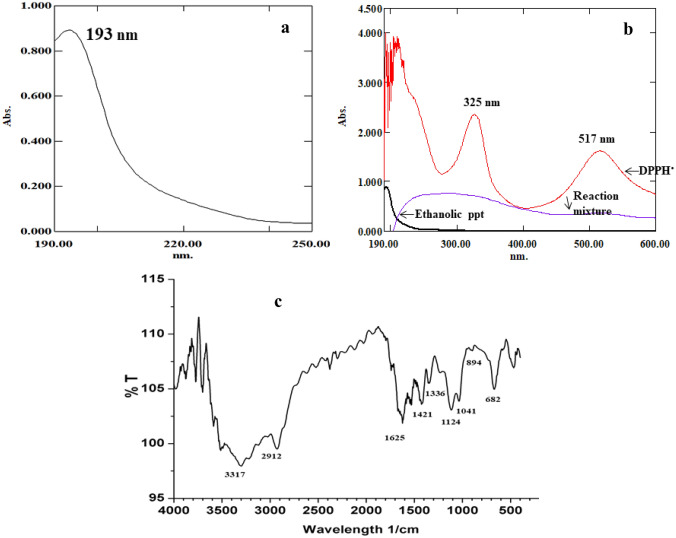
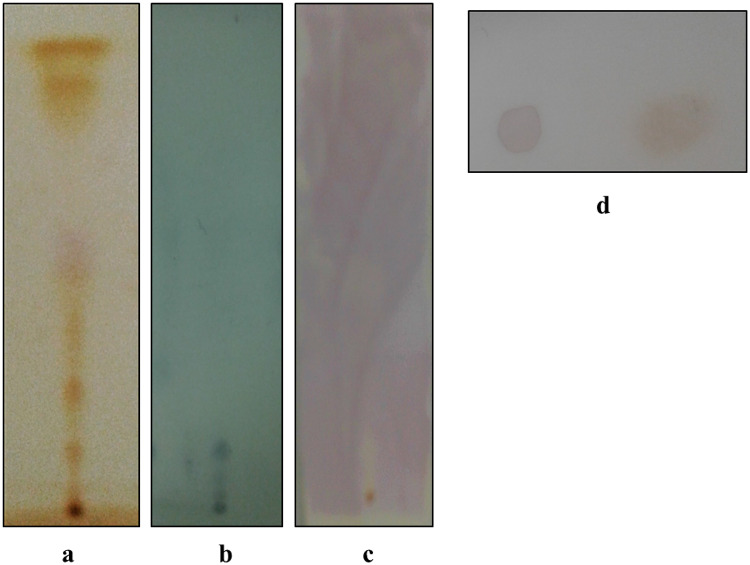
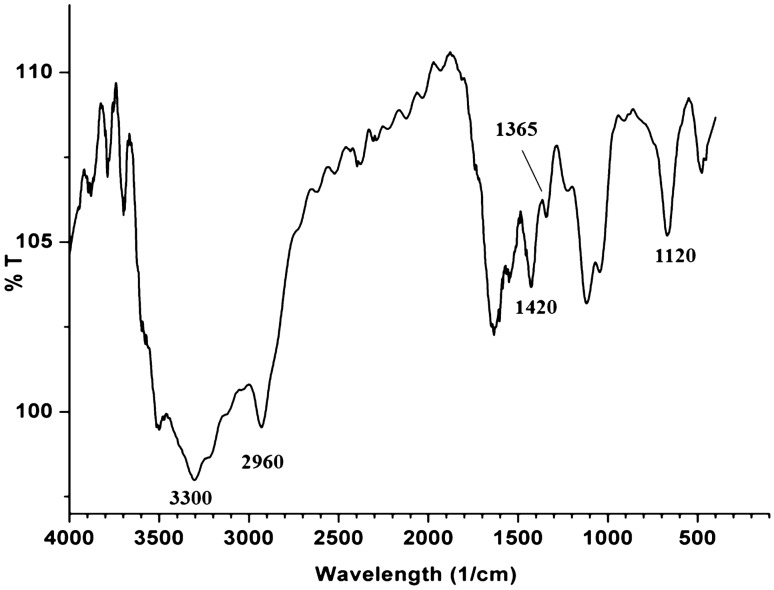
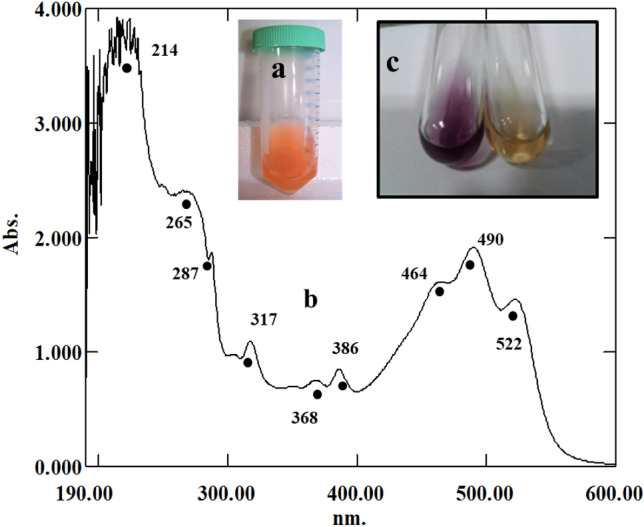
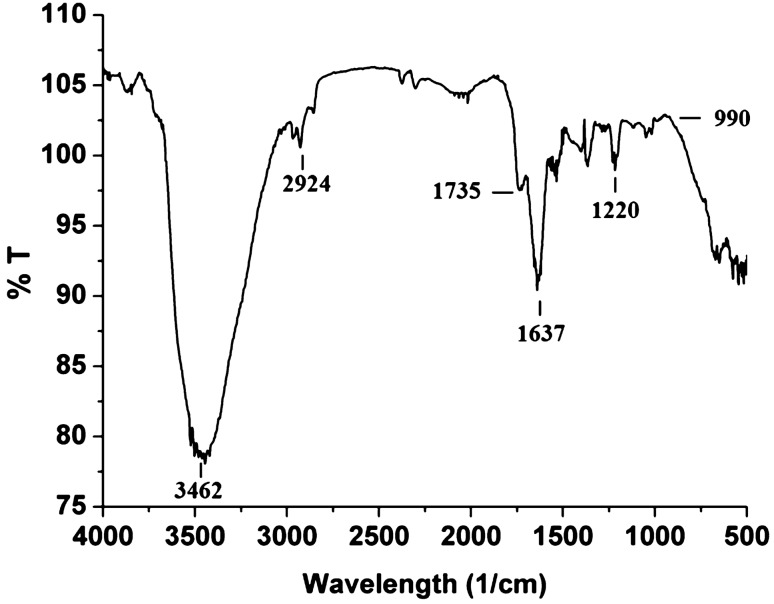
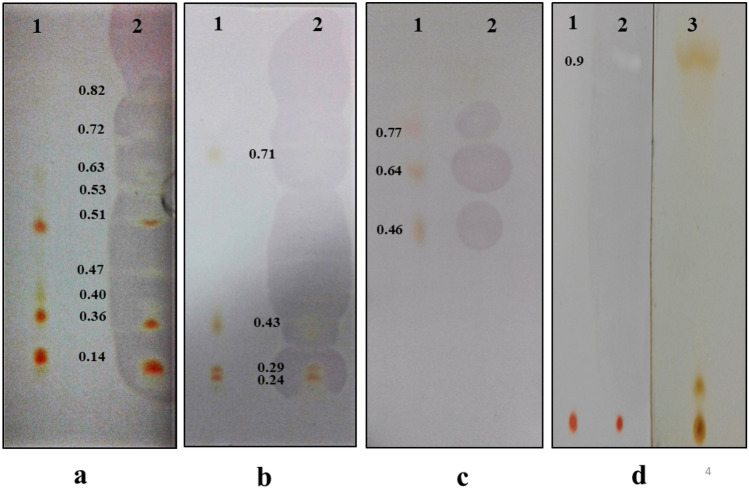
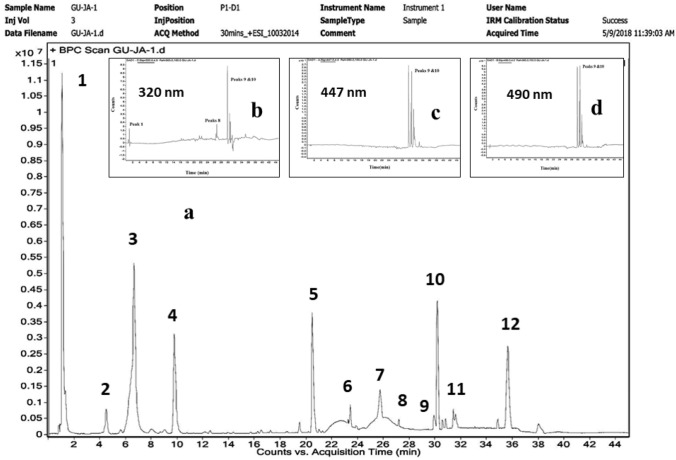
The present study was aimed to exploit the haloarchaeon Haloferax alexandrinus GUSF-1 (KF796625) for the presence of biomolecules possessing antioxidant activity. The culture produced a bright orange pigment when grown aerobically in nutrient rich medium with 25% crude solar salt. Biomolecules from cell-free supernatant and from the cells of the culture were individually extracted through the assistance of solvents of different polarities, such as ethanol, methanol and hexane, and monitored for scavenging of stable free radicals. Each of the extracts showed varying capacities to scavenge DPPH•(20, 31, and 80% DPPH• RSA; 160.19, 248.29 and 640.76 AAE µg g-1 of cells) at 1 mg mL-1. The extracellular ethanolic extract was polysaccharide in nature, equivalent to 47 µg mL-1 of glucose when assayed with the phenol-sulfuric acid method. The Fourier Transform-Infra Red spectroscopy confirmed the characteristic glycosidic peaks between 2000 and 1000 cm-1. Similarly, the glycerol diether moiety separated from hydroxylated methanolysates through thin-layer chromatography scavenged free radicals (10.47% DPPH• RSA; 80.03 AAE µg g-1 of cells). Further, the hexanolic extract exhibited spectral characteristics of red carotenoids and resolved into distinct compounds when separated by thin-layer chromatography using different developing systems. All separated compounds were positive for the DPPH• reaction (13-30% DPPH• RSA; 100-240 AAE µg g-1). Chemical profiling of the hexanolic extract using the high resolution-liquid chromatography-mass spectroscopy-diode array detector analysis confirmed the presence of different carbon length isoprenoids; C30: tetrahydrosqualene, C40: 3-hydroxyechinenone, astaxanthin, canthaxanthin, lycopene, phytofluene, phytoene and C50: bisanhydrobacterioruberin, monoanhydrobacterioruberin, bacterioruberin and haloxanthin. Thus, we conclude that the synergistic actions of all these components contribute to the antioxidant activity of the culture and that the antioxidant activity of the exopolysaccharide, glycerol dither moiety, tetrahydrosqualene, haloxanthin and 3-hydroxyechinenone is recorded as the first report for Haloferax alexandrinus GUSF-1 (KF796625). Therefore, recommended for use in microbial industrial biotechnology.
Supplementary information: The online version contains supplementary material available at 10.1007/s13205-020-02584-9.
Keywords: Carotenoids; DPPH•; Exopolysaccharides; Glycerol diether moiety; HR-LC/MS–DAD; Haloarchaea.
© King Abdulaziz City for Science and Technology 2021.
Conflict of interest statement
Conflict of interestThe authors declare that they have no conflict of interest.
Figures
References
-
- Alvares JJ, Furtado IJ. Extremely halophilic Archaea and Eubacteria are responsible for free radical scavenging activity of solar salts of Goa-India. Global J Biosci Biotechnol. 2018;7(2):242–254.
-
- Braganca JM, Furtado I. Isolation and characterisation of haloarchaea from low- salinity coastal sediments and waters of Goa. Curr Sci. 2009;96:1182–1184.
LinkOut - more resources
Full Text Sources
Other Literature Sources
Molecular Biology Databases
