


Advances in biotechnology of Emblica officinalis Gaertn. syn. Phyllanthus emblica L.: a nutraceuticals-rich fruit tree with multifaceted ethnomedicinal uses
- PMID: 33489680
- PMCID: PMC7801590
- DOI: 10.1007/s13205-020-02615-5
Advances in biotechnology of Emblica officinalis Gaertn. syn. Phyllanthus emblica L.: a nutraceuticals-rich fruit tree with multifaceted ethnomedicinal uses
Abstract
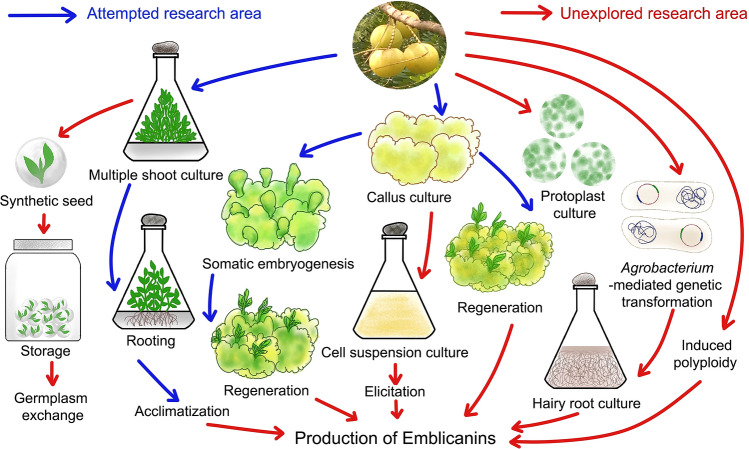
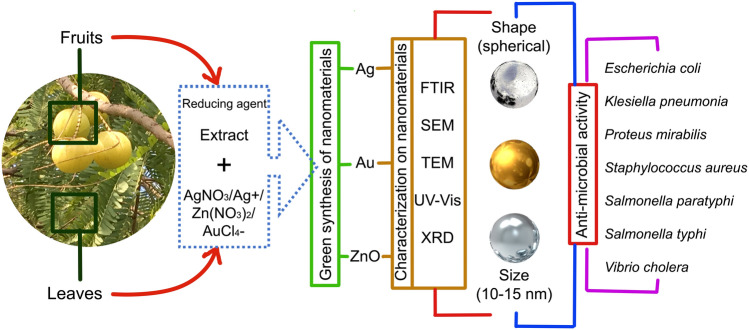
Emblica officinalis Gaertn. syn. Phyllanthus emblica L., universally known as 'Amla' or 'Aonla' or 'Indian gooseberry', is a popular fruit tree belonging to the family Euphorbiaceae and order Geraniales. It is said to be the very first tree that originated on earth, as claimed by age-old Indian mythology. Almost all parts of the tree i.e., root, bark, leaf, flower, fruit and seed are utilized in Ayurvedic and Unani medicinal formulations to improve the overall digestive process, decrease fever, act as a blood purifier, relieve asthma and cough, improve heart health, etc. This tree contains major secondary metabolites like emblicanin-A and emblicanin-B, and also is an affluent source of vitamin-C. Additionally, some other secondary metabolites like tannins, gallic acid, pyrogallol, and pectin are also present in significant amounts. Conventional propagation has been improved via suitable interventions of agrotechnology both in production and protection areas. However, the rate of propagation remains slower; therefore, attempts have been made for biotechnological advancements on E. officinalis. The present review makes an attempt to highlight the botanical description, geographical distribution, ethnopharmacological importance, conventional propagation and protection of this medicinal tree, describing the in vitro-based plant organ and tissue culture methods like direct and indirect organogenesis and somatic embryogenesis along with interventions of molecular marker-based biotechnology and nanotechnology. Further, the prospect of the yet-to-be-explored biotechnological methods for secondary metabolite enhancement like cell suspension, protoplast culture, genetic transformation, etc. and their potential for enhanced emblicanin production have also been discussed in this appraisal.
Keywords: Amla; Callus; Emblicanin; Micropropagation; Molecular markers; Nanoparticles; Somatic embryogenesis.
© The Author(s) 2021.
Conflict of interest statement
Conflict of interestAll author(s) declare that they have no conflict of interest.
Figures
References
-
- Agrawal RC, Sharma R, Maheshwari SK. Antimutagenic and wound healing activity of Emblica officinalis extract in Swiss Albino mice. Int J Sci Eng Res. 2012;3:1–12.
-
- Al-Sabah L, Sudhersan C, Jibi-Manuel S. Somatic embryogenesis and plantlet regeneration in amla. Am Eurasian J Sustain Agric. 2012;6:417–421.
-
- Ankamwar B, Damle C, Ahmad A, Sastry M. Biosynthesis of gold and silver nanoparticles using Emblica officinalis fruit extract, their phase transfer and transmetallation in an organic solution. J Nanosci Nanotechnol. 2005;5:1665–1671. - PubMed
-
- Ashwlayan VD, Singh R. Reversal effect of Phyllanthus emblica (Euphorbiaceae) Rasayana on memory deficits in mice. Int J Appl Pharm. 2011;3:10–15.
Publication types
LinkOut - more resources
Full Text Sources
Other Literature Sources
Miscellaneous
