Trends in cancer incidence and mortality rates in the United States from 1975 to 2016
- PMID: 33490183
- PMCID: PMC7812176
- DOI: 10.21037/atm-20-7841
Trends in cancer incidence and mortality rates in the United States from 1975 to 2016
Abstract
Background: Cancer is the second leading cause of death in the United States (US). The goal of this study was to characterize the trends in cancer incidence and mortality in the US from 1975 to 2016.
Methods: In this study, we analyzed 4,711,958 cancer cases and 21,489,462 cancer death cases from the Surveillance, Epidemiology and End Results (SEER) database. Cancer incidence and mortality were assessed according to sex, race, and age group. Cancer survival rates between 2010 and 2016 were also examined.
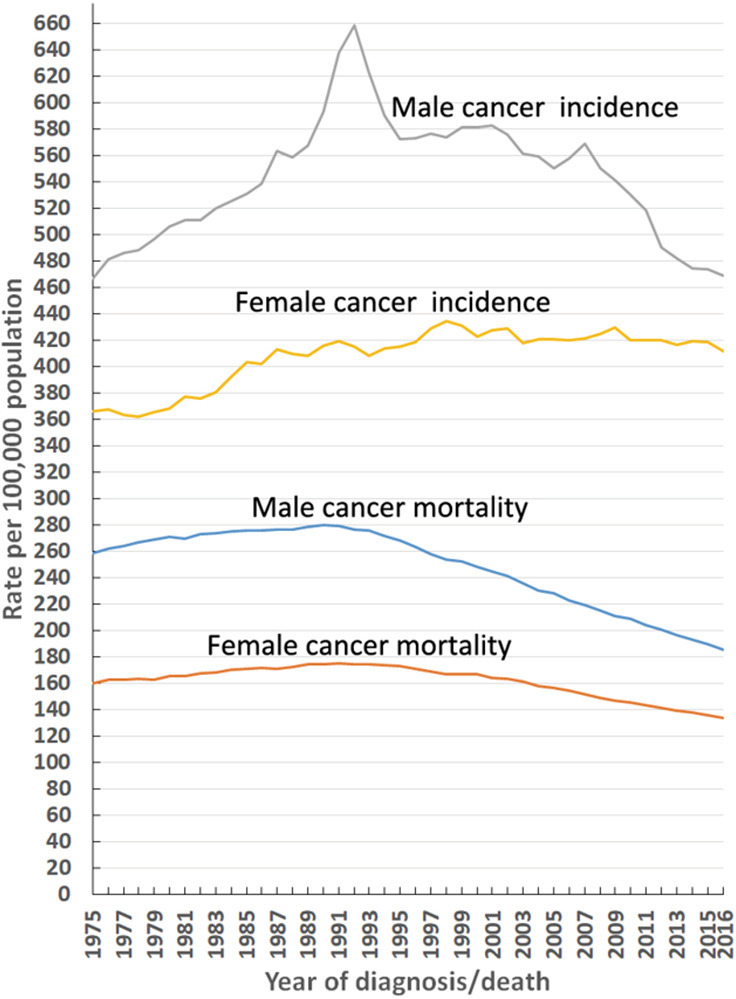
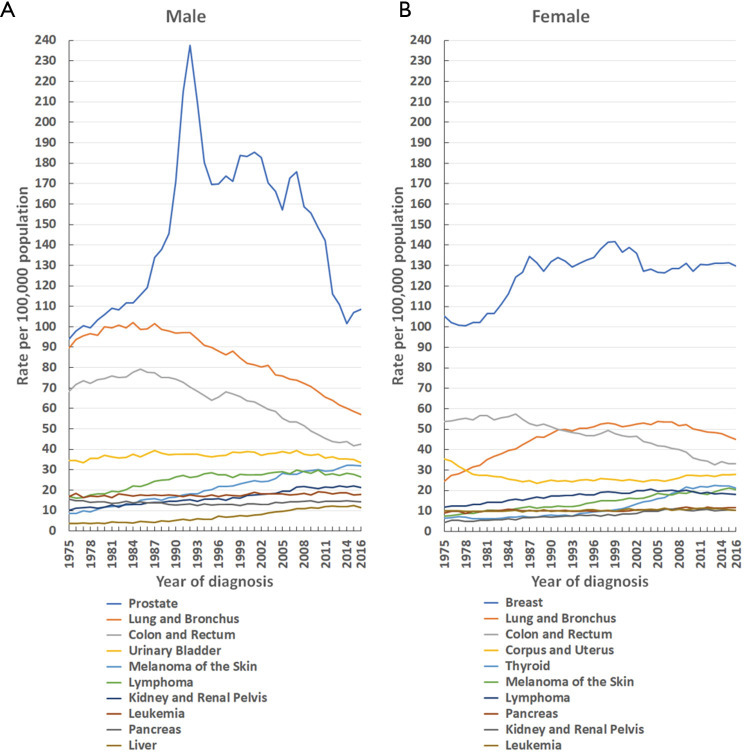
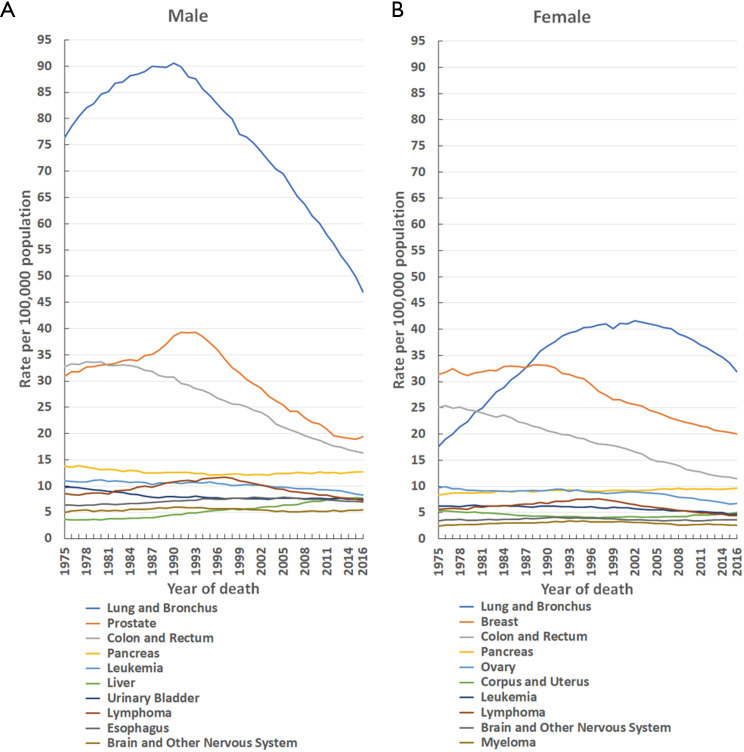
Results: The continuous decline in the overall cancer mortality rate from the early 1990s has resulted in overall decreases of 33.6% and 23.6% in the cancer mortality rates of males and females, respectively. In males, the top three leading cancers and causes of cancer death from 1975 to 2016 were prostate, lung and bronchial, and colon and rectal cancers, while in females, the top three leading cancers and causes of cancer death from 1979 to 2016 were breast, lung and bronchial, and colon and rectal cancers. The 5-year relative survival rates of males and females for all cancers combined, diagnosed from 2010-2016, were 68.5% and 70.1%, respectively. The overall cancer incidence and mortality were higher in males than females from 1975-2016. Also, black people had higher mortality and shorter survival rates for all cancers combined compared with white people (in both sexes).
Conclusions: This study presents a comprehensive overview of cancer incidence and mortality in the US over the past 42 years. Such information can provide a scientific basis for cancer prevention and control.
Keywords: Cancer incidence; breast cancer; cancer mortality; cancer survival rates; lung cancer; prostate cancer.
2020 Annals of Translational Medicine. All rights reserved.
Conflict of interest statement
Conflicts of Interest: All authors have completed the ICMJE uniform disclosure form (available at http://dx.doi.org/10.21037/atm-20-7841). The authors have no conflicts of interest to declare.
Figures
References
LinkOut - more resources
Full Text Sources
Miscellaneous