


Predictors of Urinary Tract Infections in Children and Antibiotic Susceptibility Pattern in the Buea Health District, South West Region, Cameroon
- PMID: 33490237
- PMCID: PMC7803141
- DOI: 10.1155/2020/2176569
Predictors of Urinary Tract Infections in Children and Antibiotic Susceptibility Pattern in the Buea Health District, South West Region, Cameroon
Abstract
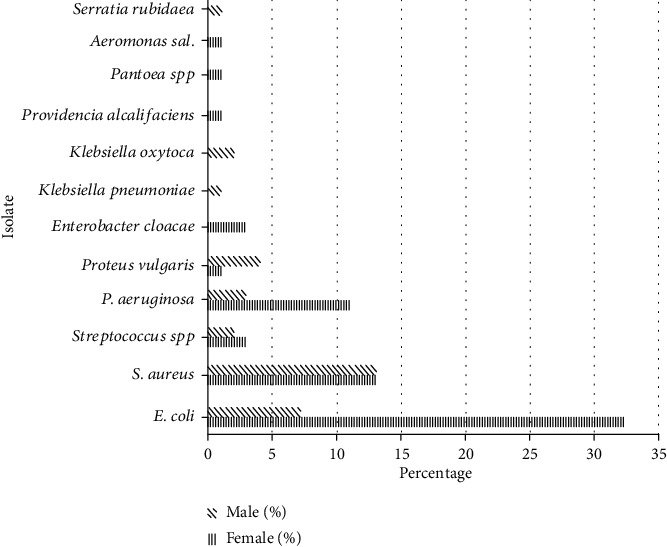
Urinary tract infections (UTI) are among the most common pediatric infections and if not promptly diagnosed and treated, it could cause long term complications. Worldwide and in Cameroon, little attention has been paid to this growing problem in the pediatric population. Identification of risk factors will contribute significantly to prevention. A cross-sectional case-control study was carried out in children ≤ 15 years to identify the risk factors of UTI, etiologic agents, and their antibiotic susceptibility. Samples (urine) were collected from in and outpatients with symptoms of UTI attending two health facilities in Buea. Controls were age- and sex-matched children in the community and those visiting these health facilities for unrelated reasons. Samples were analyzed by microscopy, culture, and antibiotic susceptibility of bacteria isolates tested by the disc diffusion technique. Questionnaires were administered to collect sociodemographic, clinical characteristics and data on risk factors. Odds ratios and bivariate and multivariate analyses were used to assess the relationship between predictors (symptoms and risk factors) and UTI. P < 0.05 was considered significant. A total of 405 participants (200 cases and 205 controls) were investigated. UTI prevalence was 12% in cases. From the UTI cases, bacteria was the major cause of infection, with E. coli (39.4%) predominating. Parasitic organisms, Trichomonas vaginalis (0.5%) and Schistosoma spp (0.5%), and yeast (6%) were also detected. Urinary urgency (F = 4.98, P = 0.027) and back pain (F = 12.37, P = 0.001) were associated to UTI following bivariate analysis. These parameters could be used to predict UTI in the pediatric population in the study area. Third generation cephalosporins: ceftriaxone (90.1%) and cefadroxil (85.4%) were the most effective and thus recommended for treatment.
Copyright © 2020 Che Pantalius Nji et al.
Conflict of interest statement
The authors declare that there is no conflict of interest regarding the publication of this paper.
Figures
References
-
- Sood A., Penna F. J., Eleswarapu S., et al. Incidence, admission rates, and economic burden of pediatric emergency department visits for urinary tract infection: data from the nationwide Emergency Department sample, 2006 to 2011. Journal of Pediatric Urology. 2015;11(5):246.e1–246.e8. doi: 10.1016/j.jpurol.2014.10.005. - DOI - PubMed
-
- Yobas R. T., Tekin R., Kelechi S., et al. Community- acquired urinary tract infections in children: pathogens, antibiotic susceptibility and seasonal changes. European Review for Medical and Pharmacological Sciences. 2013;17:971–976. - PubMed
MeSH terms
Substances
LinkOut - more resources
Full Text Sources
Medical
Miscellaneous
