


Frontotemporal dementia and COVID-19: Hypothesis generation and roadmap for future research
- PMID: 33490361
- PMCID: PMC7810128
- DOI: 10.1002/trc2.12085
Frontotemporal dementia and COVID-19: Hypothesis generation and roadmap for future research
Abstract
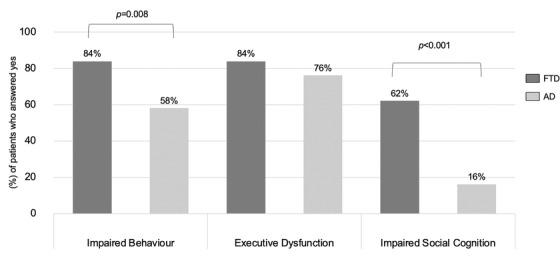
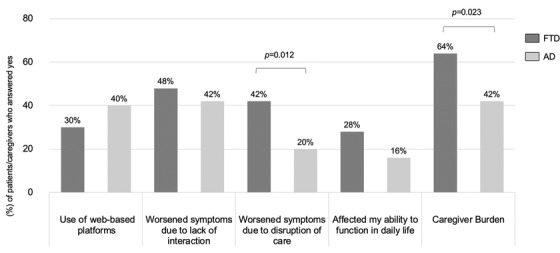
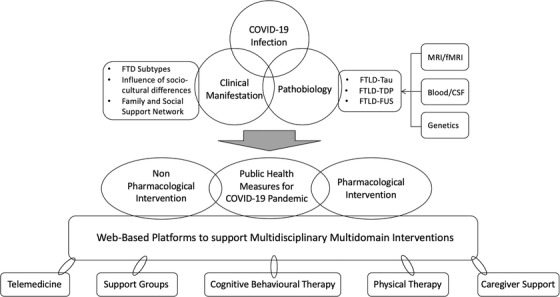
The COVID-19 pandemic has caused tremendous suffering for patients with dementia and their caregivers. We conducted a survey to study the impact of the pandemic on patients with mild frontotemporal dementia (FTD). Our preliminary findings demonstrate that patients with FTD have significant worsening in behavior and social cognition, as well as suffer greater negative consequences from disruption to health-care services compared to patients with AD. The reduced ability to cope with sudden changes to social environments places patients with FTD at increased vulnerability to COVID-19 infection as well as to poorer clinical and social outcomes. Caregivers of FTD patients also demonstrate high burden during crisis situations. A proportion of patients with FTD benefitted from use of web-based interactive platforms. In this article, we outline the priority areas for research as well as a roadmap for future collaborative research to ensure greatest benefit for patients with FTD and their caregivers.
Keywords: COVID‐19; frontotemporal dementia; research roadmap.
© 2020 The Authors. Alzheimer's & Dementia: Translational Research & Clinical Interventions published by Wiley Periodicals, Inc. on behalf of Alzheimer's Association.
Conflict of interest statement
The authors report no conflicts of interest.
Figures
References
-
- World Health Organization . Coronavirus disease (COVID‐19) pandemic. 2020. https://www.who.int/emergencies/diseases/novel-coronavirus-2019.
-
- Williamson E, Walker AJ, Bhaskaran KJ, et al. OpenSAFELY: factors associated with COVID‐19‐related hospital death in the linked electronic health records of 17 million adult NHS patients. MedRxiv. 2020.