The biological pathways of Alzheimer disease: a review
- PMID: 33490374
- PMCID: PMC7815481
- DOI: 10.3934/Neuroscience.2021005
The biological pathways of Alzheimer disease: a review
Abstract
Alzheimer disease is a progressive neurodegenerative disorder, mainly affecting older people, which severely impairs patients' quality of life. In the recent years, the number of affected individuals has seen a rapid increase. It is estimated that up to 107 million subjects will be affected by 2050 worldwide. Research in this area has revealed a lot about the biological and environmental underpinnings of Alzheimer, especially its correlation with β-Amyloid and Tau related mechanics; however, the precise molecular events and biological pathways behind the disease are yet to be discovered. In this review, we focus our attention on the biological mechanics that may lie behind Alzheimer development. In particular, we briefly describe the genetic elements and discuss about specific biological processes potentially associated with the disease.
Keywords: Alzheimer disease; biological pathways; immune system; oxidative stress.
© 2021 the Author(s), licensee AIMS Press.
Conflict of interest statement
Conflicts of interest: The authors declare there are no conflicts of interest.
Figures
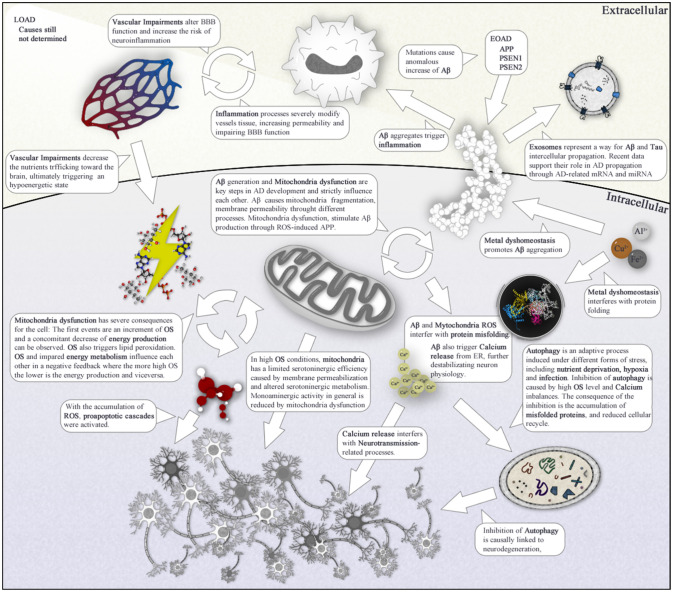
References
-
- APA. 2020 Alzheimer's disease facts and figures. Alzheimers Dement. 2020 in press.
-
- Brookmeyer R, Johnson E, Ziegler-Graham K, et al. Forecasting the global burden of Alzheimer's disease. Alzheimers Dement. 2007;3:186–191. - PubMed
-
- Prince M, Bryce R, Albanese E, et al. The global prevalence of dementia: a systematic review and metaanalysis. Alzheimers Dement. 2013;9:63–75. e2. - PubMed
-
- Alzheimer's Association. 2018 Alzheimer's disease facts and figures. Alzheimers Dement. 2018;14:367–429.
Publication types
LinkOut - more resources
Full Text Sources
Other Literature Sources