


Prevalence and Factors Associated with Pelvic Girdle Pain During Pregnancy in Australian Women: A Cross-Sectional Study
- PMID: 33492087
- PMCID: PMC8221721
- DOI: 10.1097/BRS.0000000000003954
Prevalence and Factors Associated with Pelvic Girdle Pain During Pregnancy in Australian Women: A Cross-Sectional Study
Abstract
Study design: Cross-sectional study conducted between December 2017 and October 2019.
Objective: To determine the prevalence and risk factors associated with pregnancy-related pelvic girdle pain (PPGP) in Australia.
Summary of background data: PPGP is a common condition worldwide yet the prevalence and associated risk factors are not known in Australia.
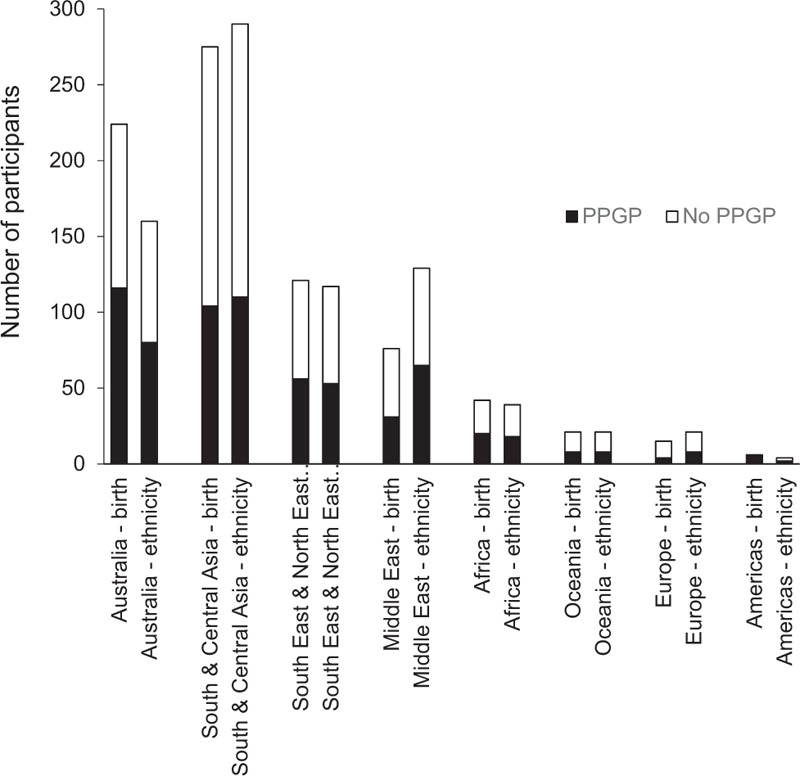
Methods: A random sample of pregnant women (N = 780) of (mean [SD]) 31 (5) years of age between 14 and 38 weeks gestation attending ante-natal care in a tertiary referral hospital in Sydney, Australia was conducted. The main outcome measure was point-prevalence of PPGP as classified by recommended guidelines including a physical examination. A number of potential risk factors, including socio-demographic characteristics, country of birth, ethnicity, history of low back pain (LBP) and PPGP, family history of PPGP, occupational factors, and physical activity were investigated with logistic regression.
Results: The point-prevalence of PPGP in a random sample of 780 Australian women was 44% with the odds of having PPGP increasing with each additional week of gestation (odds ratio [OR]) (OR 1.02). Increasing parity (P = 0.03, OR 1.15), country of birth (P = 0.03), and greater duration of time spent standing (P = 0.009, OR 1.06) were associated with PPGP. The strongest predictors of PPGP were previous LBP and/or PPGP both pregnancy (P < 0.001, OR 4.35) and not pregnancy related (P < 0.001, OR 2.24), and a family history of PPGP (P < 0.001, OR 3.76).
Conclusion: The prevalence of PPGP in Australian women was high with almost half the sample classified with PPGP, matching data reported worldwide. The identified risk factors associated with PPGP can be included in routine ante-natal care to screen women and identify those at risk of this common and disabling condition.Level of Evidence: 1.
Copyright © 2021 The Author(s). Published by Wolters Kluwer Health, Inc.
Figures
References
-
- Van de Pol G, van Brummen HJ, Bruinse HW, et al. Pregnancy-related pelvic girdle pain in the Netherlands. Acta Obstet Gynecol Scand 2007; 86:416–422. - PubMed
-
- Kovacs FM, Garcia E, Royuela A, et al. Prevalence and factors associated with low back pain and pelvic girdle pain during pregnancy. Spine (Phila Pa 1976) 2012; 37:1516–1533. - PubMed
MeSH terms
LinkOut - more resources
Full Text Sources
Other Literature Sources
Medical
Research Materials
Miscellaneous
