Review
. 2021 Feb 24;121(4):2413-2444.
doi: 10.1021/acs.chemrev.0c00825. Epub 2021 Jan 25.

Hexadehydro-Diels-Alder Reaction: Benzyne Generation via Cycloisomerization of Tethered Triynes

Affiliations
Review

Hexadehydro-Diels-Alder Reaction: Benzyne Generation via Cycloisomerization of Tethered Triynes

Lucas L Fluegel et al. Chem Rev. .

Abstract

The hexadehydro-Diels-Alder (HDDA) reaction is the thermal cyclization of an alkyne and a 1,3-diyne to generate a benzyne intermediate. This is then rapidly trapped, in situ, by a variety of species to yield highly functionalized benzenoid products. In contrast to nearly all other methods of aryne generation, no other reagents are required to produce an HDDA benzyne. The versatile and customizable nature of the process has attracted much attention due not only to its synthetic potential but also because of the fundamental mechanistic insights the studies often afford. The authors have attempted to provide here a comprehensive compilation of publications appearing by mid-2020 that describe experimental results of HDDA reactions.


Conflict of interest statement

The authors declare no competing financial interests.

Figures
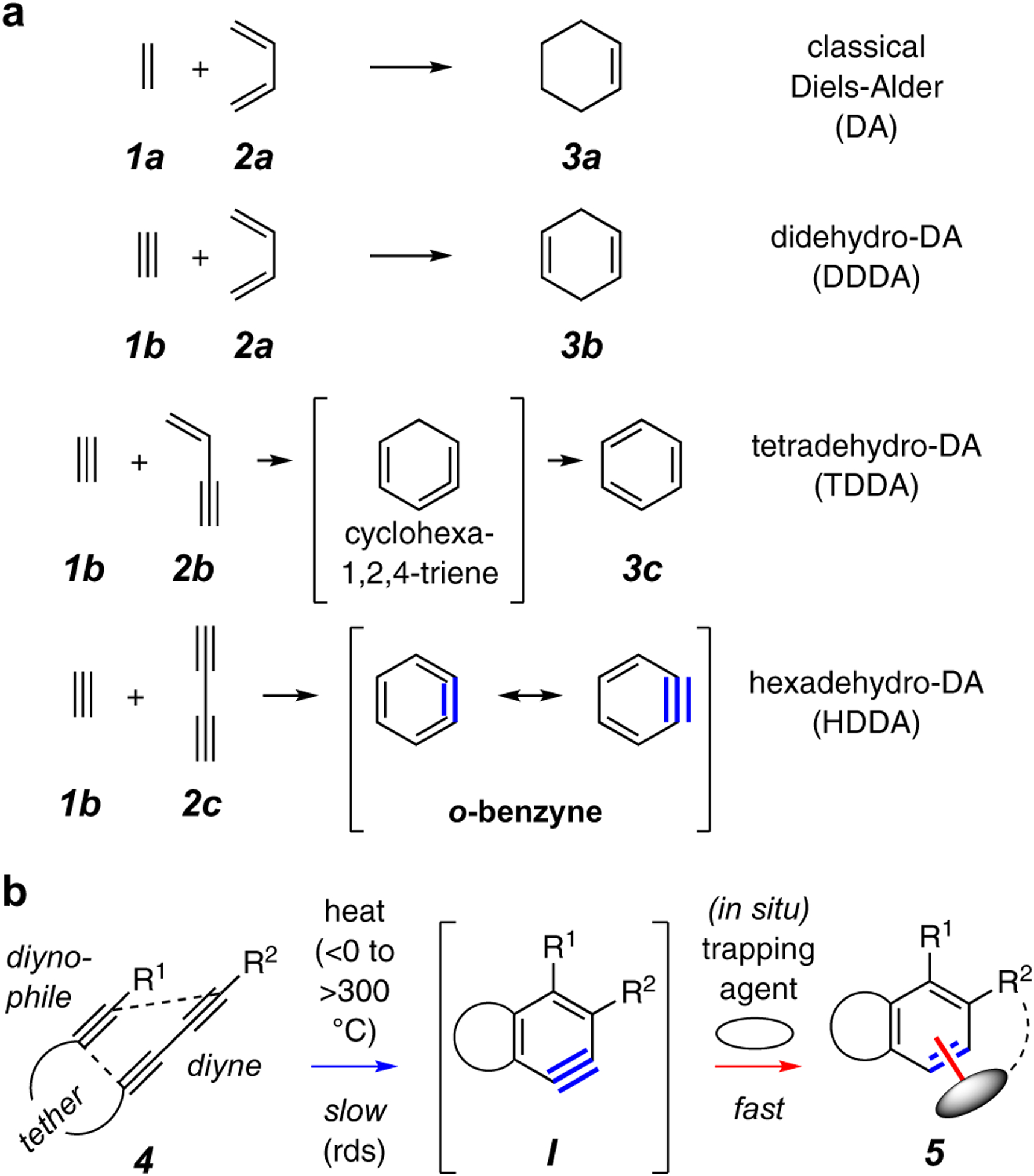
Figure 1.
Figure 1.
(a) The family of prototypical classical and various dehydro-Diels-Alder reactions of increasing oxidation states. (b) The generic intramolecular hexadehydro-Diels-Alder (HDDA) cyclization and benzyne-trapping reaction.
Figure 2.
Figure 2.
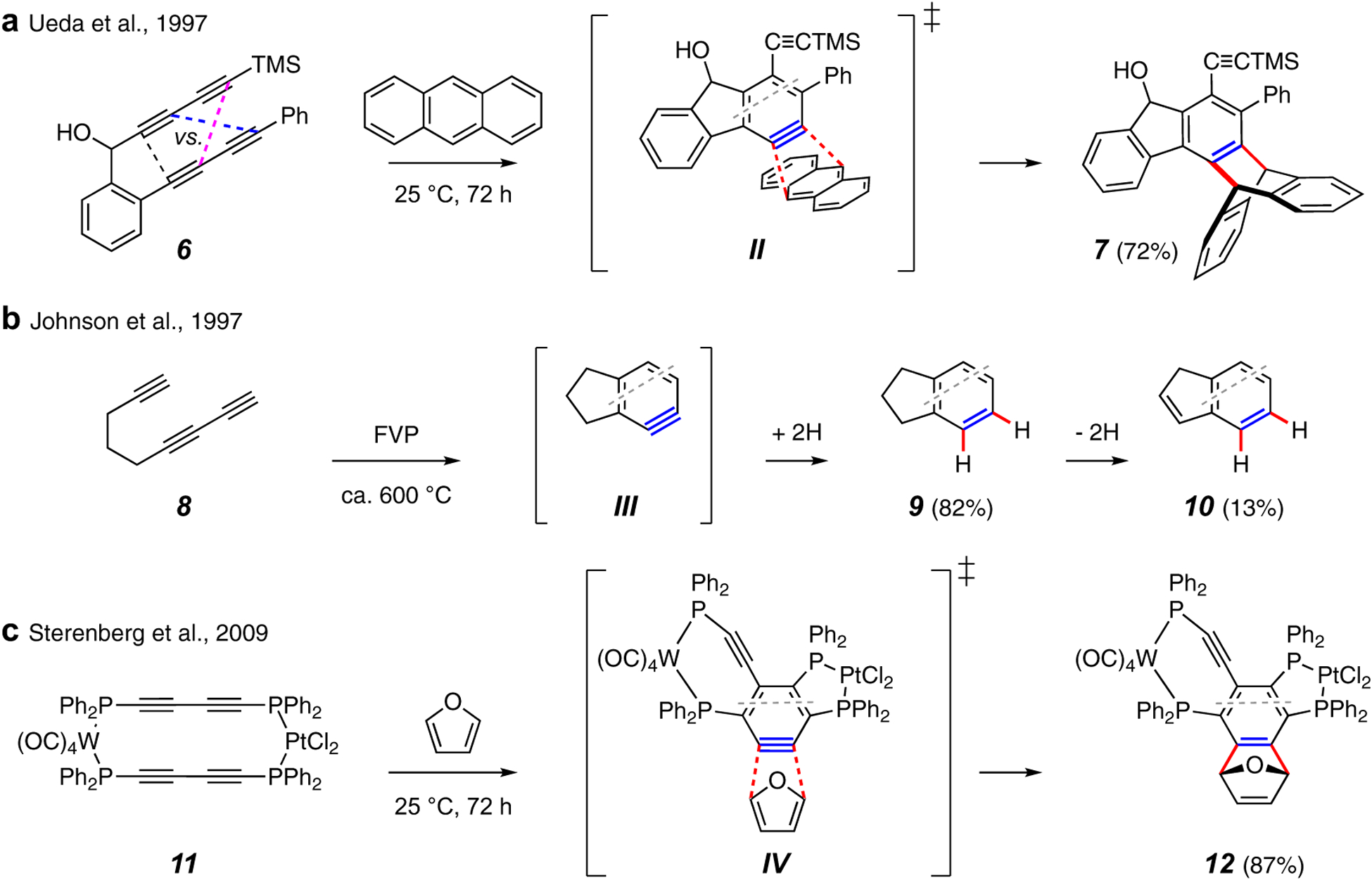
Earliest reports of cyclization of a triyne to a benzyne intermediate. (a)formattingasusedbyChemRev Ueda and coworkers (1997): trapping of the benzyne II with anthracene gives the triptycene 7. (b) Johnson and coworkers (1997): high temperature (short time) cycloisomerization of 8 to 10 via III and 9. (c) Sterenberg and Tsui (2009): intra-annular cyclization of dinuclear complex 11 in the presence of furan gives the adduct 12 via IV.
Figure 3.
Figure 3.
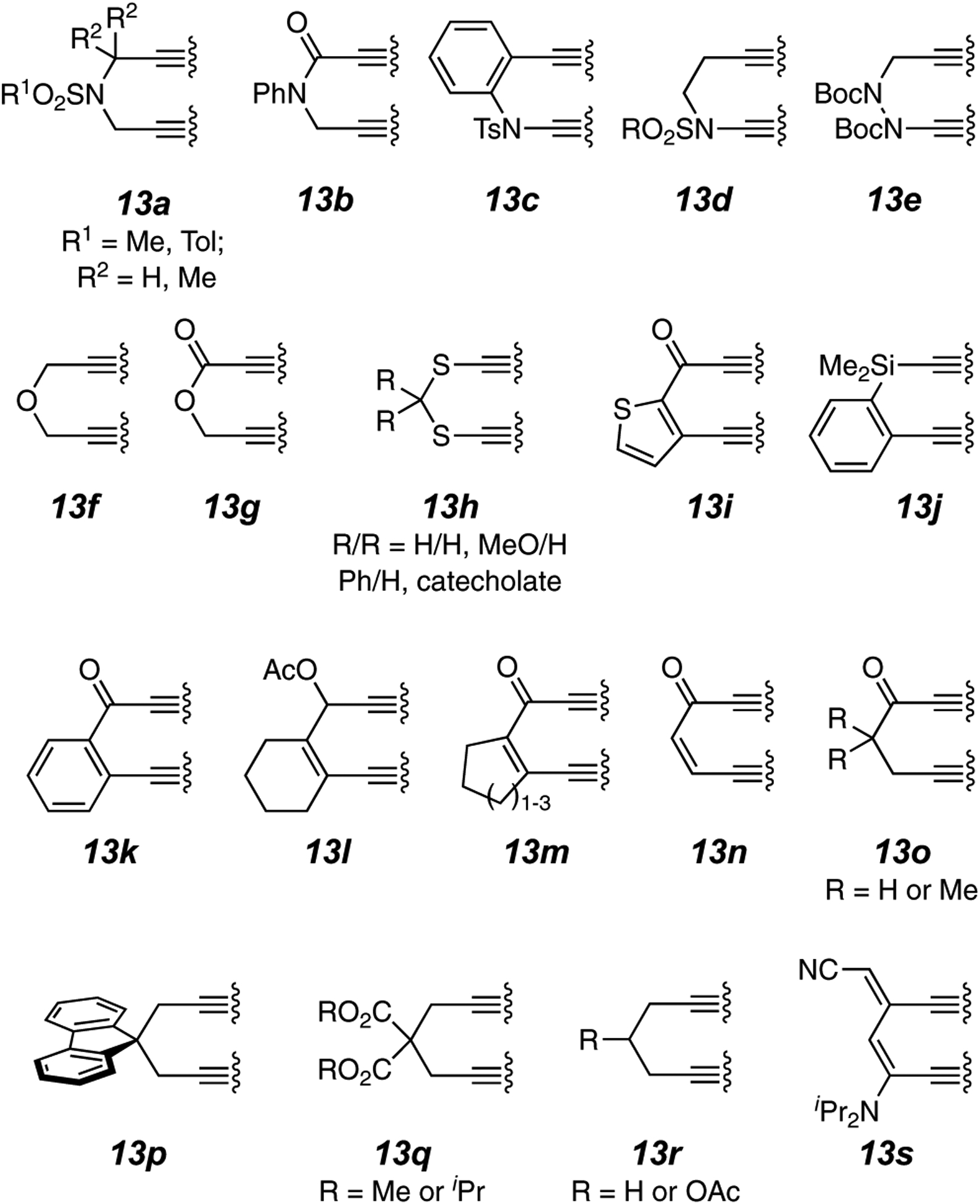
The majority of the three-atom tethers present in reported HDDA polyyne substrates.
Figure 4.
Figure 4.
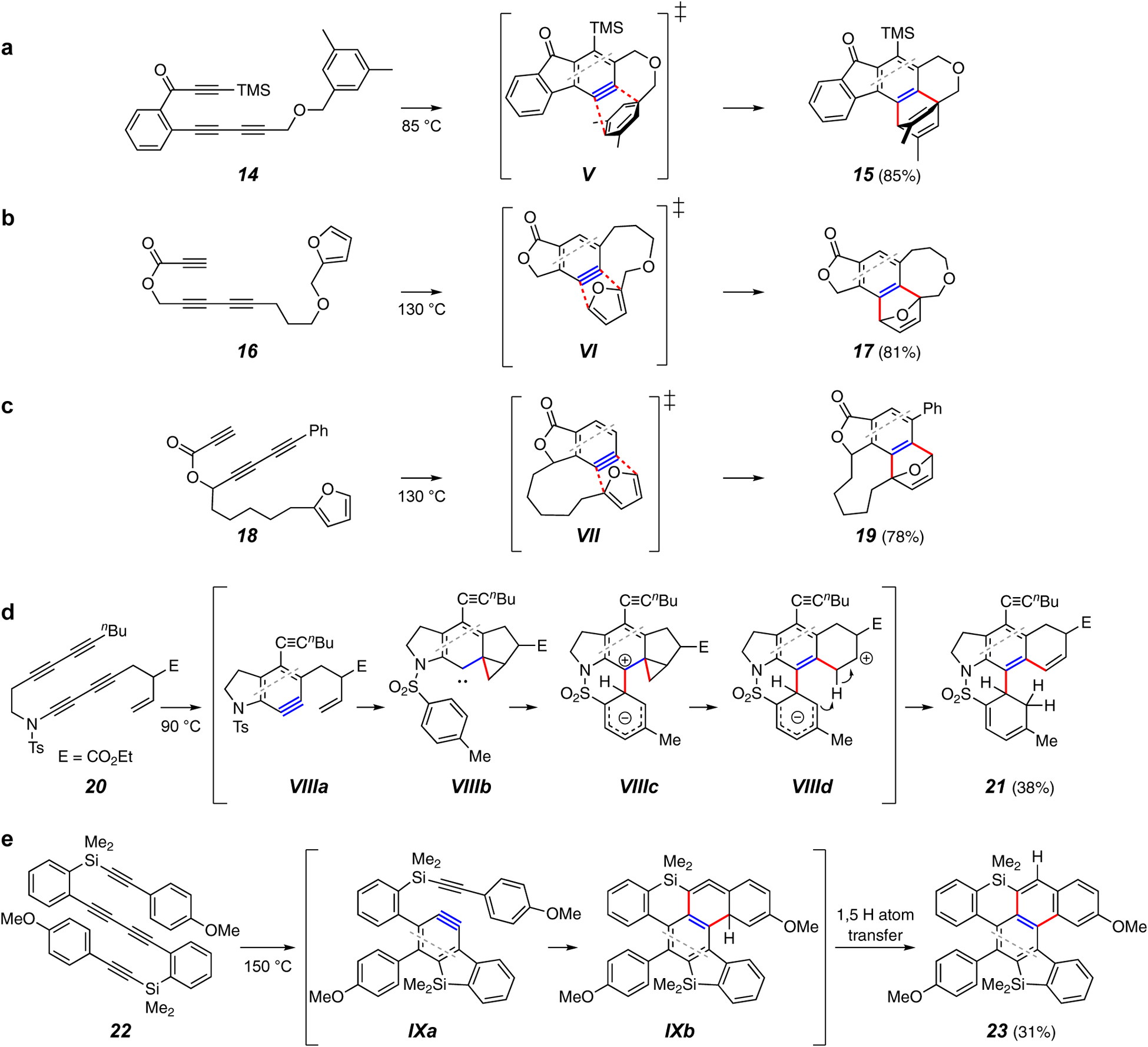
Intramolecular traps forming two C–C bonds.
Figure 5.
Figure 5.
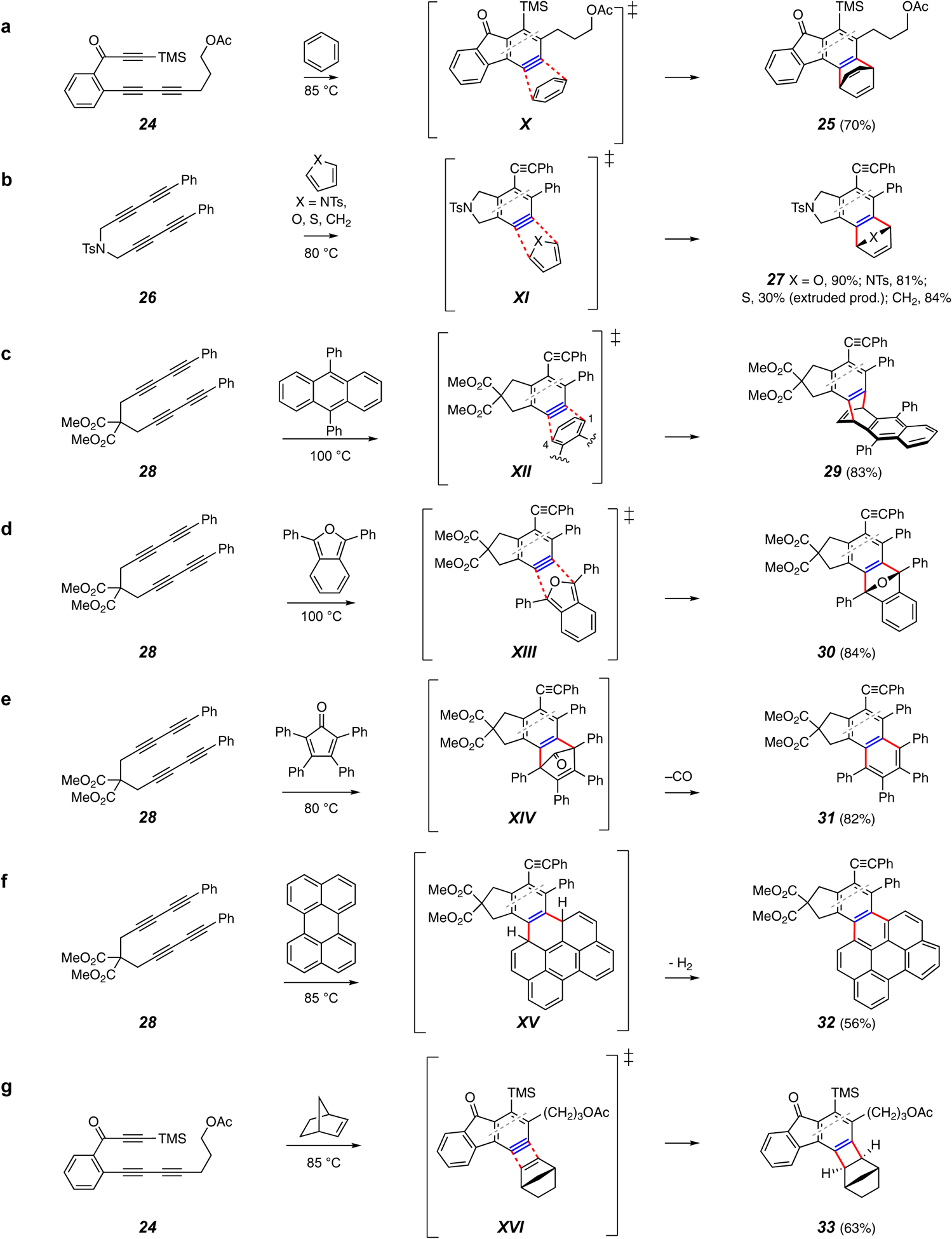
Intermolecular traps forming two C–C bonds.
Figure 5.
Figure 5.
Intermolecular traps forming two C–C bonds.
Figure 6.
Figure 6.
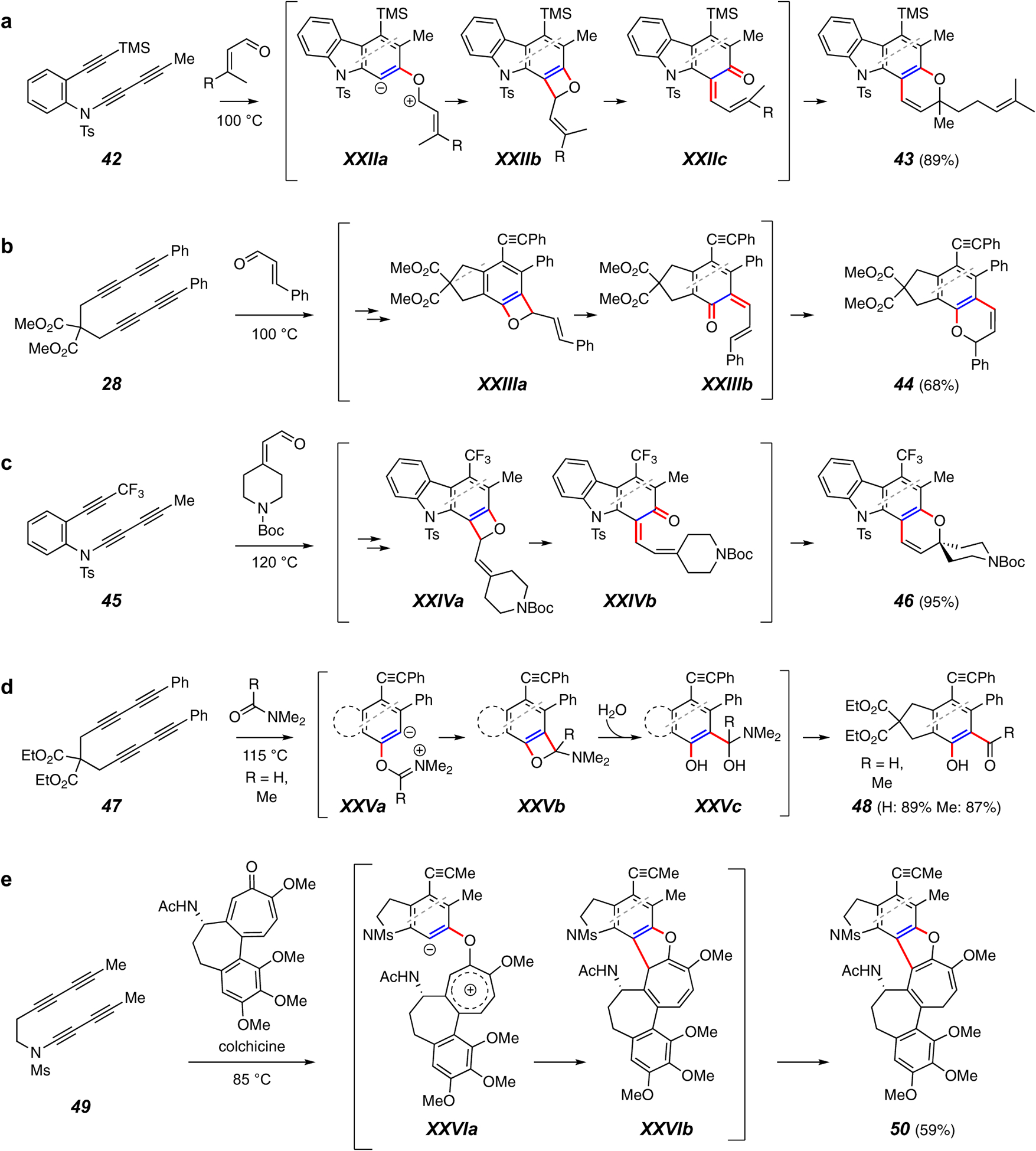
Trapping reactions forming a C–C and a C–O bond. (a-c) Reactions with enals begins with benzoxetene formation prior to electrocyclic opening and reclosure to produce benzopyrans. (d) Nucleophilic amides capture benzynes to product o-hydroxy aldehydes and ketones such as 48. (e) The cycloheptatrienone in colchicine captures an HDDA-produced benzyne to give the benzofuran derivative 50.
Figure 7.
Figure 7.
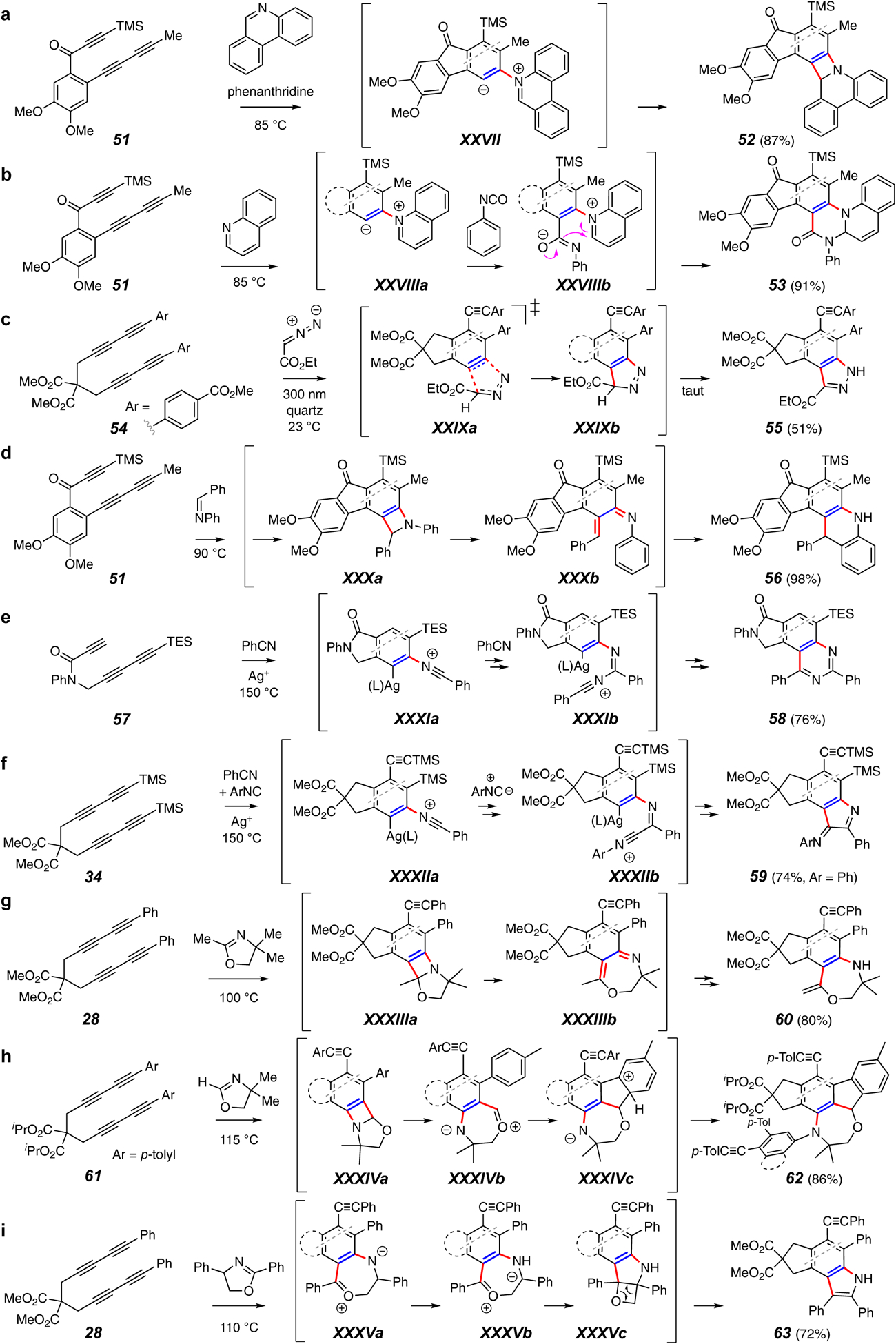
Trapping reactions forming a C–C and a C–N bond.
Figure 8.
Figure 8.
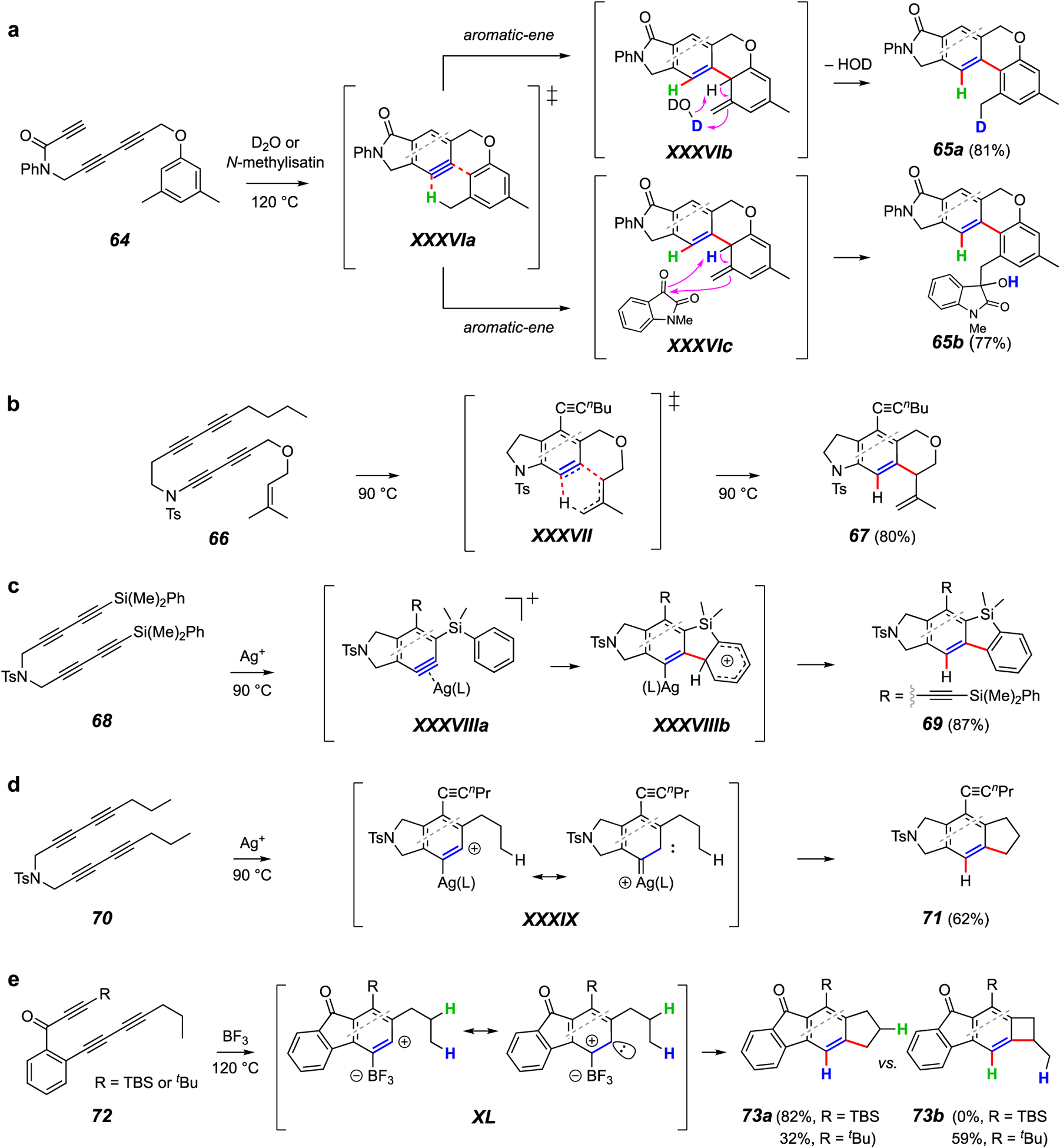
(Intramolecular) trapping reactions forming a C–C and a C–H bond.
Figure 9.
Figure 9.
(Intermolecular) trapping reactions forming a C–C and a C–H bond.
Figure 10.
Figure 10.
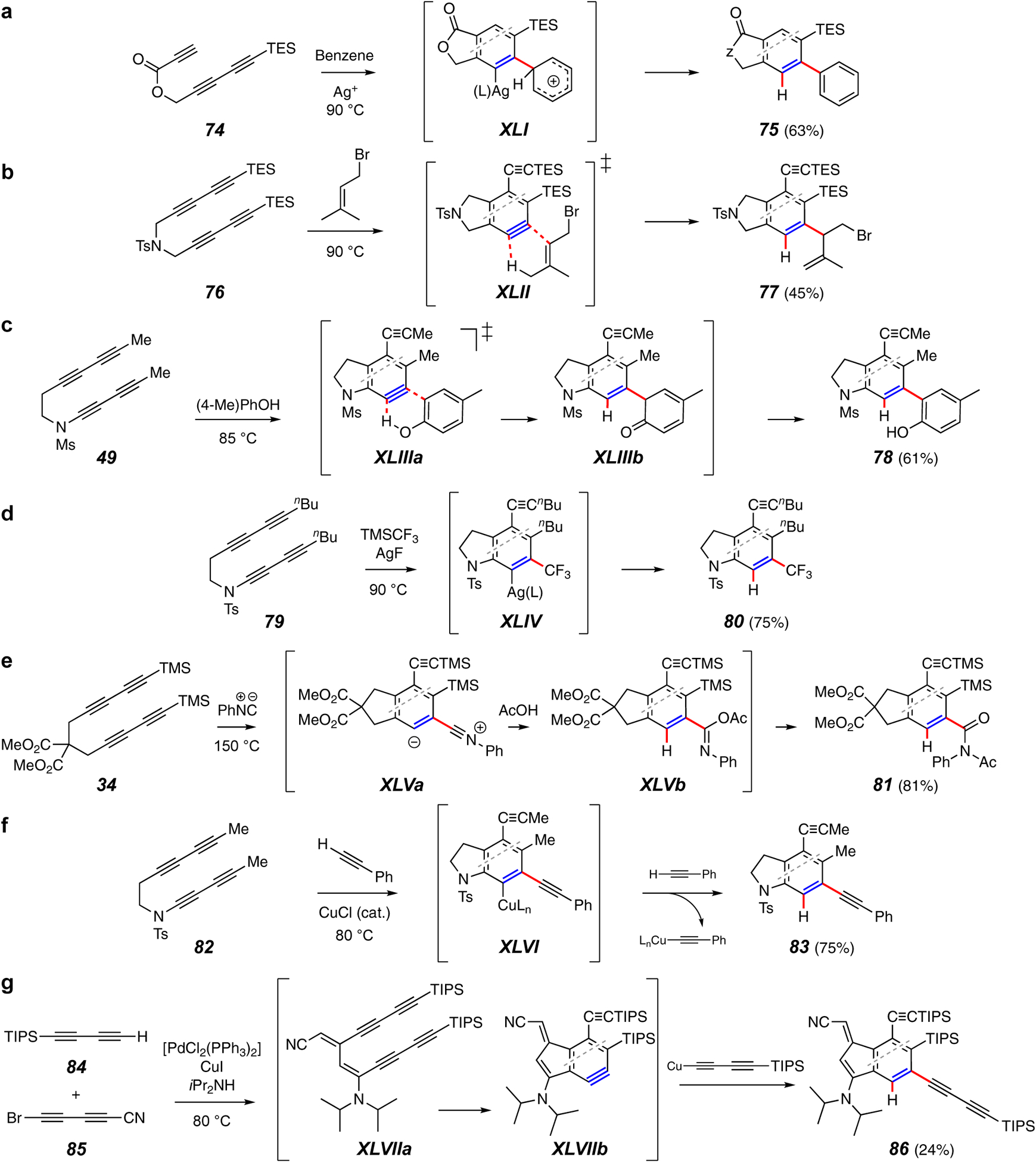
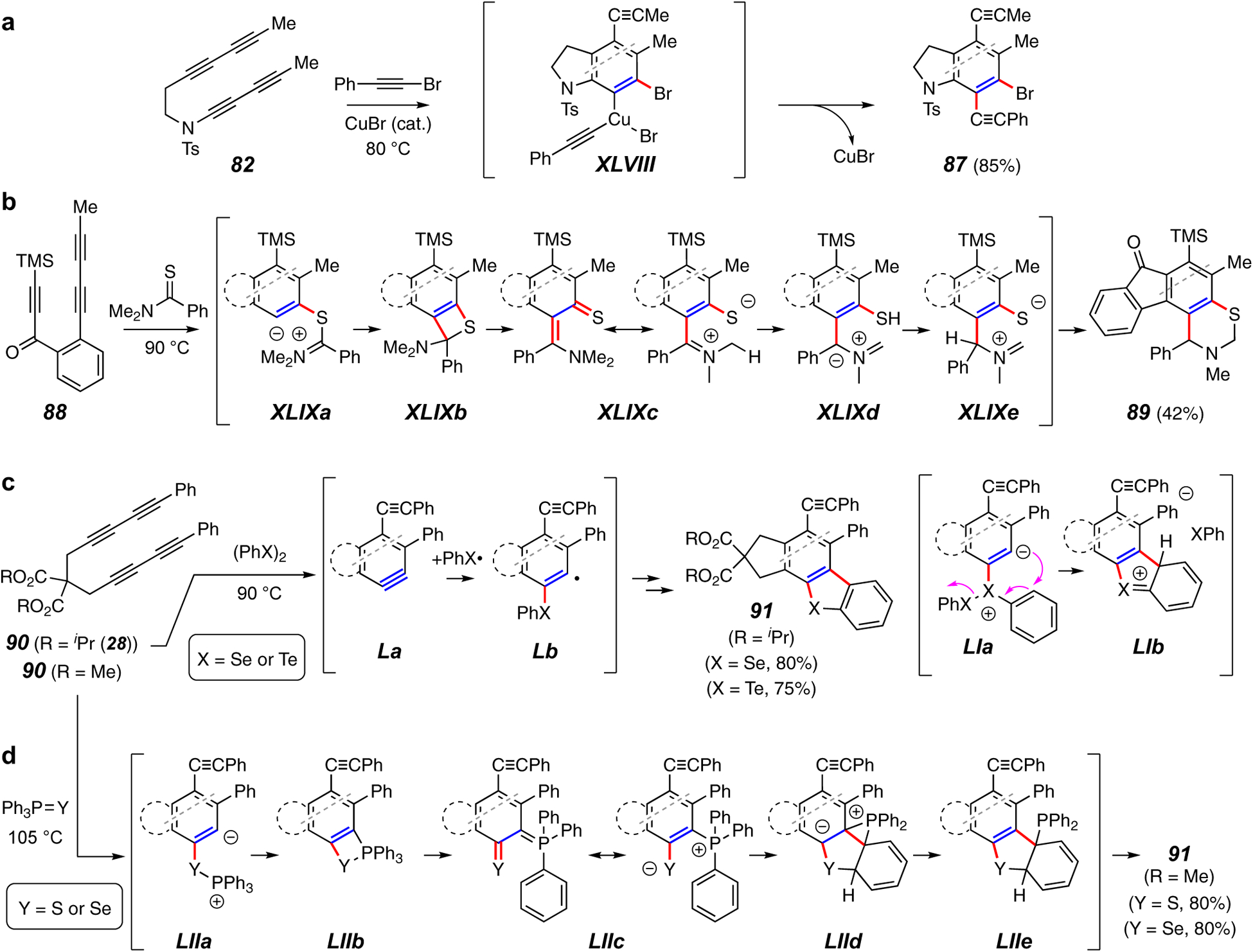
Trapping reactions forming a C–C and a C–Br, C–S, C–Se, or C–Te bond.
Figure 11.
Figure 11.
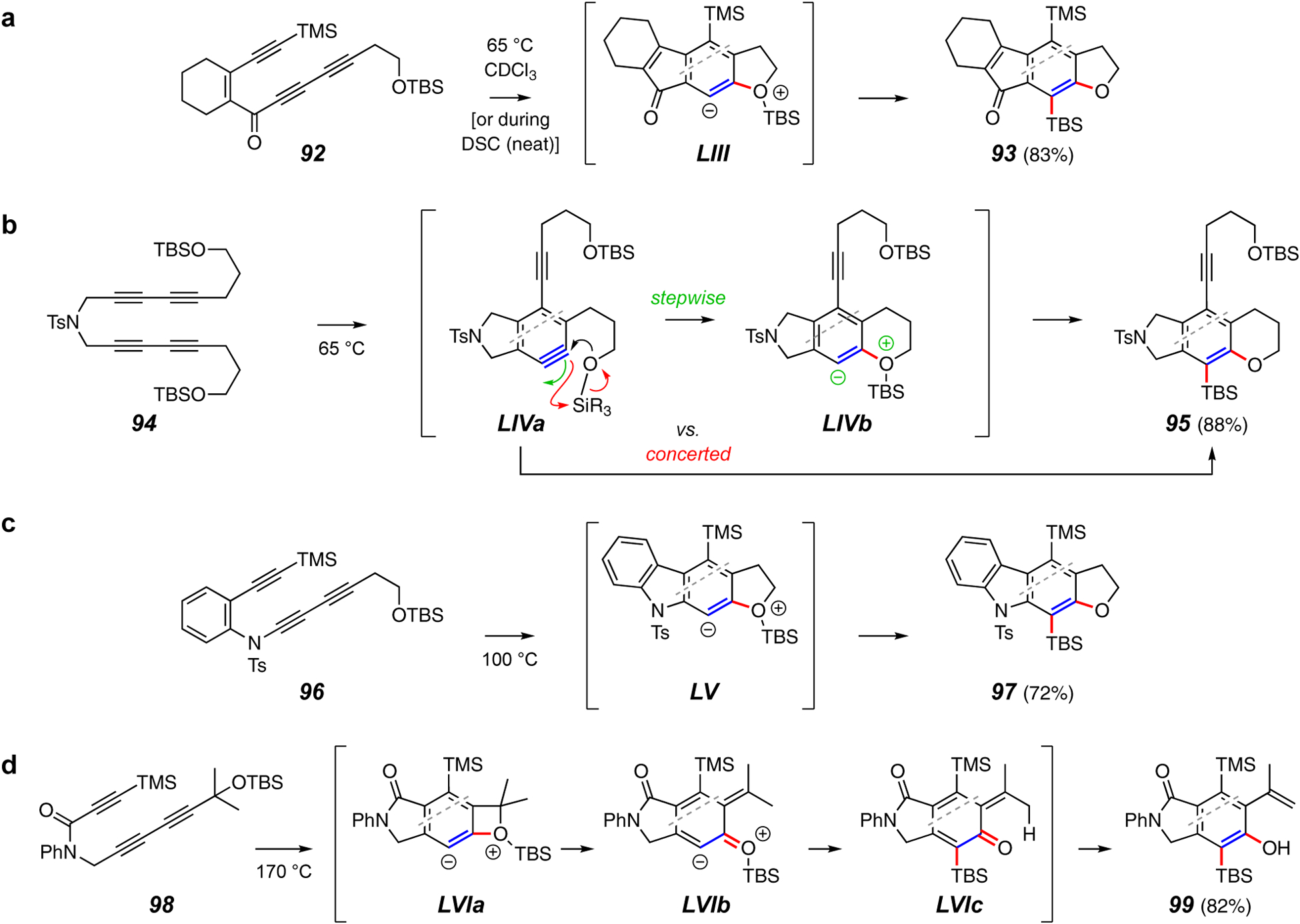
Trapping reactions forming a C–O and a C–Si bond.
Figure 12.
Figure 12.
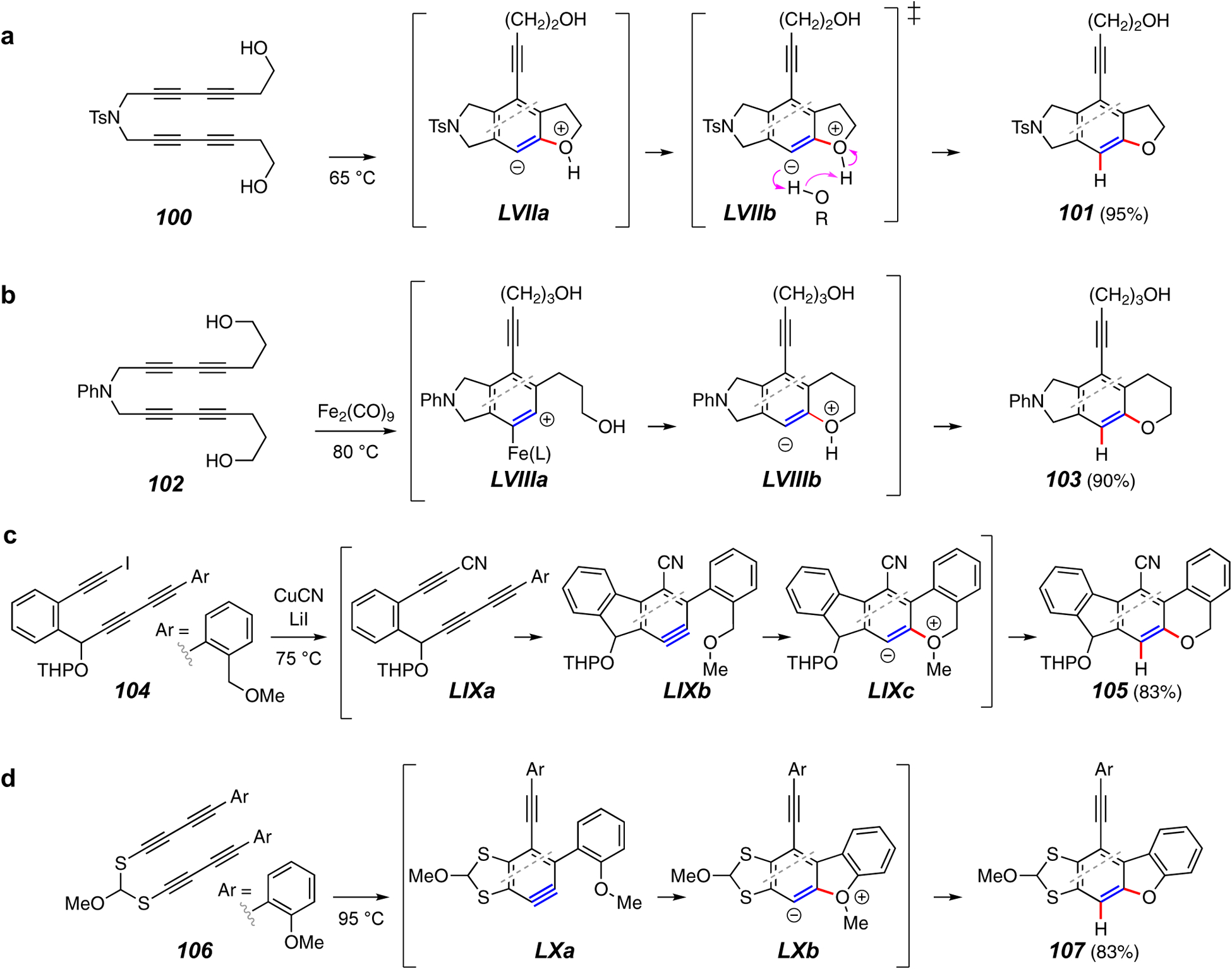
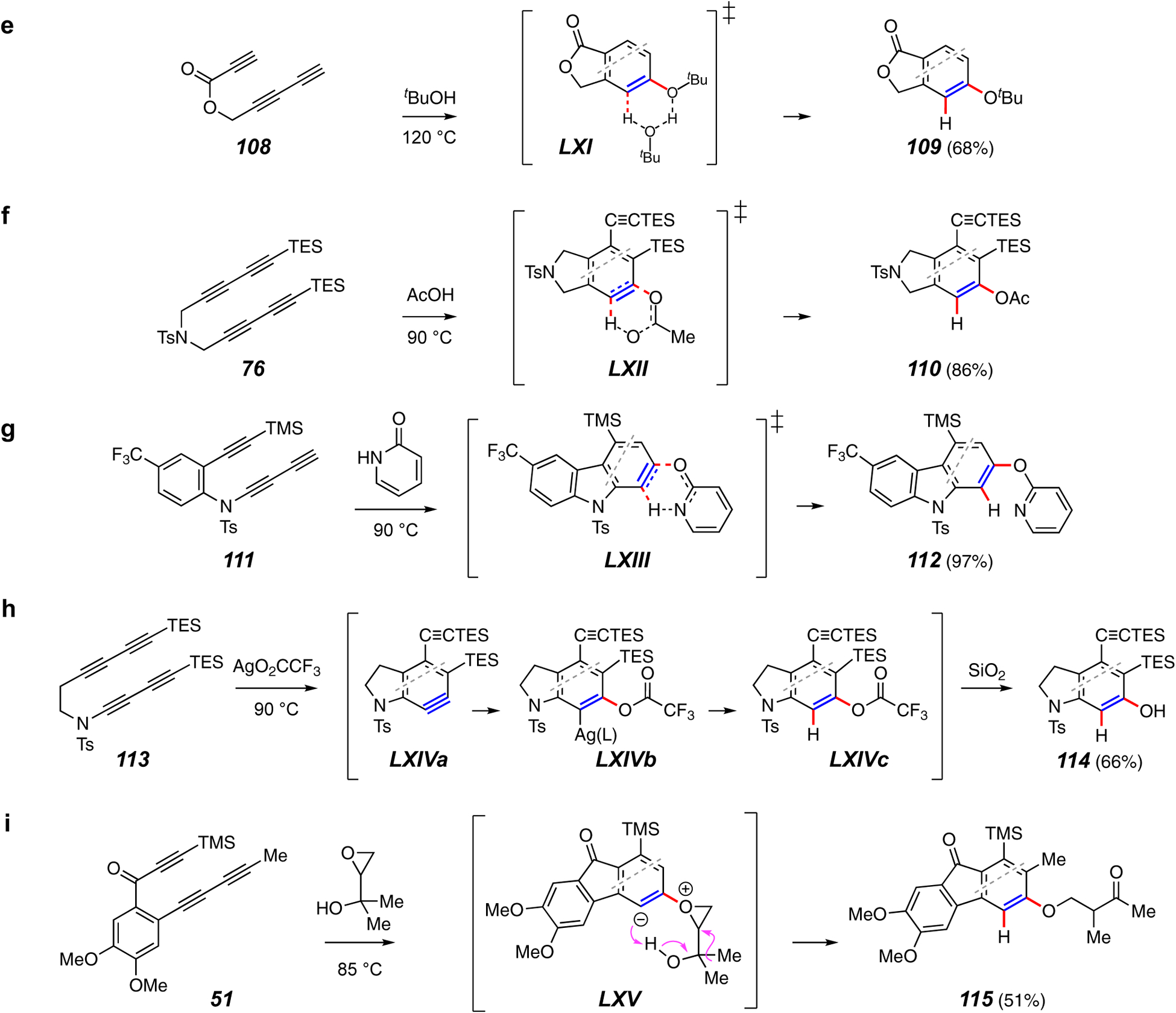
Trapping reactions forming a C–O and a C–H bond.
Figure 12.
Figure 12.
Trapping reactions forming a C–O and a C–H bond.
Figure 13.
Figure 13.
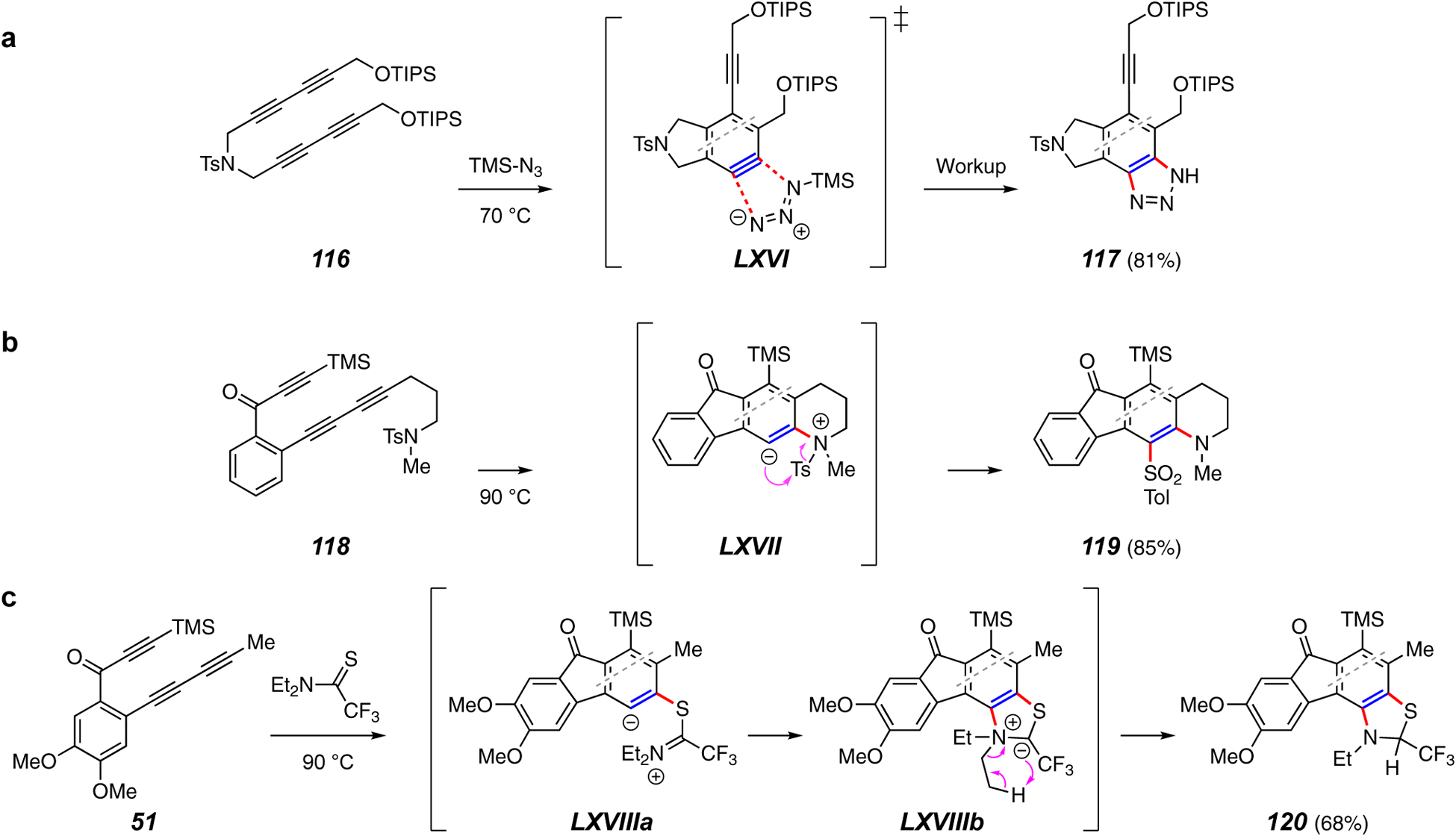
Trapping reactions forming two C–N bonds or a C–N and a C–S bond.
Figure 14.
Figure 14.
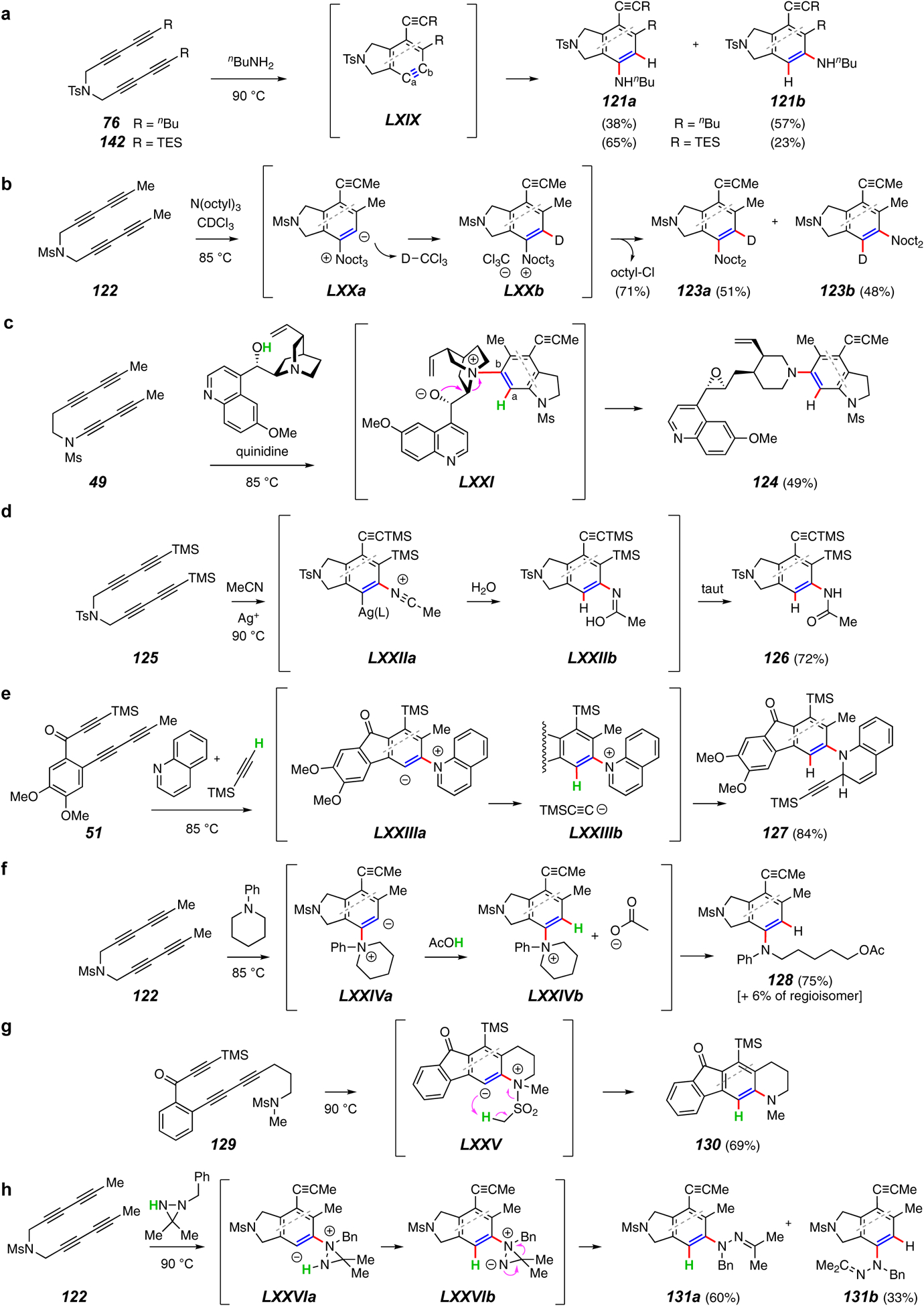
Trapping reactions forming a C–N and a C–H bond.
Figure 15.
Figure 15.
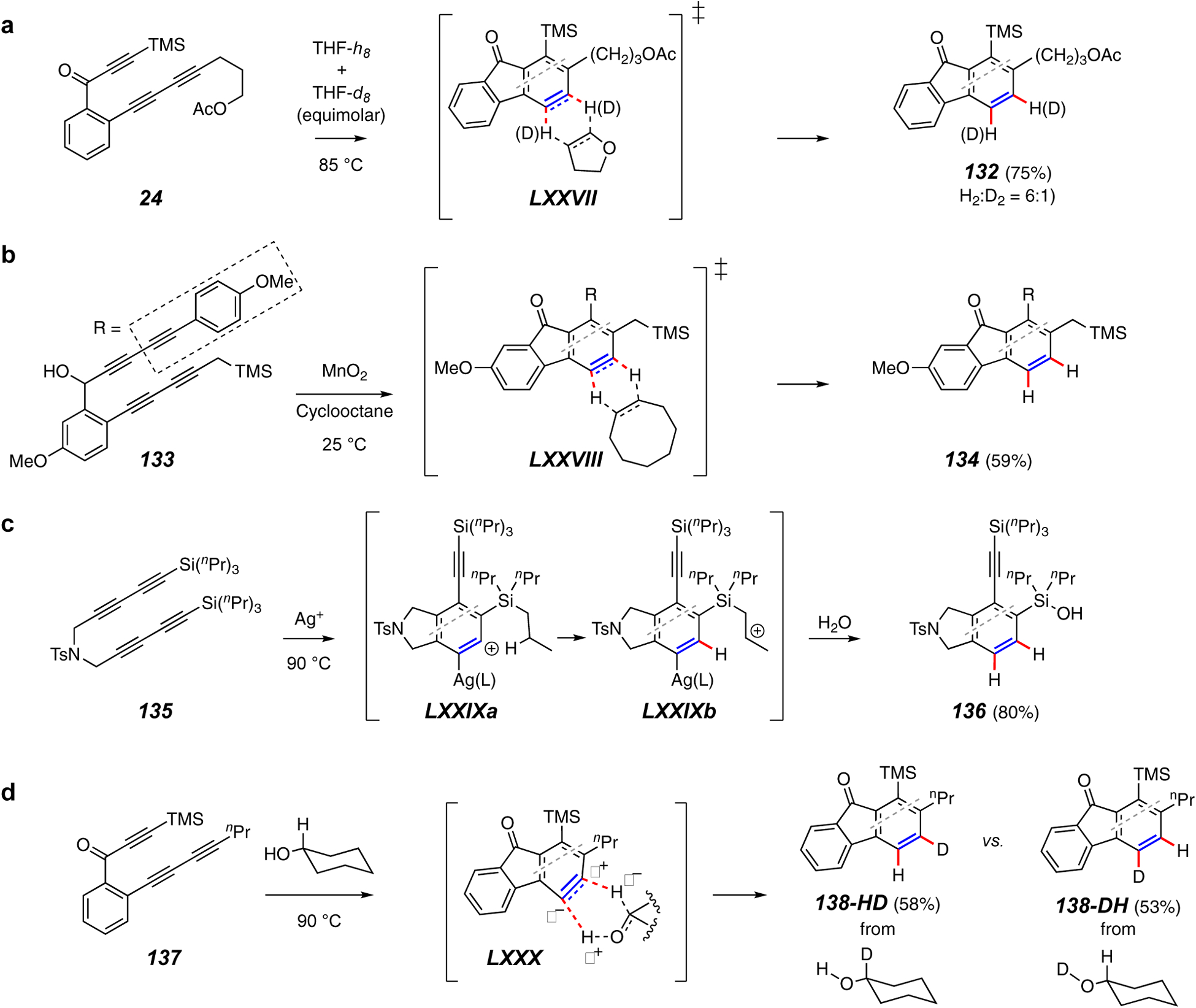
Trapping reactions forming two C–H bonds.
Figure 16.
Figure 16.
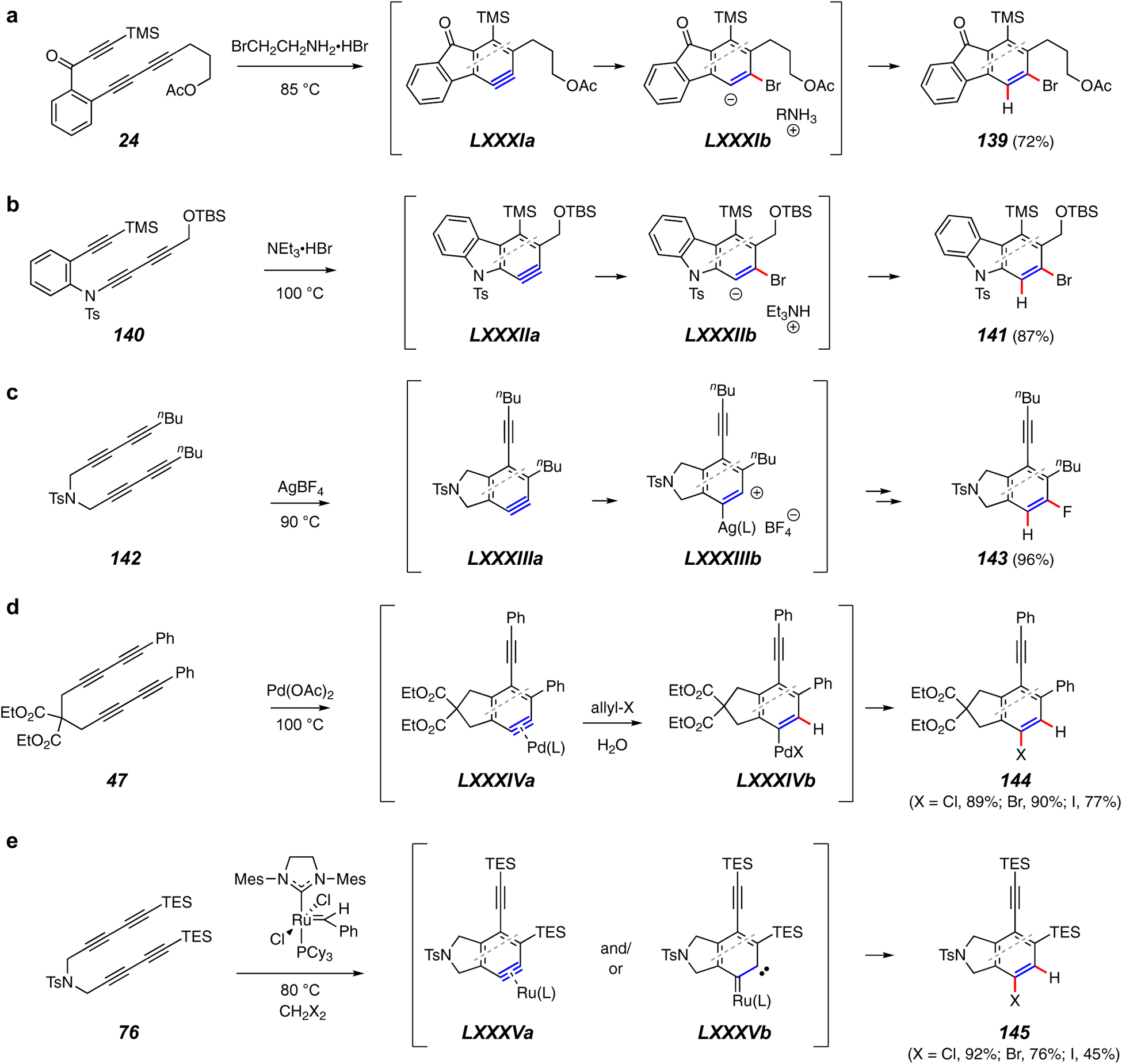
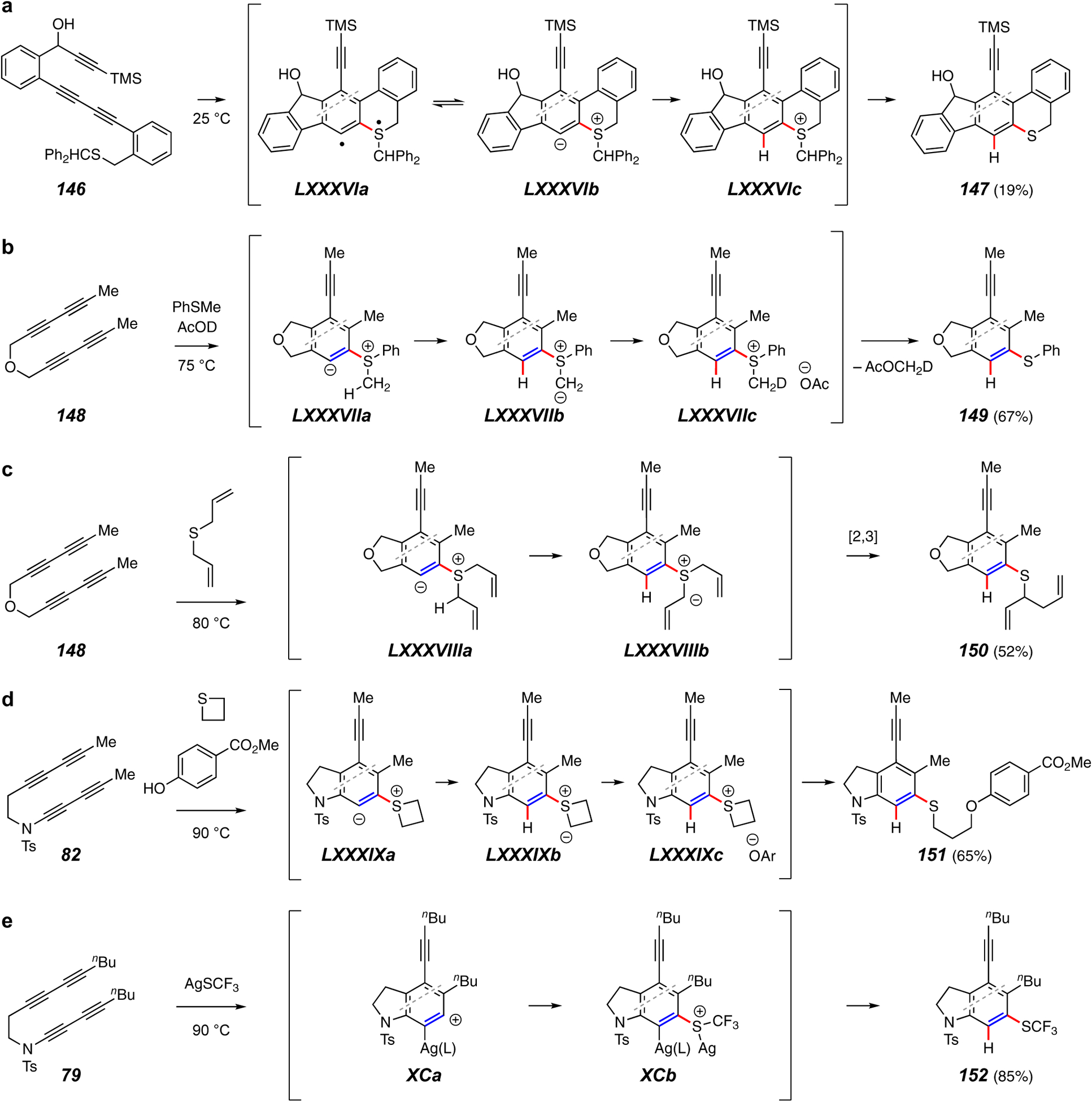
Trapping reactions forming a C–H bond and a C–Hal bond.
Figure 17.
Figure 17.
Trapping reactions that form a C–H bond and a C–S bond.
Figure 18.
Figure 18.
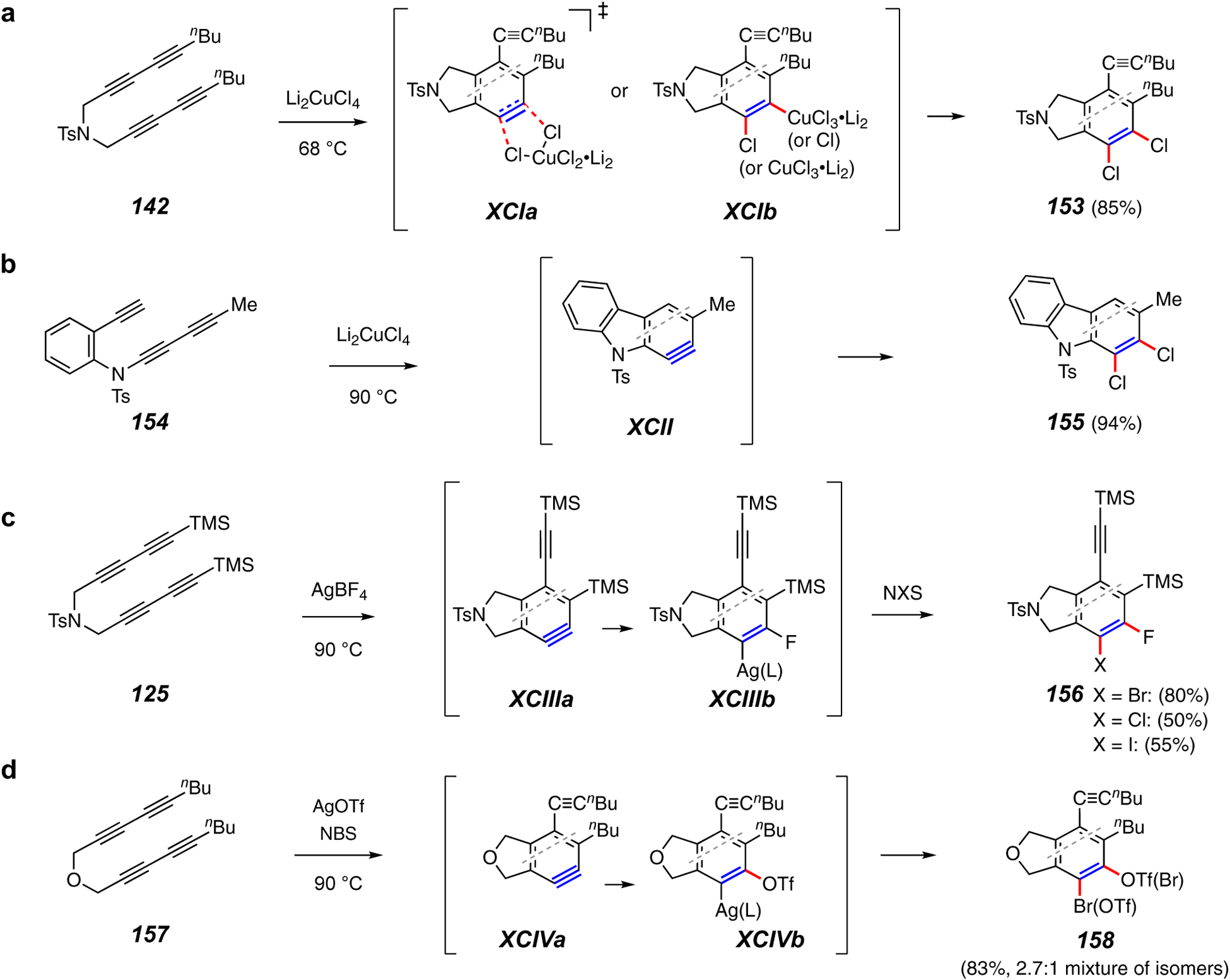
Trapping reactions that form a C–Hal bond as well as a (second) C–Hal or a C–O bond.
Figure 19.
Figure 19.
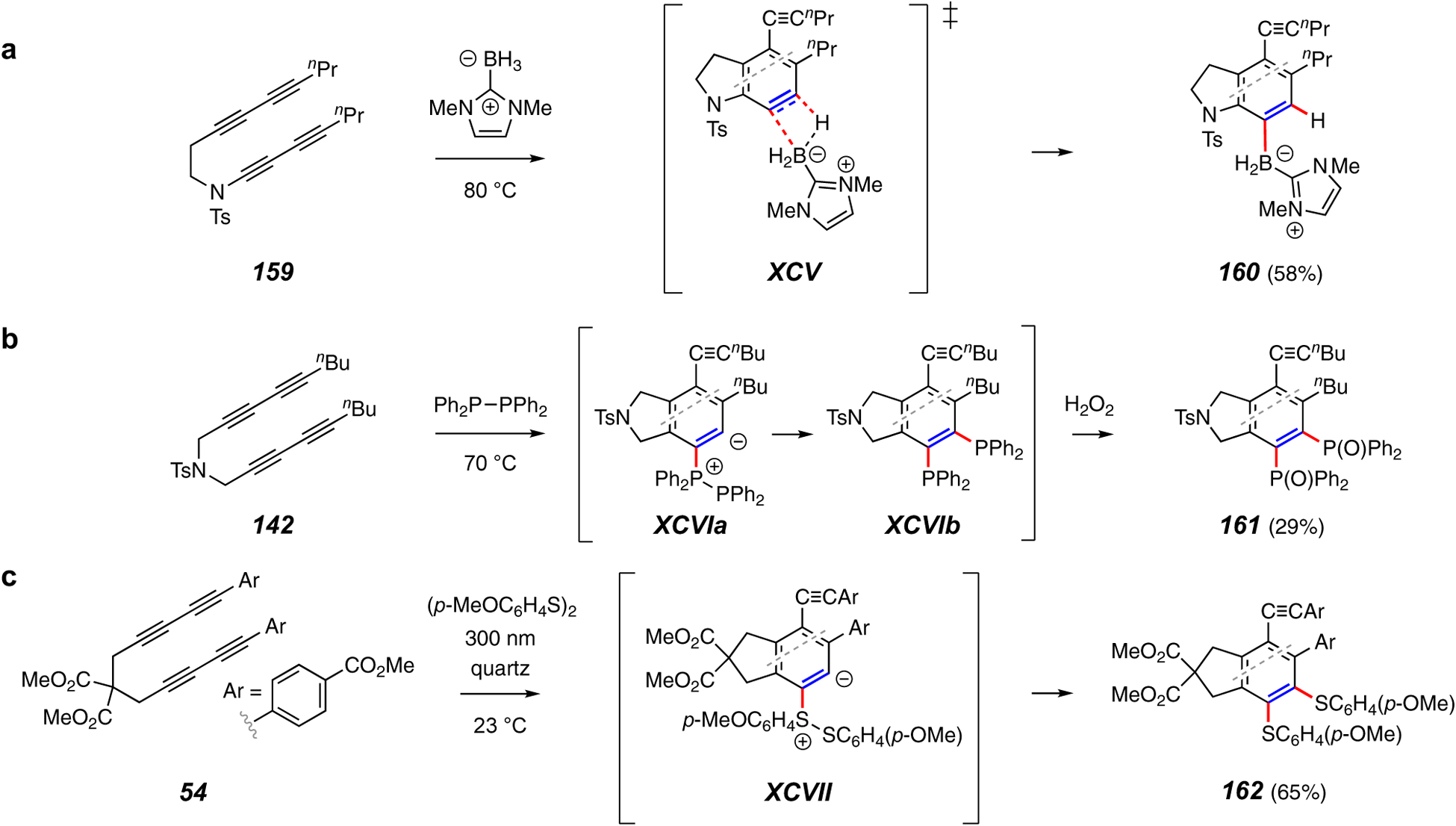
Trapping reactions that form (a) a C–H and a C–B bond, (b) two C–P bonds, and (c) two C–S bonds.
Figure 20.
Figure 20.
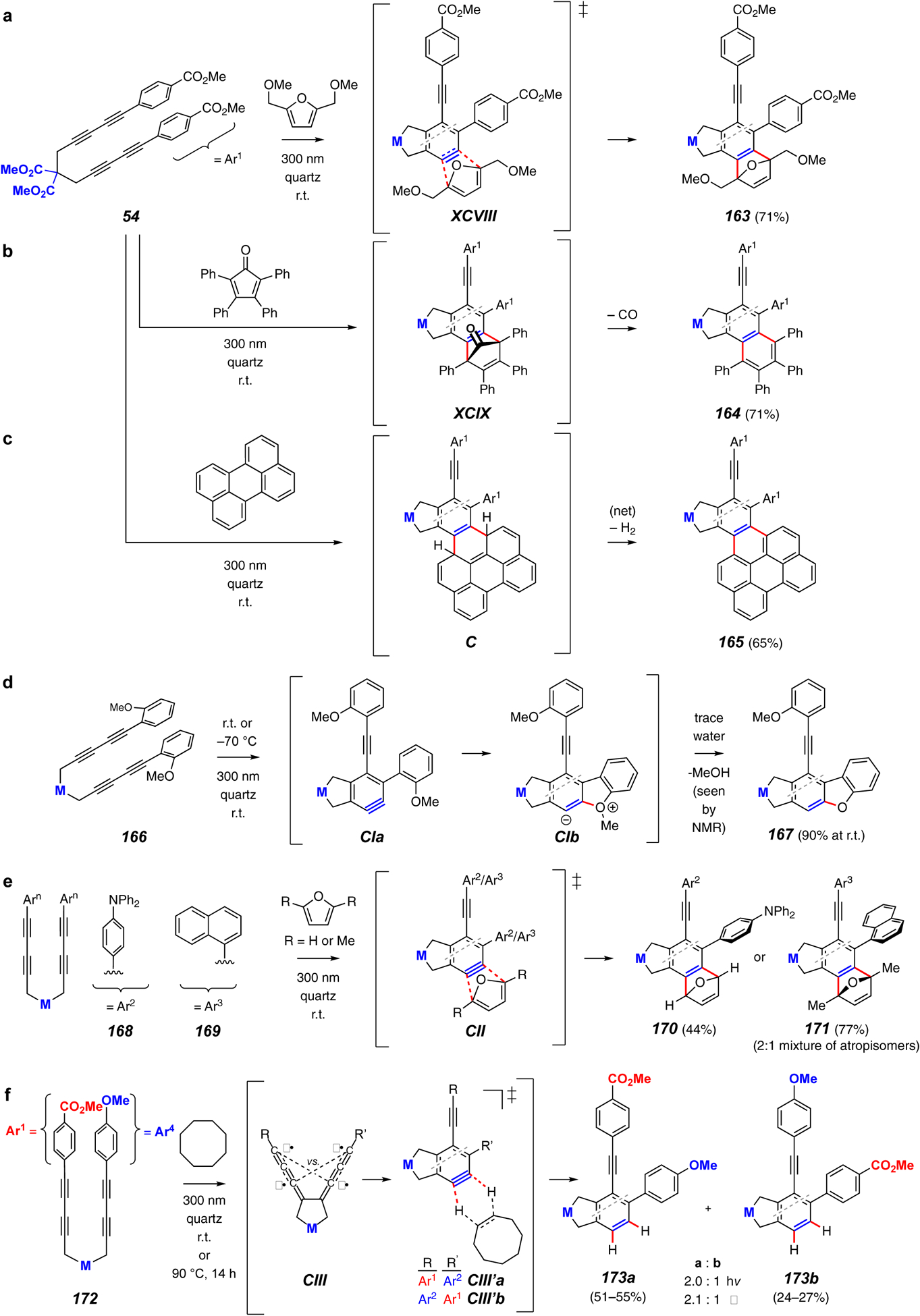
Examples of the photochemical HDDA (hv-HDDA) reaction.
Figure 21.
Figure 21.
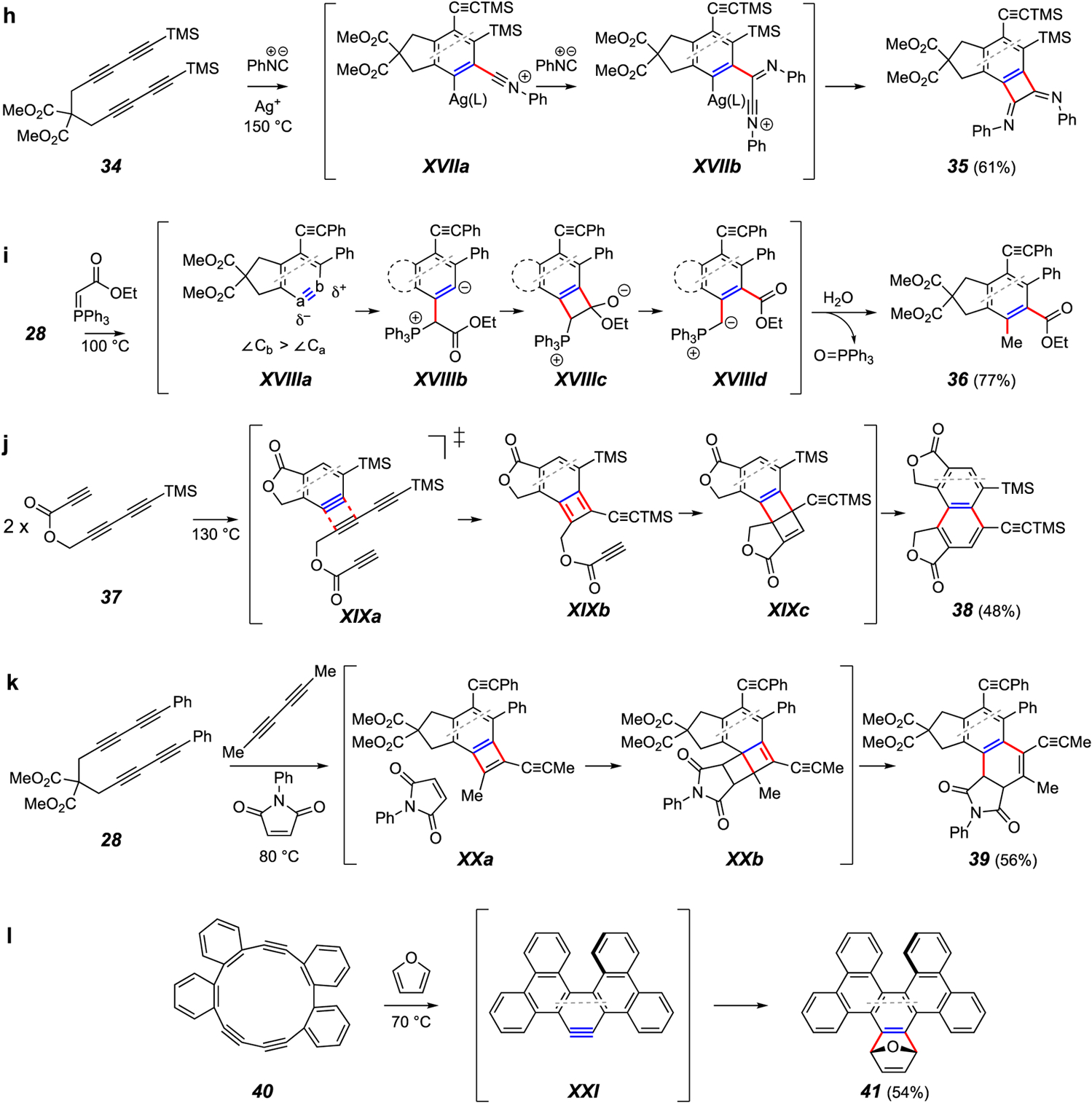
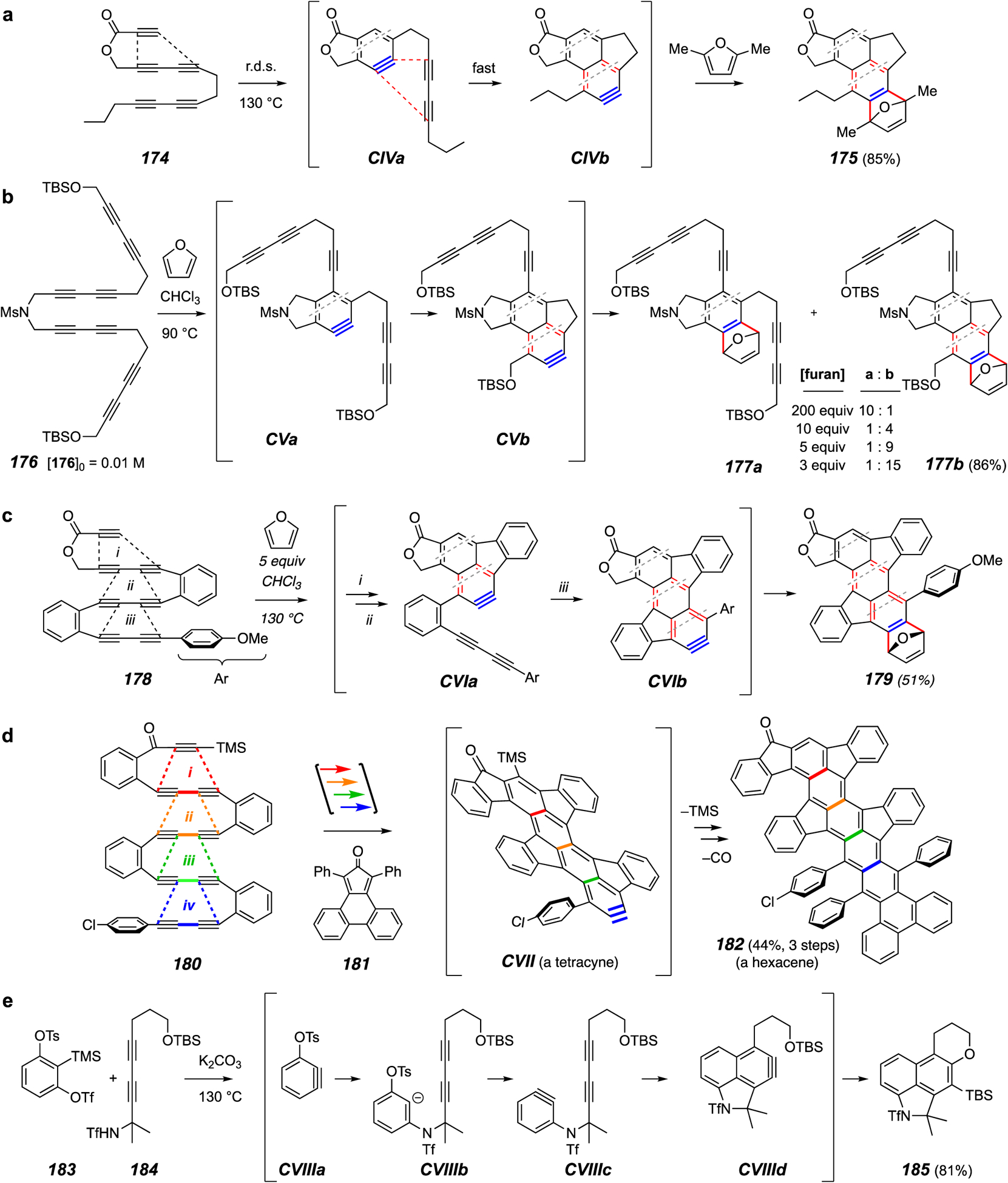
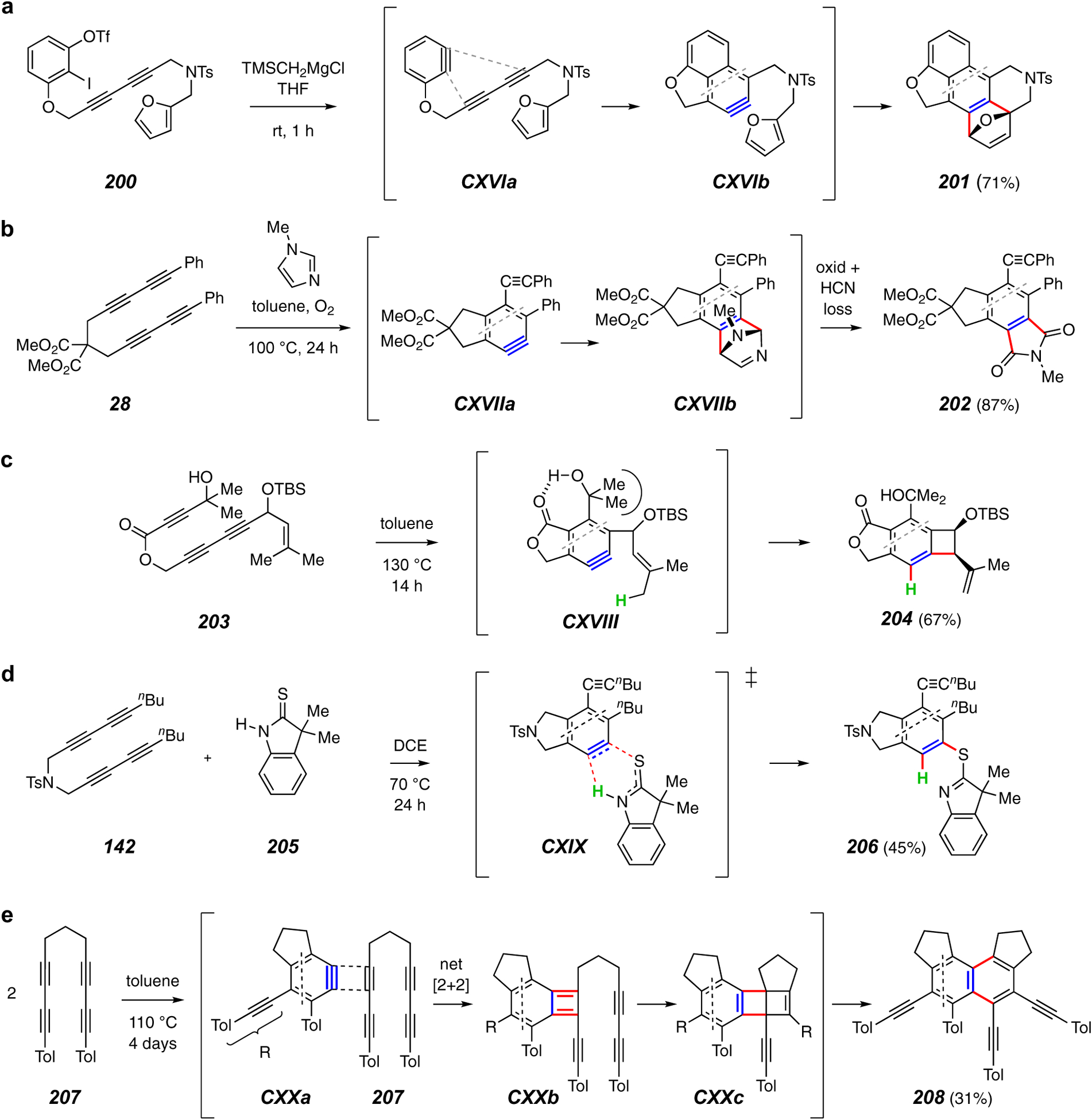
Examples of the domino HDDA reaction. (a) Benzyne to naphthyne. (b) Evidence for the intermediacy of a benzyne. (c) Benzyne to naphthyne to anthracyne. (d) Benzyne to naphthyne to anthracyne to tetracyne. (e) A domino cascade involving benzynes generated by both classical and HDDA processes.
Figure 22.
Figure 22.
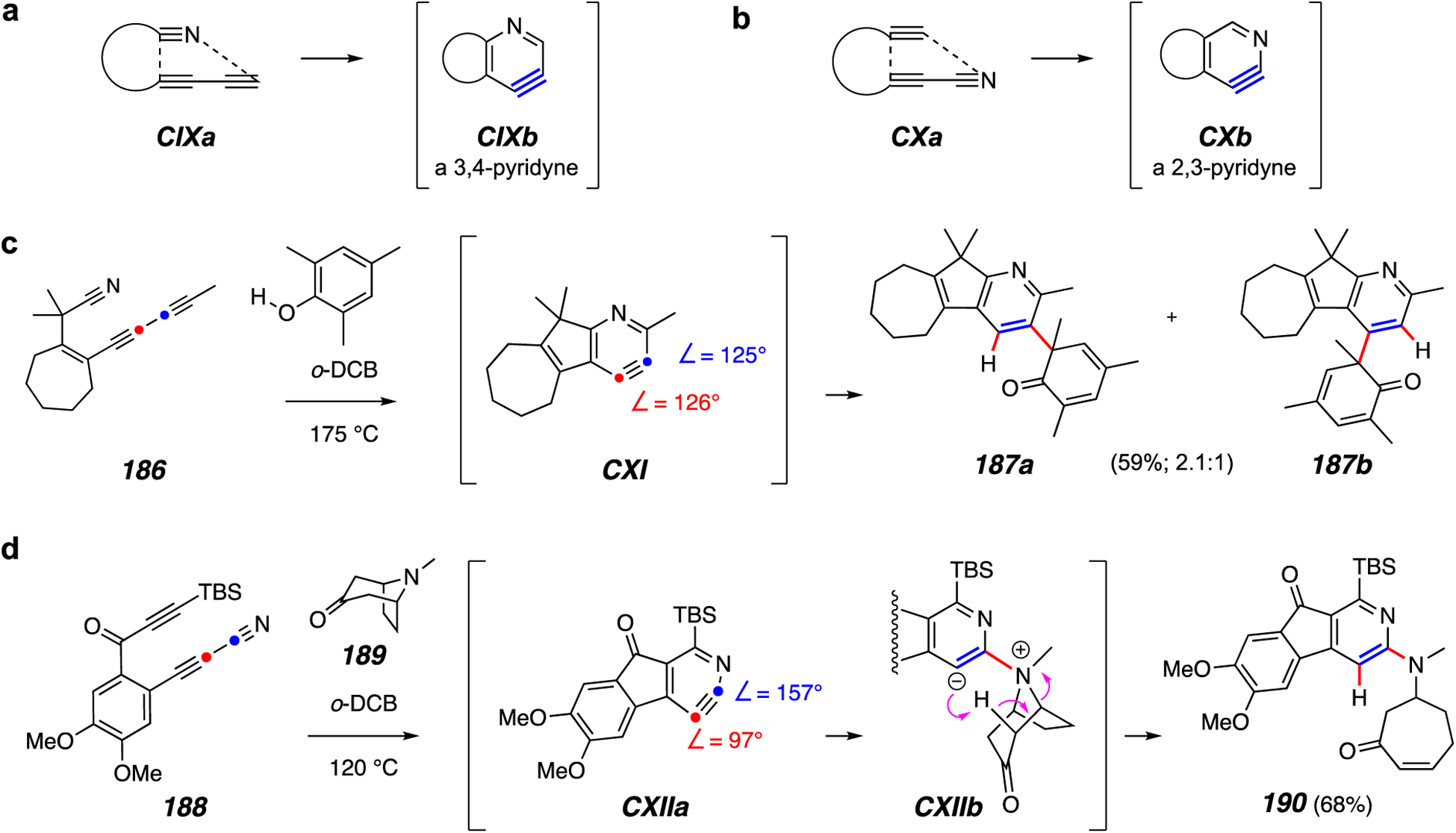
Aza-HDDA reactions. (a) Generic formation of a 3,4-pyridyne. (b) Generic formation of a 2,3-pyridyne. (c) A relatively unselective trapping of a 3,4-pyridyne. (d) A highly selective trapping of a 2,3-pyridyne.
Figure 23.
Figure 23.
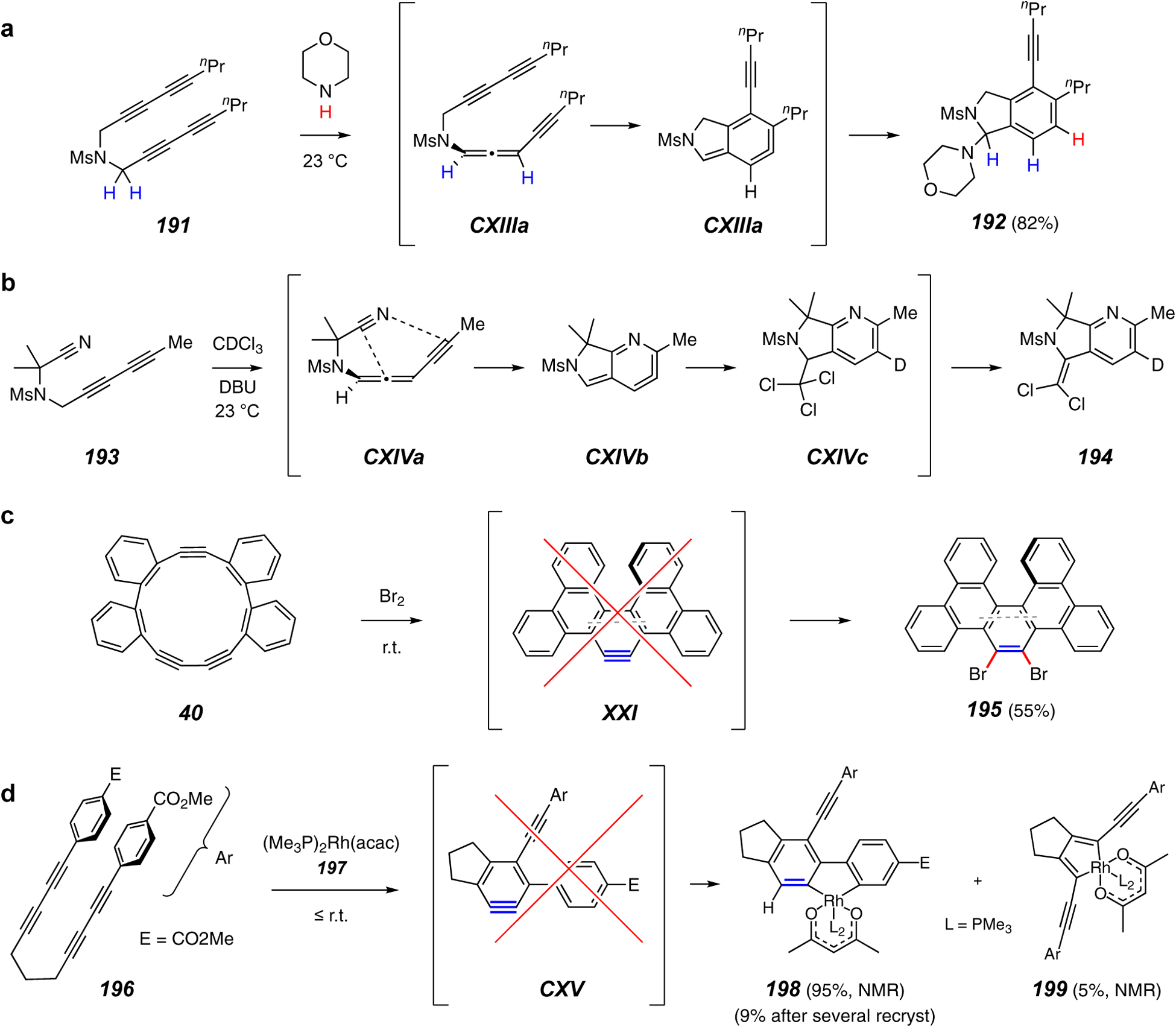
Reactions of polyyne substrates that proceed under conditions that would not promote appreciable levels of HDDA benzynes, indicating that the co-reactant is promoting cyclization by engaging the substrate prior to the thermal HDDA cycloisomerization.
Figure 24.
Figure 24.
Reactions identified during manuscript review or published since initial submission.

References

    1. Diels O; Alder K Synthesen in der hydroaromatischen Reihe. Justus Liebigs Ann. Chem 1928, 460, 98–122.
    1. Wessig P; Müller G The dehydro-Diels-Alder reaction. Chem. Rev 2008, 108, 2051–2063. - PubMed
    1. Johnson RP Dehydropericyclic routes to reactive intermediates. J. Phys. Org. Chem 2010, 23, 283–292.
    1. Li W; Zhou L; Zhang J Recent progress in dehydro(genative) Diels–Alder reaction. Chem. Eur. J 2016, 22, 1558–1571. - PubMed
    1. Baire B; Niu D; Willoughby PH; Woods BP Synthesis of complex benzenoids via the intermediate generation of o-benzynes through the hexadehydro-Diels-Alder reaction. Nature Protoc. 2013, 8, 501–508. - PMC - PubMed

Publication types

MeSH terms

LinkOut - more resources