


γ-PGA-Rich Chungkookjang, Short-Term Fermented Soybeans: Prevents Memory Impairment by Modulating Brain Insulin Sensitivity, Neuro-Inflammation, and the Gut-Microbiome-Brain Axis
- PMID: 33494481
- PMCID: PMC7911192
- DOI: 10.3390/foods10020221
γ-PGA-Rich Chungkookjang, Short-Term Fermented Soybeans: Prevents Memory Impairment by Modulating Brain Insulin Sensitivity, Neuro-Inflammation, and the Gut-Microbiome-Brain Axis
Abstract
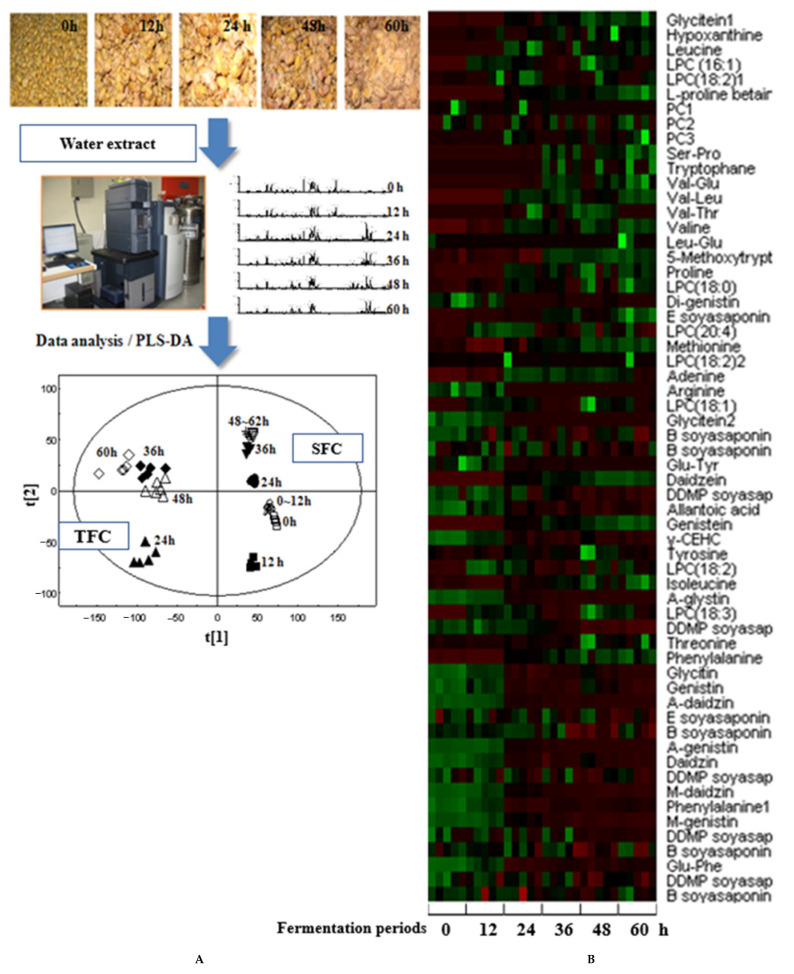
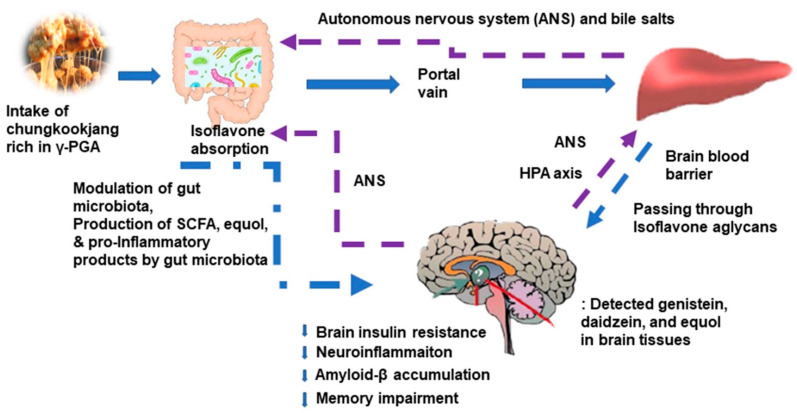
Fermented soybean paste is an indigenous food for use in cooking in East and Southeast Asia. Korea developed and used its traditional fermented foods two thousand years ago. Chungkookjang has unique characteristics such as short-term fermentation (24-72 h) without salt, and fermentation mostly with Bacilli. Traditionally fermented chungkookjang (TFC) is whole cooked soybeans that are fermented predominantly by Bacillus species. However, Bacillus species are different in the environment according to the regions and seasons due to the specific bacteria. Bacillus species differently contribute to the bioactive components of chungkookjang, resulting in different functionalities. In this review, we evaluated the production process of poly-γ-glutamic acid (γ-PGA)-rich chungkookjang fermented with specific Bacillus species and their effects on memory function through the modulation of brain insulin resistance, neuroinflammation, and the gut-microbiome-brain axis. Bacillus species were isolated from the TFC made in Sunchang, Korea, and they included Bacillus (B.) subtilis, B. licheniformis, and B. amyloliquefaciens. Chungkookjang contains isoflavone aglycans, peptides, dietary fiber, γ-PGA, and Bacillus species. Chungkookjangs made with B. licheniformis and B. amyloliquefaciens have higher contents of γ-PGA, and they are more effective for improving glucose metabolism and memory function. Chungkookjang has better efficacy for reducing inflammation and oxidative stress than other fermented soy foods. Insulin sensitivity is improved, not only in systemic organs such as the liver and adipose tissues, but also in the brain. Chungkookjang intake prevents and alleviates memory impairment induced by Alzheimer's disease and cerebral ischemia. This review suggests that the intake of chungkookjang (20-30 g/day) rich in γ-PGA acts as a synbiotic in humans and promotes memory function by suppressing brain insulin resistance and neuroinflammation and by modulating the gut-microbiome-brain axis.
Keywords: Bacillus; cheonggukjang; chungkookjang; glucose metabolism; gut microbiota; memory function; soybean.
Conflict of interest statement
The authors declare no conflict of interest.
Figures
References
-
- Jeong D.Y., Daily J.W., Lee G.H., Ryu M.S., Yang H.-J., Jeong S.-Y., Qiu J.Y., Zhang T., Park S. Short-Term Fermented Soybeans with Bacillus amyloliquefaciens Potentiated Insulin Secretion Capacity and Improved Gut Microbiome Diversity and Intestinal Integrity To Alleviate Asian Type 2 Diabetic Symptoms. J. Agric. Food Chem. 2020;68:13168–13178. doi: 10.1021/acs.jafc.9b07962. - DOI - PubMed
Publication types
LinkOut - more resources
Full Text Sources
Other Literature Sources
