Review
. 2021 Jan 25;40(1):42.
doi: 10.1186/s13046-021-01845-6.

Gut microbiota influence tumor development and Alter interactions with the human immune system

Affiliations
Review

Gut microbiota influence tumor development and Alter interactions with the human immune system

Yanshan Ge et al. J Exp Clin Cancer Res. .

Erratum in

Abstract

Recent scientific advances have greatly enhanced our understanding of the complex link between the gut microbiome and cancer. Gut dysbiosis is an imbalance between commensal and pathogenic bacteria and the production of microbial antigens and metabolites. The immune system and the gut microbiome interact to maintain homeostasis of the gut, and alterations in the microbiome composition lead to immune dysregulation, promoting chronic inflammation and development of tumors. Gut microorganisms and their toxic metabolites may migrate to other parts of the body via the circulatory system, causing an imbalance in the physiological status of the host and secretion of various neuroactive molecules through the gut-brain axis, gut-hepatic axis, and gut-lung axis to affect inflammation and tumorigenesis in specific organs. Thus, gut microbiota can be used as a tumor marker and may provide new insights into the pathogenesis of malignant tumors.

Keywords: Gut microbiota; Gut-brain/liver/lung axis; Immunity; Metabolism.


Conflict of interest statement

The authors declare that they have no competing interests.

Figures
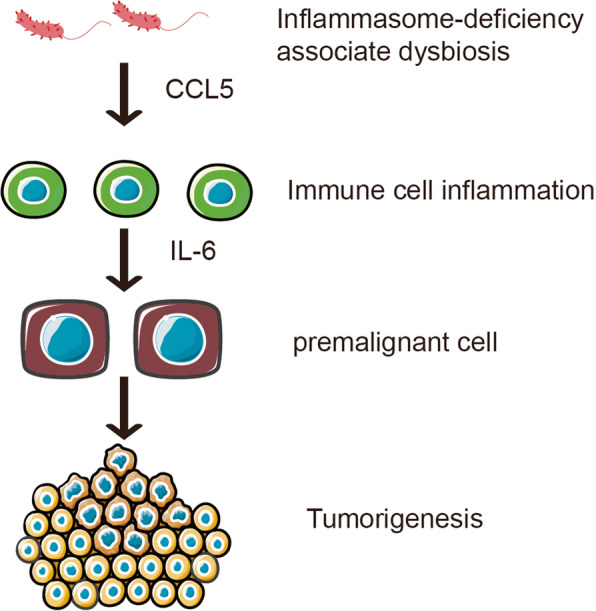
Fig. 1
Fig. 1
Gut dysbiosis can drive inflammation-induced cancer; it causes epithelial reprogramming and induces CCL5 transcription to induce local inflammation. In turn, it leads to local induction of IL-6 secretion and proliferation of intestinal epithelial cells, ultimately leading to tumor formation
Fig. 2
Fig. 2
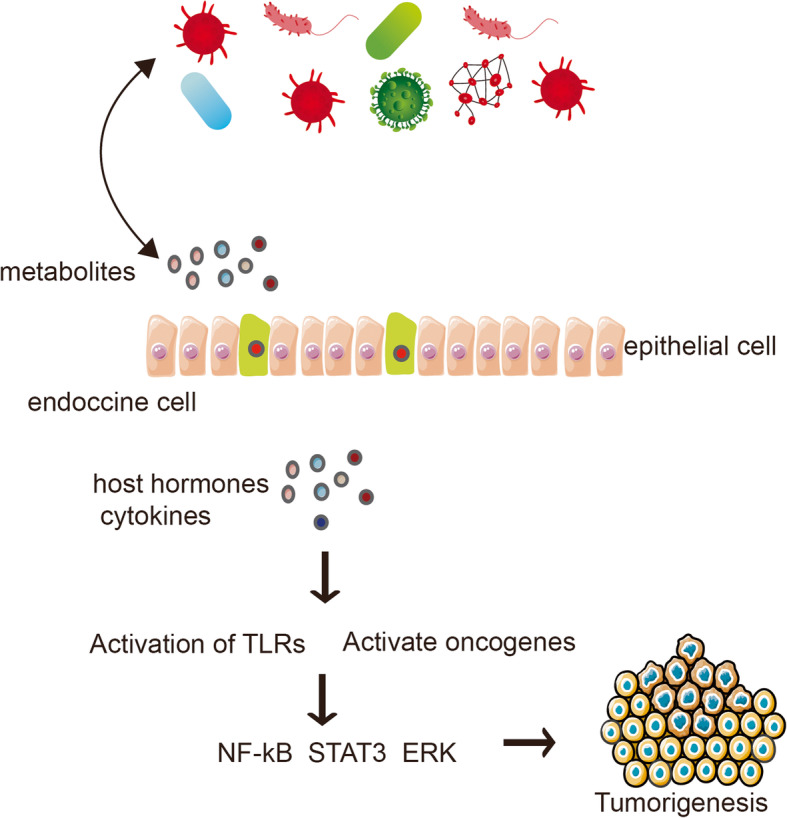
Microbiota metabolites are related to tumor development. Pro-inflammatory pathways are activated when the mucosal barrier is broken. The loss of the boundary between the host and the microorganism is related to the pattern recognition receptor signaling cascade. The feedforward circuit of chronic inflammation mediated by NF-kB and STAT3 signal transduction promotes canceration in transformed cells and non-tumor cells. Microbial PAMP activate TLR signaling in a variety of cell types, leading to cytokine production and NF-kB-mediated inflammation, thereby exacerbating tumor growth
Fig. 3
Fig. 3
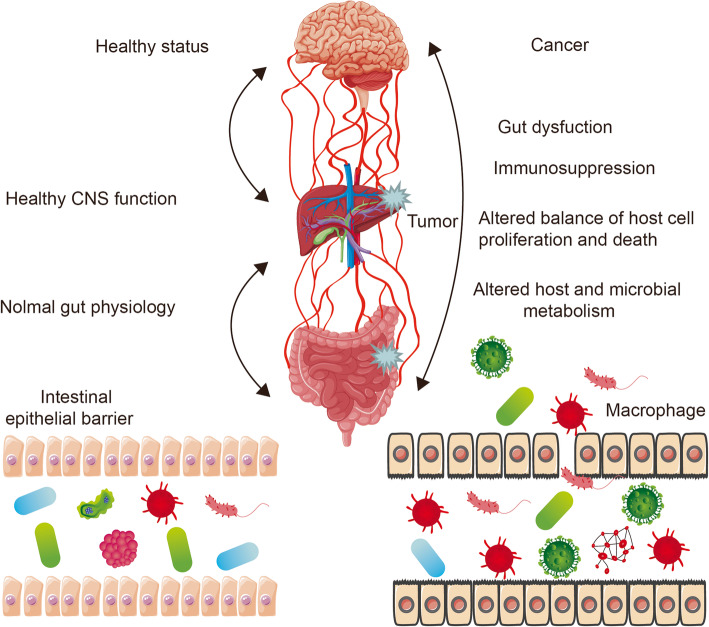
The dysbacteriosis leads to continuous destruction of the barrier and delayed restoration of homeostasis. In these cases, the microbiota can affect canceration by changing the proliferation and apoptosis of host cells, disrupting the function of the immune system, and affecting the metabolism of the host

References

    1. Jandhyala SM, Talukdar R, Subramanyam C, Vuyyuru H, Sasikala M, Nageshwar RD. Role of the normal gut microbiota. World J Gastroenterol. 2015;21:8787–8803. doi: 10.3748/wjg.v21.i29.8787. - DOI - PMC - PubMed
    1. Song M, Chan AT, Sun J. Influence of the gut microbiome, diet, and environment on risk of colorectal Cancer. Gastroenterology. 2020;158:322–340. doi: 10.1053/j.gastro.2019.06.048. - DOI - PMC - PubMed
    1. Hampton T. Gut microbes may shape response to Cancer immunotherapy. JAMA. 2018;319:430–431. doi: 10.1001/jama.2017.12857. - DOI - PubMed
    1. Kaiser J. Gut microbes shape response to cancer immunotherapy. Science. 2017;358:573. doi: 10.1126/science.358.6363.573. - DOI - PubMed
    1. Yang JY, Kim MS, Kim E, Cheon JH, Lee YS, Kim Y, Lee SH, Seo SU, Shin SH, Choi SS, et al. Enteric viruses ameliorate gut inflammation via toll-like receptor 3 and toll-like receptor 7-mediated interferon-beta production. Immunity. 2016;44:889–900. doi: 10.1016/j.immuni.2016.03.009. - DOI - PubMed