


Loss-of-function variants in SEMA3F and PLXNA3 encoding semaphorin-3F and its receptor plexin-A3 respectively cause idiopathic hypogonadotropic hypogonadism
- PMID: 33495532
- PMCID: PMC7612467
- DOI: 10.1038/s41436-020-01087-5
Loss-of-function variants in SEMA3F and PLXNA3 encoding semaphorin-3F and its receptor plexin-A3 respectively cause idiopathic hypogonadotropic hypogonadism
Abstract
Purpose: Idiopathic hypogonadotropic hypogonadism (IHH) is characterized by absent puberty and subsequent infertility due to gonadotropin-releasing hormone (GnRH) deficiency. IHH can be accompanied by normal or compromised olfaction (Kallmann syndrome). Several semaphorins are known potent modulators of GnRH, olfactory, and vomeronasal system development. In this study, we investigated the role of Semaphorin-3F signaling in the etiology of IHH.
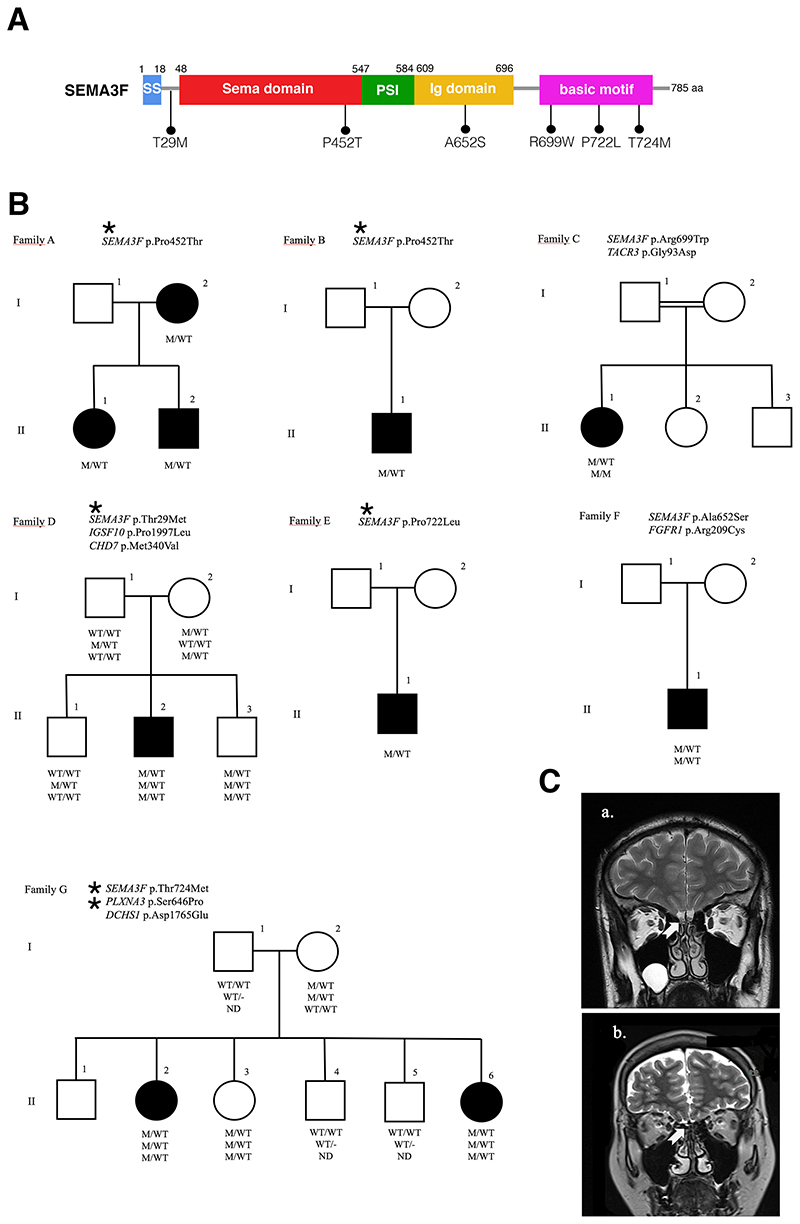
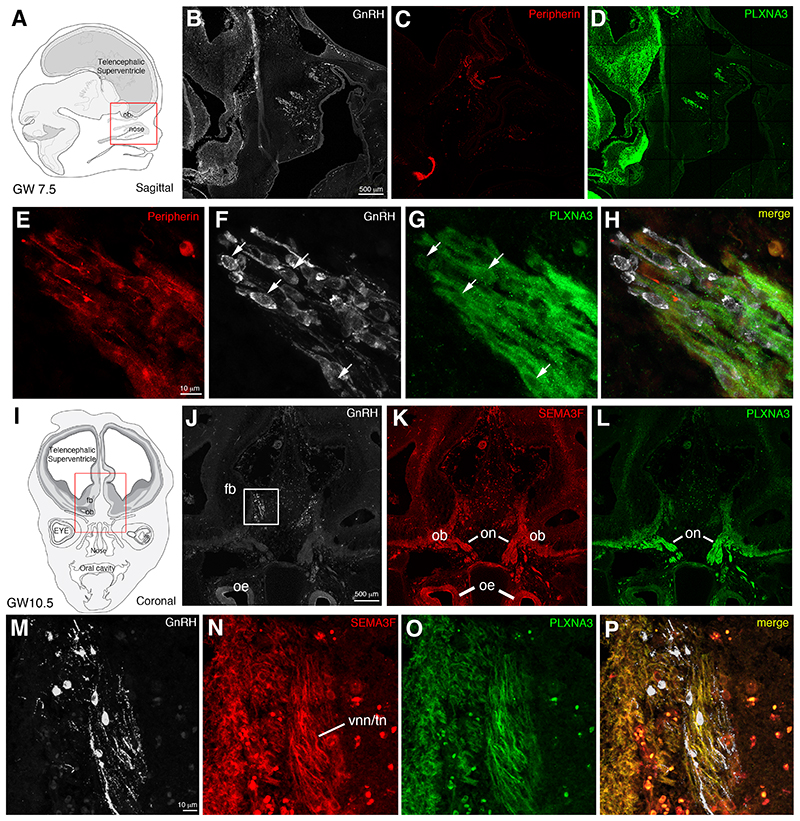
Methods: We screened 216 IHH patients by exome sequencing. We transiently transfected HEK293T cells with plasmids encoding wild type (WT) or corresponding variants to investigate the functional consequences. We performed fluorescent IHC to assess SEMA3F and PLXNA3 expression both in the nasal region and at the nasal/forebrain junction during the early human fetal development.
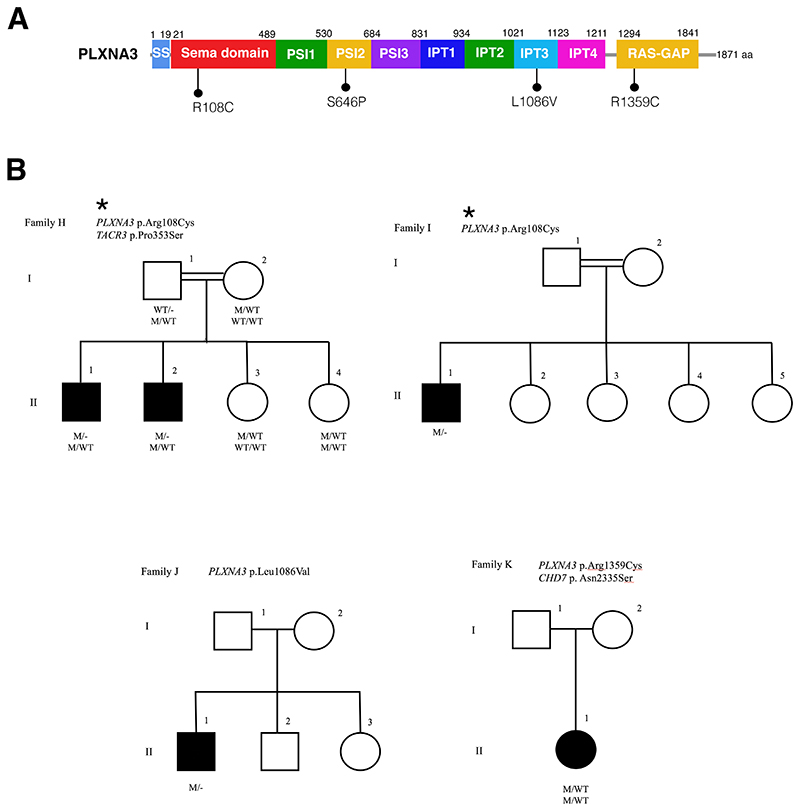
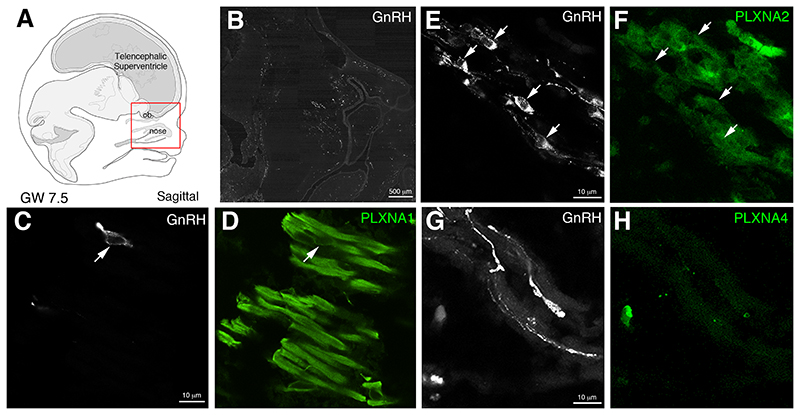
Results: We identified ten rare missense variants in SEMA3F and PLXNA3 in 15 patients from 11 independent families. Most of these variants were predicted to be deleterious by functional assays. SEMA3F and PLXNA3 are both expressed along the olfactory nerve and intracranial projection of the vomeronasal nerve/terminal nerve. PLXNA1-A3 are expressed in the early migratory GnRH neurons.
Conclusion: SEMA3F signaling through PLXNA1-A3 is involved in the guidance of GnRH neurons and of olfactory and vomeronasal nerve fibers in humans. Overall, our findings suggest that Semaphorin-3F signaling insufficiency contributes to the pathogenesis of IHH.
Conflict of interest statement
Figures
References
-
- Casoni F, et al. Development of the neurons controlling fertility in humans: new insights from 3D imaging and transparent fetal brains. Development. 2016;143:3969–3981. - PubMed
-
- Schwanzel-Fukuda M, et al. Migration of luteinizing hormone-releasing hormone (LHRH) neurons in early human embryos. J Comp Neurol. 1996;366:547–57. - PubMed
-
- Pasterkamp RJ. Getting neural circuits into shape with semaphorins. Nat Rev Neurosci. 2012;13:605–18. - PubMed
Publication types
MeSH terms
Substances
Supplementary concepts
Grants and funding
LinkOut - more resources
Full Text Sources
Other Literature Sources
