Plasmodium ovale wallikeri and P. ovale curtisi Infections and Diagnostic Approaches to Imported Malaria, France, 2013-2018
- PMID: 33496652
- PMCID: PMC7853592
- DOI: 10.3201/eid2702.202143
Plasmodium ovale wallikeri and P. ovale curtisi Infections and Diagnostic Approaches to Imported Malaria, France, 2013-2018
Abstract
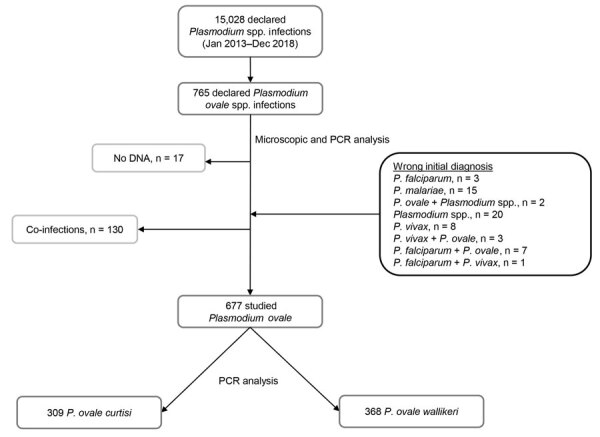
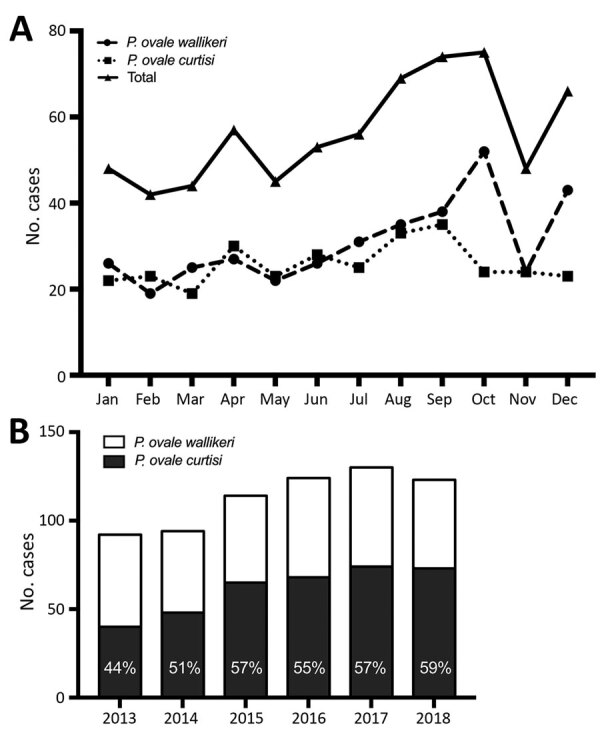
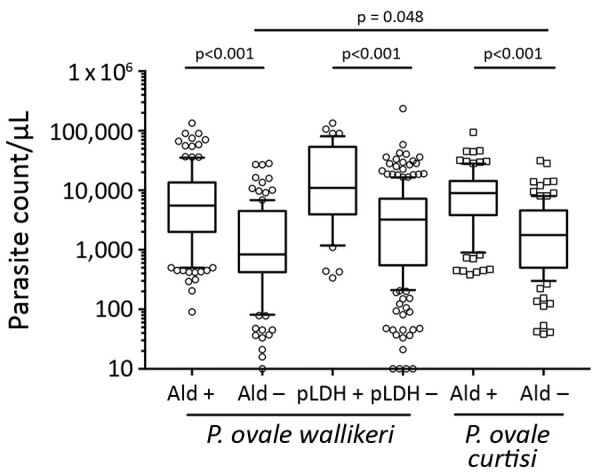
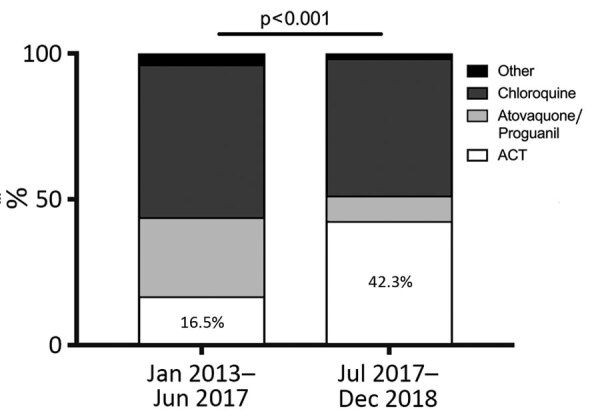
We retrospectively analyzed epidemiologic, clinical, and biologic characteristics of 368 Plasmodium ovale wallikeri and 309 P. ovale curtisi infections treated in France during January 2013–December 2018. P. ovale wallikeri infections displayed deeper thrombocytopenia and shorter latency periods. Despite similar clinical manifestations, P. ovale wallikeri–infected patients were more frequently treated with artemisinin-based combination therapy. Although the difference was not statistically significant, P. ovale wallikeri–infected patients were 5 times more frequently hospitalized in intensive care or intermediate care and had a higher proportion of severe thrombocytopenia than P. ovale curtisi–infected patients. Rapid diagnostic tests that detect aldolase were more efficient than those detecting Plasmodium lactate dehydrogenase. Sequence analysis of the potra gene from 90 P. ovale isolates reveals an insufficient polymorphism for relapse typing.
Keywords: France; Plasmodium ovale curtisi; Plasmodium ovale wallikeri; diagnosis; imported malaria; malaria; malaria-endemic countries; parasites.
Figures
References
-
- World Health Organization. World malaria report 2019. [cited 2020 Jan 7]. https://www.who.int/publications-detail/world-malaria-report-2019
-
- Centre National de Référence du Paludisme. Rapport d’activité annuel 2018. [cited 2020 Jan 7]. https://anofel.net/wp-content/uploads/2019/07/ra_cnr_2018_CNPaludisme.pdf
MeSH terms
LinkOut - more resources
Full Text Sources
Other Literature Sources
Medical