Clinical Trial
. 2021 Feb 22;6(4):e141088.
doi: 10.1172/jci.insight.141088.

Pneumococcal colonization impairs mucosal immune responses to live attenuated influenza vaccine

Affiliations
Clinical Trial

Pneumococcal colonization impairs mucosal immune responses to live attenuated influenza vaccine

Beatriz F Carniel et al. JCI Insight. .

Abstract

Influenza virus infections affect millions of people annually, and current available vaccines provide varying rates of protection. However, the way in which the nasal microbiota, particularly established pneumococcal colonization, shape the response to influenza vaccination is not yet fully understood. In this study, we inoculated healthy adults with live Streptococcus pneumoniae and vaccinated them 3 days later with either tetravalent-inactivated influenza vaccine (TIV) or live attenuated influenza vaccine (LAIV). Vaccine-induced immune responses were assessed in nose, blood, and lung. Nasal pneumococcal colonization had no impact upon TIV-induced antibody responses to influenza, which manifested in all compartments. However, experimentally induced pneumococcal colonization dampened LAIV-mediated mucosal antibody responses, primarily IgA in the nose and IgG in the lung. Pulmonary influenza-specific cellular responses were more apparent in the LAIV group compared with either the TIV or an unvaccinated group. These results indicate that TIV and LAIV elicit differential immunity to adults and that LAIV immunogenicity is diminished by the nasal presence of S. pneumoniae. Therefore, nasopharyngeal pneumococcal colonization may affect LAIV efficacy.

Keywords: Adaptive immunity; Immunology; Influenza; Vaccines.


Conflict of interest statement

Conflict of interest: The authors have declared that no conflict of interest exists.

Figures

Figure 1
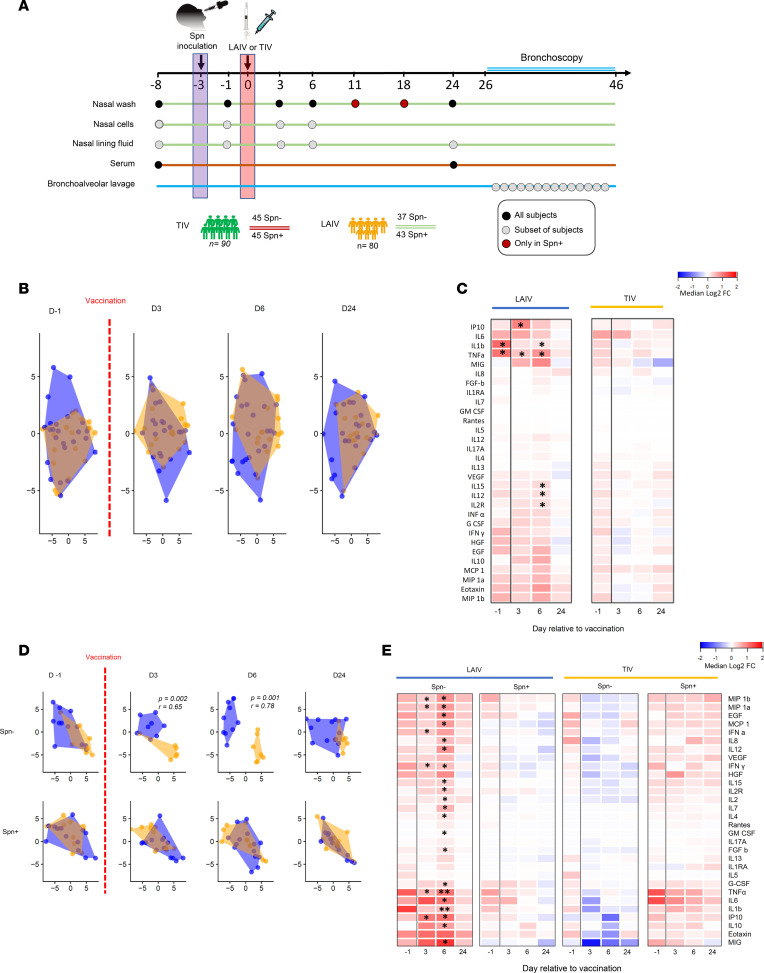
Figure 1. Pneumococcal colonization prevents an acute nasal LAIV-induced proinflammatory response.
(A) Healthy adults (n = 170) 18–48 years of age were recruited and participated in a randomized, controlled clinical trial. Subjects were screened 8 days prevaccination (baseline), followed by challenge with live Streptococcus pneumoniae (Spn) 3 days before vaccination against influenza (D-3). Then, they received either LAIV or TIV at day 0 (D0). Serum samples were collected at baseline (D-8) and D24. Nasal washes were collected from all volunteers at D-8, D-1, D3, D6, and D24, plus at D11 and D18 for the colonized. Nasal fluid and cells were collected at D-8, D-1, D3, and D6, plus at D24 for nasal fluid only. BAL sample was collected 26–46 days after vaccination. (BE) Levels of 30 cytokines were measured in nasal fluid at baseline, 1 day before vaccination (D-1), and 3, 6, and 24 days after vaccination for LAIV/Spn (LAIV vaccinated/noncolonized, n = 15), LAIV/Spn+ (LAIV vaccinated/colonized, n = 15), TIV/Spn (TIV vaccinated/noncolonized, n = 16) and TIV/Spn+ (TIV vaccinated/colonized, n = 14). (B and D) Samples were clustered based on fold change (FC) levels to baseline using t-distributed stochastic neighbor embedding for LAIV (blue) or TIV (orange). R and P values shown for significant time points based on analysis of similarity (anosim), including (FCs) for all cytokines. (C) Heatmap showing median log2FC to baseline levels at each time point after LAIV or TIV administration, irrespective of colonization status. Upregulation (red) and downregulation (blue) in cytokines’ levels from baseline. (E) Heatmap showing median log2FC to baseline levels at each time point for the 4 experimental groups, based on stratification by vaccine and colonization status. Statistical comparisons were applied against the baseline sample for each time point in every group independently. **P < 0.01, *P < 0.05, Wilcoxon’s paired test with Benjamini-Hochberg correction for multiple testing.
Figure 2
Figure 2. LAIV increases frequency of influenza-specific TNF-α– and IFN-γ–producing CD4+ and TRM CD4+ T cells in the lung.
Frequencies of cytokine-producing CD4+ and TRM CD4+ T cells were measured in human BAL samples by intracellular staining flow cytometry analysis with and without (mock) in vitro influenza antigen stimulation. Volunteers were divided by vaccine and colonization status in TIV/Spn (n = 6), TIV/Spn+ (n = 8), LAIV/Spn (n = 10), LAIV/Spn+ (n = 9), and unvaccinated (n = 8, 3 Spn and 5 Spn+) groups. (A) Production of TNF-α by total CD4+ T cells in each group (paired unstimulated [mock] and stimulated condition [flu]). (B) Influenza-specific production of TNF-α by total CD4+ T cells (difference between influenza-stimulated and unstimulated) in each group. (C) Production of TNF-α by CD4+CD69+ T cells in each group. (D) Production of influenza-specific TNF-α by CD4+CD69+ T cells in each group. (E) Production of IFN- γ by total CD4+ T cells in each group. (F) Production of influenza-specific IFN-γ by CD4+ T cells in each group. (G) Production of IFN-γ by CD4+CD69+ T cells and (H) influenza-specific IFN-γ by CD4+CD69+ T cells in each group. Each individual dot represents a single volunteer, and the conditions from 1 individual are connected. Medians with IQR are depicted for influenza-specific responses (B, D, F, and H). *P < 0.05, **P < 0.01 by Wilcoxon’s test for comparisons within the same group and by Mann-Whitney U test for between-group comparisons.
Figure 3
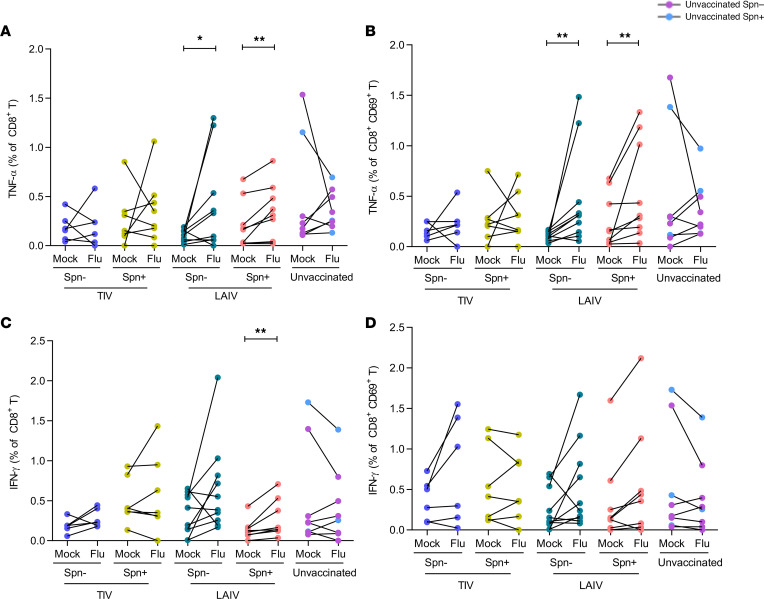
Figure 3. LAIV increases frequency of influenza-specific TNF-α–producing CD8+ and TRM CD8+ T cells in the lungs.
Frequencies of cytokine-producing CD8+ T cells were measured in human BAL samples by intracellular staining flow cytometry analysis following stimulation with influenza antigens or nonstimulation (mock) in each group. Volunteers were divided by vaccine and colonization status in TIV/Spn (n = 6), TIV/Spn+ (n = 8), LAIV/Spn (n = 10), LAIV/Spn+ (n = 9), and unvaccinated (n = 8, 3 Spn and 5 Spn+) groups. Production of TNF-α by (A) total CD8+ T cells and (B) TRM CD8+ T cells in each group (paired unstimulated [mock] and stimulated condition [flu]). Production of IFN-γ production by (C) total CD8+ T cells and (D) TRM CD8+ T cells in each group. Each individual dot represents a single volunteer, and the conditions per individual are connected. *P < 0.05, **P < 0.01 by Wilcoxon’s test.
Figure 4
Figure 4. LAIV increases frequency of IFN-γ–producing influenza-specific TCR-γδ+ in the lungs of noncolonized individuals.
Frequency of cytokine-producing TCR-γδ+ T cells was measured in human BAL samples by intracellular staining flow cytometry analysis after in vitro stimulation with influenza antigens or nonstimulation (mock). Volunteers were divided by vaccine and colonization status in TIV/Spn (n = 6), TIV/Spn+ (n = 8), LAIV/Spn (n = 10), LAIV/Spn+ (n = 9), and unvaccinated (n = 8, 3 Spn and 5 Spn+) groups. Production of (A) TNF-α, (B) IFN-γ, and (C) IL-17A by lung TCR-γδ T cells. Individual dot represents a single volunteer, and the conditions per individual are connected. **P < 0.01 by Wilcoxon’s test.
Figure 5
Figure 5. LAIV vaccination increases levels of antibody against influenza in serum and nasal wash, with impaired nasal production caused by S. pneumoniae colonization.
(A) IgG titers to influenza, measured by ELISA, in serum of LAIV (n = 36) and TIV (n = 36) vaccinated subjects at baseline (8 days prevaccination) and D24 (24 days after vaccination). (B) FC (D24/baseline) of paired IgG titers to influenza in serum following TIV or LAIV vaccination. TIV/Spn (n = 20), TIV/Spn+ (n = 16), LAIV/Spn (n = 18), and LAIV/Spn+ (n = 18). (C) IgA and (D) IgG titers against influenza measured by ELISA in nasal wash of TIV (n = 40) and LAIV (n = 80) vaccinated subjects at baseline (8 days before vaccination) and D24 (24 days after vaccination). (E) FC (D24/baseline) of paired IgA and (F) IgG titers against influenza in nasal wash following vaccination with TIV/Spn (n = 21), TIV/Spn+ (n = 19), LAIV/Spn (n = 37), and LAIV/Spn+ (n = 43). Medians with IQR are shown. *P < 0.05, ***P < 0.001, ****P < 0.0001 by Wilcoxon’s test for comparisons within the same group and by Mann-Whitney U test for comparisons between groups.
Figure 6
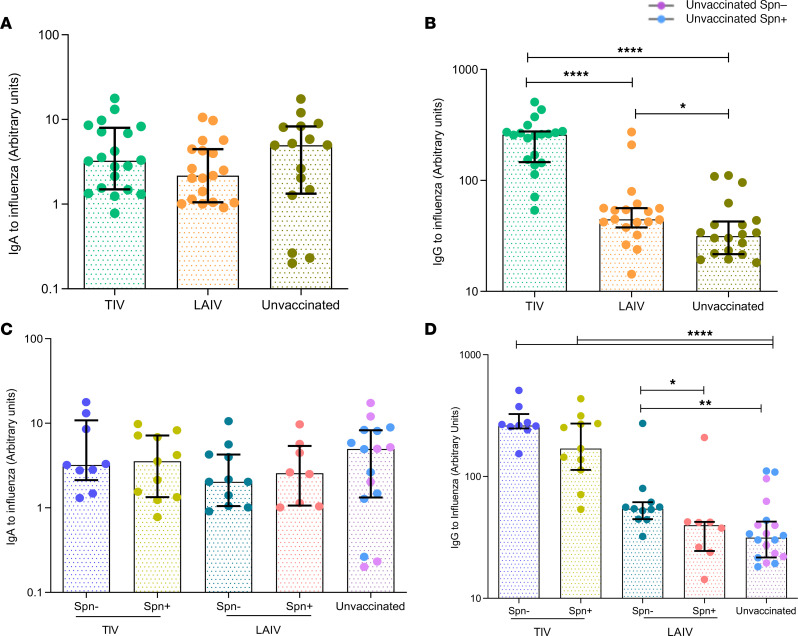
Figure 6. IgG but not IgA is induced by influenza vaccines in the lung, with LAIV responses being reduced during S. pneumoniae colonization.
(A and B) IgA and IgG titers against influenza for TIV (n = 20), LAIV (n = 19) vaccinated subjects and unvaccinated (n = 20) was measured by ELISA in BAL fluid. (C and D) IgA and IgG titers grouped based on vaccination and colonization status, as TIV/Spn (n = 9), TIV/Spn+ (n = 11), LAIV/Spn (n = 11), LAIV/Spn+ (n = 8), and unvaccinated (n = 20). Medians with IQR are shown. *P < 0.05, **P < 0.01, ****P < 0.0001 by Wilcoxon’s test for comparisons within the same group and by Mann-Whitney test U for comparisons between groups.
Figure 7
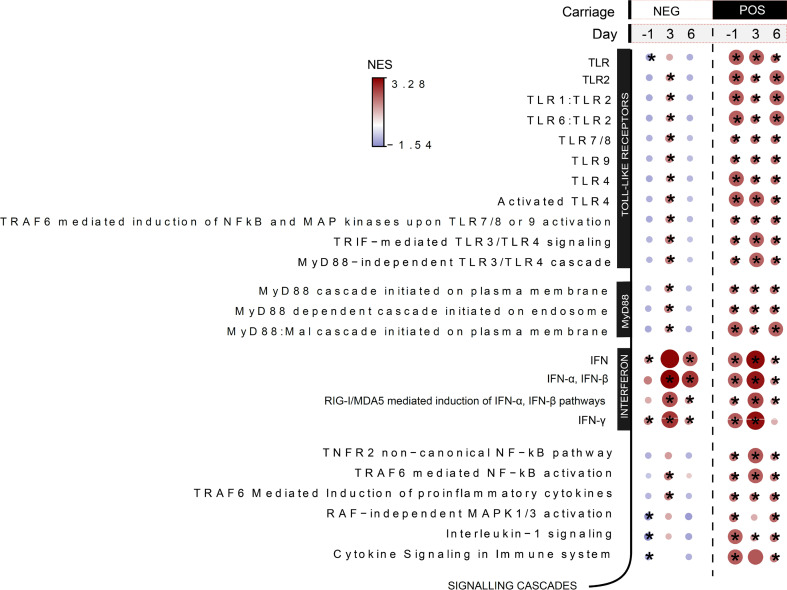
Figure 7. TLR priming by S. pneumoniae and increased type I IFN gene expression profile soon after nasal colonization.
Selected pathways after gene set enrichment analysis for LAIV/Spn (n = 11) and LAIV/Spn+ (n = 9) groups at D-1, D3, and D6 in relation to LAIV administration applied on log2FCs (baseline/pre-Spn inoculation-normalized values). Normalized enrichment score (NES) is presented in gradient color. Red shades indicate pathways overrepresented, whereas blue shades depict the underrepresented pathways at each time point in relation to baseline (prior pneumococcal inoculation). *P < 0.05 by Wilcoxon’s paired test corrected by multiple-comparison testing (Benjamini-Hochberg).

References

    1. Iuliano AD, et al. Estimates of global seasonal influenza-associated respiratory mortality: a modelling study. Lancet. 2018;391(10127):1285–1300. doi: 10.1016/S0140-6736(17)33293-2. - DOI - PMC - PubMed
    1. Tisa V, et al. Quadrivalent influenza vaccine: a new opportunity to reduce the influenza burden. J Prev Med Hyg. 2016;57(1):E28–E33. - PMC - PubMed
    1. Carter NJ, Curran MP. Live attenuated influenza vaccine (FluMist; Fluenz): a review of its use in the prevention of seasonal influenza in children and adults. Drugs. 2011;71(12):1591–1622. doi: 10.2165/11206860-000000000-00000. - DOI - PubMed
    1. Sridhar S, et al. Influenza vaccination strategies: comparing inactivated and live attenuated influenza vaccines. Vaccines (Basel) 2015;3(2):373–389. doi: 10.3390/vaccines3020373. - DOI - PMC - PubMed
    1. American Academy of Pediatrics Committee on Infectious Diseases Recommendations for prevention and control of influenza in children, 2015–2016. Pediatrics. 2015;136(4):792–808. doi: 10.1542/peds.2015-2920. - DOI - PubMed

Publication types

MeSH terms