


Linear-Nonlinear Stiffness Responses of Carbon Fiber-Reinforced Polymer Composite Materials and Structures: A Numerical Study
- PMID: 33498984
- PMCID: PMC7865844
- DOI: 10.3390/polym13030344
Linear-Nonlinear Stiffness Responses of Carbon Fiber-Reinforced Polymer Composite Materials and Structures: A Numerical Study
Abstract
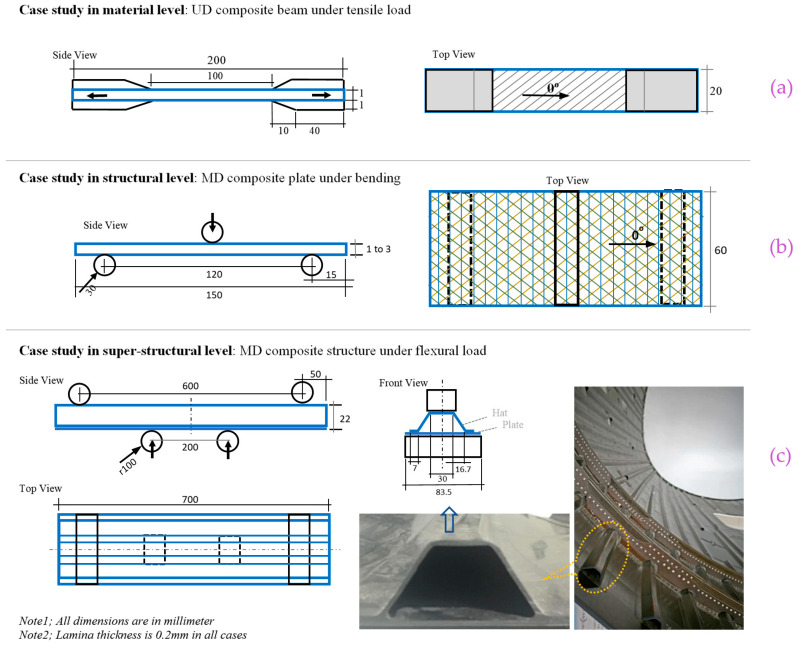
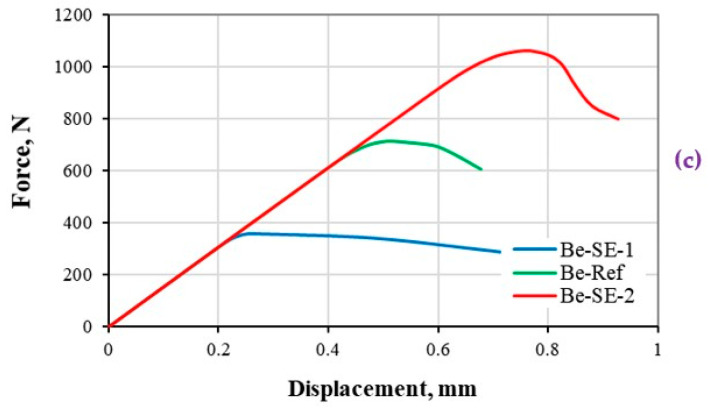
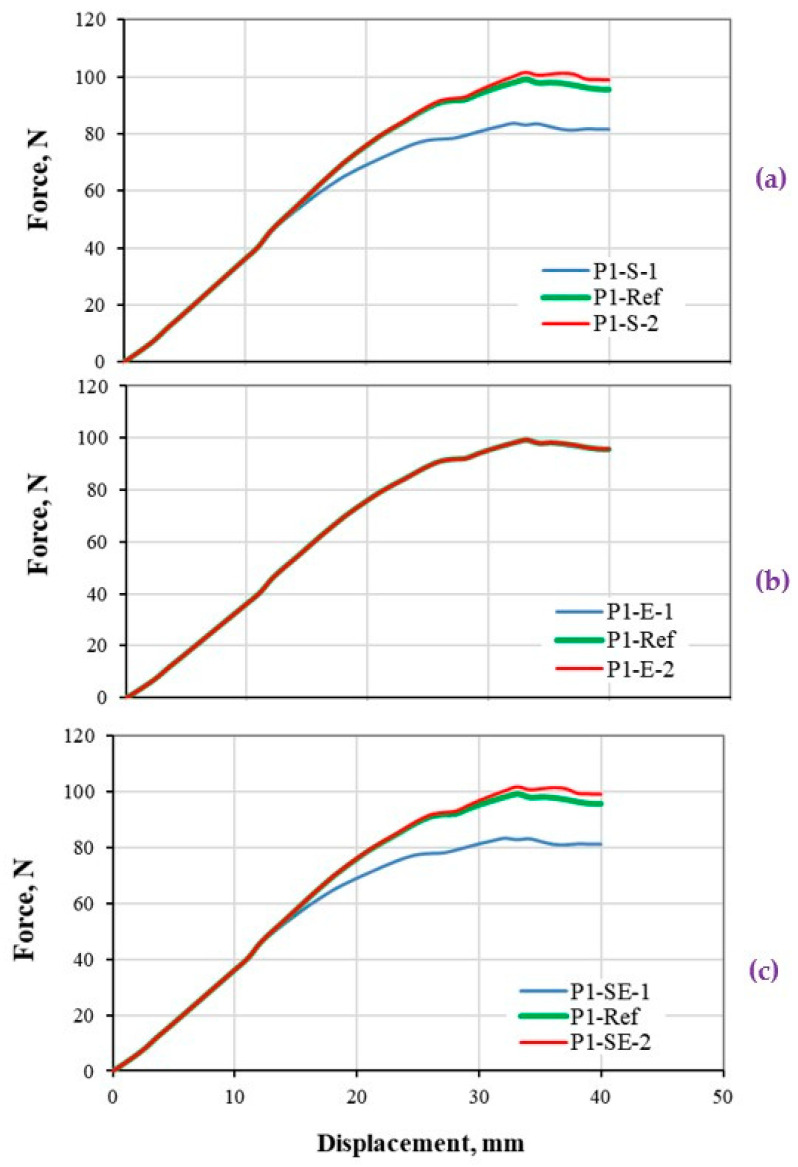
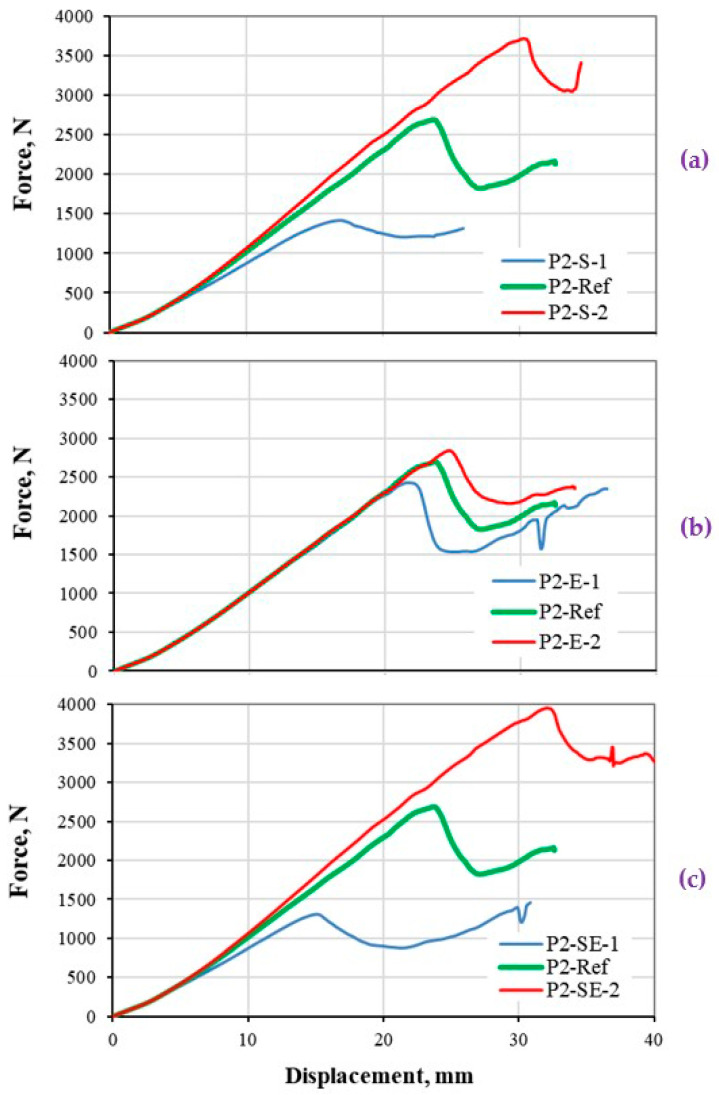
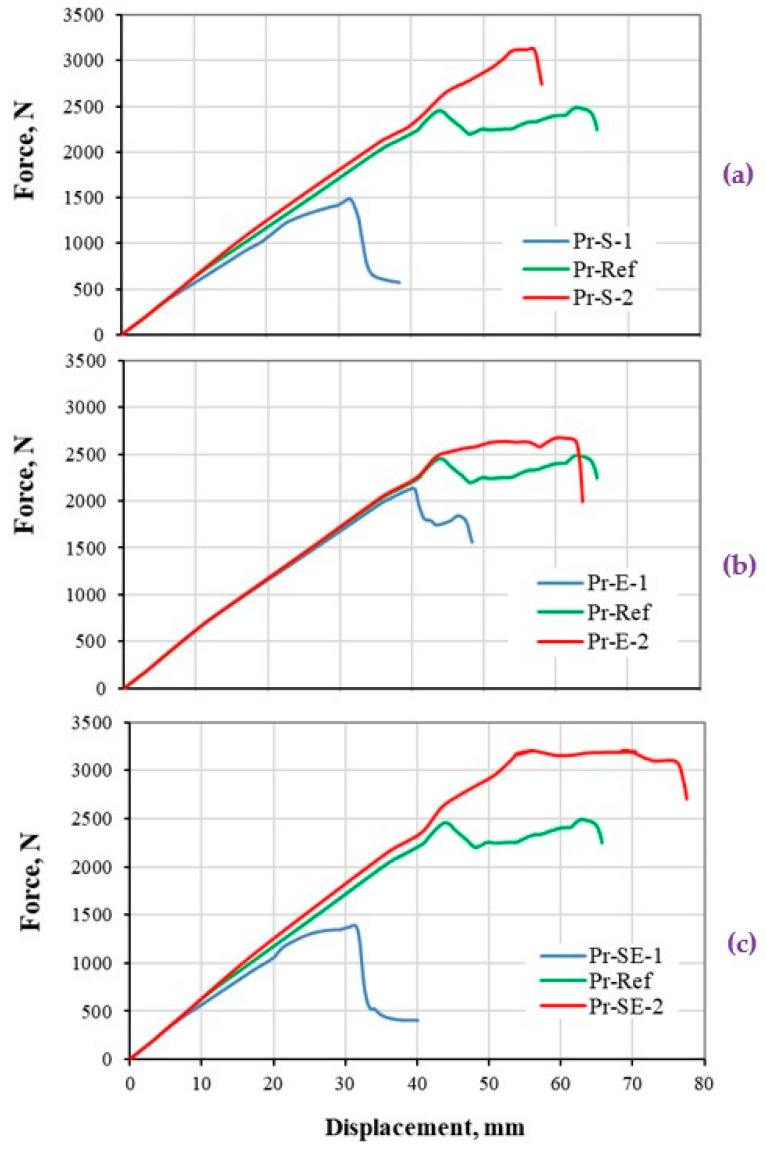
The stiffness response or load-deformation/displacement behavior is the most important mechanical behavior that frequently being utilized for validation of the mathematical-physical models representing the mechanical behavior of solid objects in numerical method, compared to actual experimental data. This numerical study aims to investigate the linear-nonlinear stiffness behavior of carbon fiber-reinforced polymer (CFRP) composites at material and structural levels, and its dependency to the sets of individual/group elastic and damage model parameters. In this regard, a validated constitutive damage model, elastic-damage properties as reference data, and simulation process, that account for elastic, yielding, and damage evolution, are considered in the finite element model development process. The linear-nonlinear stiffness responses of four cases are examined, including a unidirectional CFRP composite laminate (material level) under tensile load, and also three multidirectional composite structures under flexural loads. The result indicated a direct dependency of the stiffness response at the material level to the elastic properties. However, the stiffness behavior of the composite structures depends both on the structural configuration, geometry, lay-ups as well as the mechanical properties of the CFRP composite. The value of maximum reaction force and displacement of the composite structures, as well as the nonlinear response of the structures are highly dependent not only to the mechanical properties, but also to the geometry and the configuration of the structures.
Keywords: CFRP composites; damage mechanics; finite element method; material behavior; stiffness response; structural analysis.
Conflict of interest statement
The authors declare no conflict of interest.
Figures
References
-
- Koloor S.S.R., Khosravani M.R., Hamzah R., Tamin M. FE model-based construction and progressive damage processes of FRP composite laminates with different manufacturing processes. Int. J. Mech. Sci. 2018;141:223–235. doi: 10.1016/j.ijmecsci.2018.03.028. - DOI
-
- Rangappa S.M., Parameswaranpillai J., Siengchin S., Kroll L. Lightweight Polymer Composite Structure: Design and Manufacturing Techniques. CRC Press; Boca Raton, FL, USA: 2020.
-
- Kaddour A., Hinton M., Smith P., Li S. The background to the third world-wide failure exercise. J. Compos. Mater. 2013;47:2417–2426. doi: 10.1177/0021998313499475. - DOI
-
- Hinton M.J., Kaddour A.S., Soden P.D. Failure Criteria in Fibre Reinforced Polymer Composites: The World-Wide Failure Exercise. Elsevier; Amsterdam, The Netherlands: 2004.
-
- Pidaparti R.M. Engineering Finite Element Analysis. Morgan & Claypool Publishers; San Rafael, CA, USA: 2017.
LinkOut - more resources
Full Text Sources
Other Literature Sources
