. 2021 Jan 26;12(1):443.
doi: 10.1038/s41467-020-20495-4.

Neonatal antibiotic exposure impairs child growth during the first six years of life by perturbing intestinal microbial colonization

Affiliations

Neonatal antibiotic exposure impairs child growth during the first six years of life by perturbing intestinal microbial colonization

Atara Uzan-Yulzari et al. Nat Commun. .

Abstract

Exposure to antibiotics in the first days of life is thought to affect various physiological aspects of neonatal development. Here, we investigate the long-term impact of antibiotic treatment in the neonatal period and early childhood on child growth in an unselected birth cohort of 12,422 children born at full term. We find significant attenuation of weight and height gain during the first 6 years of life after neonatal antibiotic exposure in boys, but not in girls, after adjusting for potential confounders. In contrast, antibiotic use after the neonatal period but during the first 6 years of life is associated with significantly higher body mass index throughout the study period in both boys and girls. Neonatal antibiotic exposure is associated with significant differences in the gut microbiome, particularly in decreased abundance and diversity of fecal Bifidobacteria until 2 years of age. Finally, we demonstrate that fecal microbiota transplant from antibiotic-exposed children to germ-free male, but not female, mice results in significant growth impairment. Thus, we conclude that neonatal antibiotic exposure is associated with a long-term gut microbiome perturbation and may result in reduced growth in boys during the first six years of life while antibiotic use later in childhood is associated with increased body mass index.


Conflict of interest statement

The authors declare no competing interests.

Figures
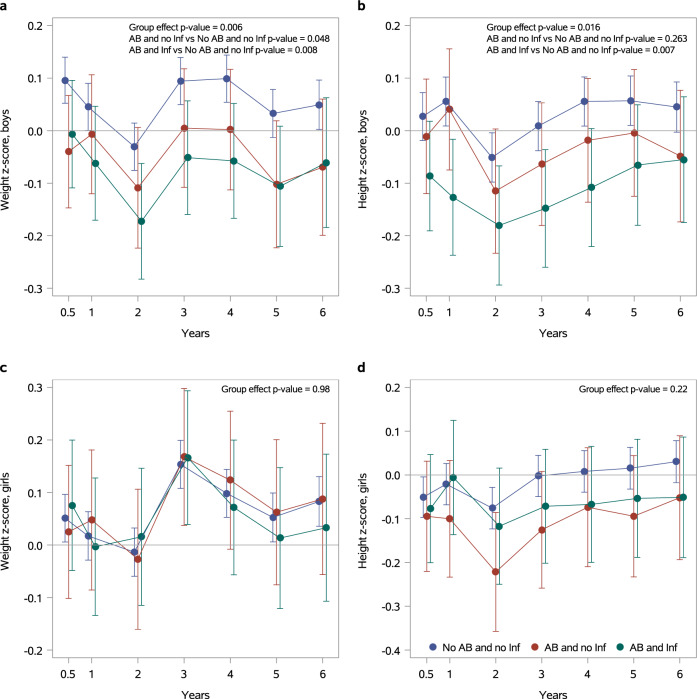
Fig. 1
Fig. 1. Neonatal antibiotic exposure is associated with impaired weight and height gain in boys.
Growth during the first six years in life in children exposed to brief empirical antibiotic therapy (AB and no Inf, N = 513) and children who had received antibiotics for confirmed or clinical bacterial infection (AB and Inf, N = 638) as compared to children not exposed to antibiotics (No AB and no Inf, N = 11,271). Estimates for weight and height Z-scores are presented separately for boys (Fig. 1a Fig. 1b, respectively) and for girls (Fig. 1c Fig. 1d, respectively). The x-axis represents the age in years; the y axis represents the model-based Least Squares Mean (LSM) estimates. The whiskers represent 95% confidence intervals. The data were analyzed using a hierarchical linear mixed model for repeated measurements. Neonatal antibiotic exposure, gestational age, birth weight Z-score, mode of delivery, child’s age, maternal prepregnancy BMI, and intrapartum antibiotic treatment were included in the model as explanatory variables.
Fig. 2
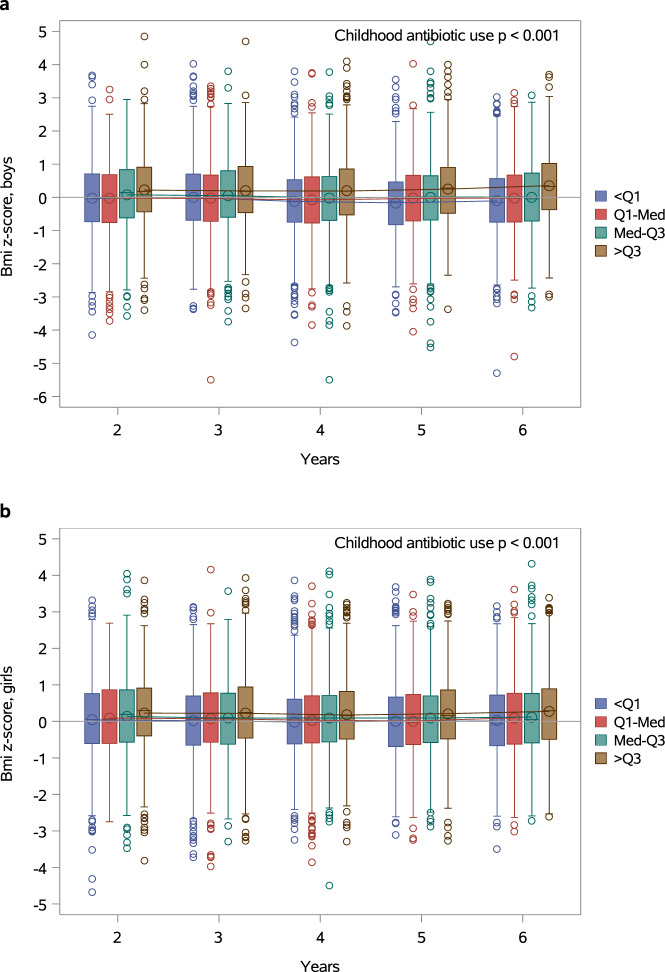
Fig. 2. Early childhood antibiotic exposure is associated with increased BMI.
The association between childhood antibiotic use and BMI Z-scores during the first six years of life in boys (a) and girls (b). The subjects have been categorized by quartiles (Q1, median, and Q3) based on the cumulative number of antibiotic purchases at each point in time. The number of antibiotic purchases was associated with significantly higher BMI Z-scores during the first six years of life in both boys (p < 0.001) and girls (p < 0.001) in a hierarchical linear mixed model for repeated measurements adjusted for gestational age, birth weight Z-score, mode of delivery, maternal prepregnancy BMI and neonatal antibiotic exposure. The boxes represent interquartile range (IQR) and the whiskers represent 1.5 times IQR. The circles represent outliers.
Fig. 3
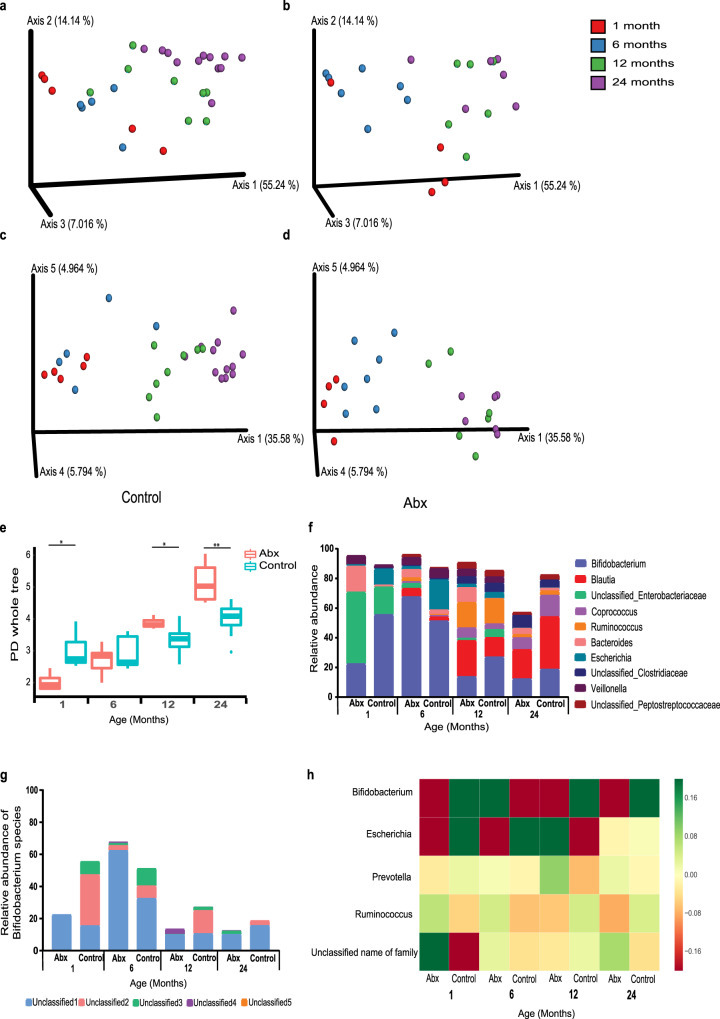
Fig. 3. Alterations in gut bacterial colonization in infants following antibiotic exposure.
16 S rRNA sequencing was performed to characterize bacterial changes. a, b Principal Coordinates Analysis (PCoA) based on Weighted UniFrac and (c, d) Unweighted UniFrac distance matrices in (a, c) control (n = 20), and (b, d) antibiotic-treated (n = 13) infants after 1 (red), 6 (blue), 12 (green), and 24 (purple) months from antibiotic exposure. (e) Alpha diversity comparison based on phylogenetic diversity. Significant differences in bacterial richness between control and antibiotic-treated groups are seen at 1 (p = 0.014), 12 (p = 0.014) and 24 (p = 0.001) months following antibiotic exposure. (f) Relative taxonomic composition based on 10 most abundant genera of control and antibiotic-treated groups. (g) Relative levels of Bifidobacterium species. (h) Average log10 change in the bacteria showing significant differences between groups (p < 0.05 and FDR correction). Green values imply over-representation, and red represents under representation. (*p < 0.05, **p < 0.01, ***p < 0.001 and ****p < 0.0001; minimum four samples in each group).
Fig. 4
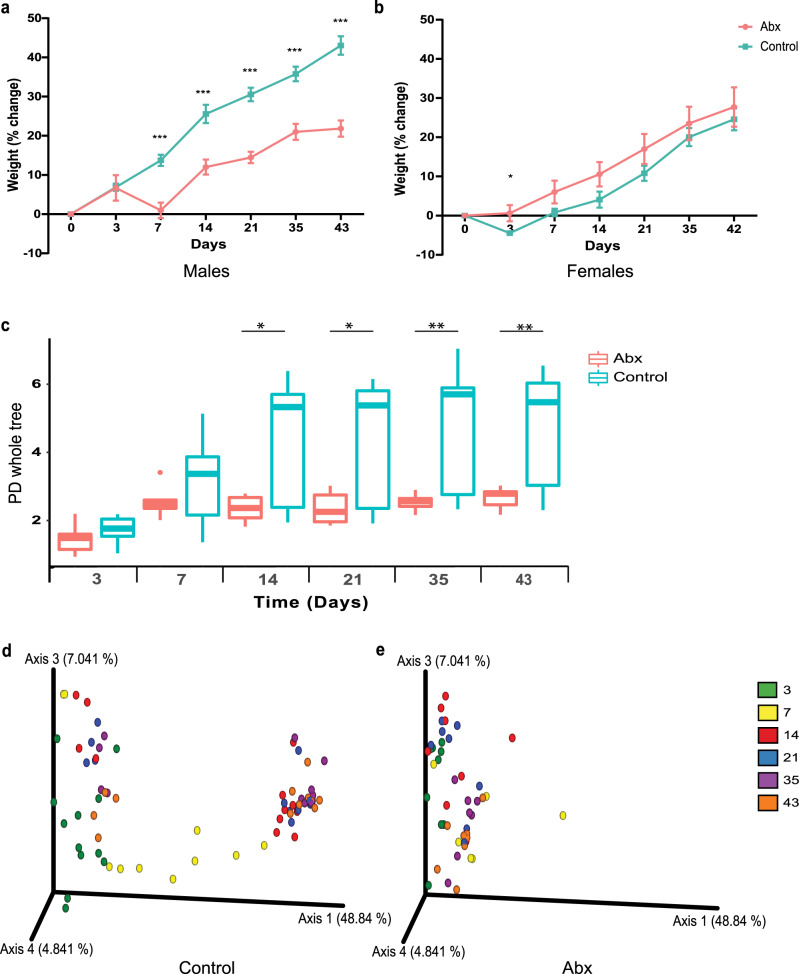
Fig. 4. Fecal microbiota transplant (FMT) from antibiotic-exposed neonates induces changes in weight gain and bacterial composition in germ-free mice.
(a) Male mice receiving FMT from 1-month old infants exposed to neonatal antibiotics (pink) gained significantly less weight compared to mice receiving FMT from non-exposed infants (blue) starting from day 7 (***p ≤ 0.001). (b) Female mice receiving FMT from antibiotic-exposed neonates (pink) exhibit only a transient difference in growth 3 days after transplantation (p = 0.02). (c) Fecal microbiota alpha diversity comparison based on phylogenetic diversity. Significant differences in bacterial richness between mice receiving FMT from control and antibiotic-exposed infants (day 14 p = 0.04; day 21 p = 0.013; day 35 p = 0.004; day 43 p = 0.01). PCoA based on Unweighted UniFrac distances in mice receiving FMT from control (d) antibiotic-exposed (e) infants at six-time points, 3 (green), 7 (yellow), 14 (red), 21 (blue), 35 (purple) and 43 (orange) days after FMT. (For (A) control group, n = 8–9; abx group, n = 12. For (ce), control group, day 3,14,21,35 and 43, n = 12; day 7, n = 11. Abx group, day 3, n = 9; day 7, n = 6; day 14,21,35 and 43, n = 8. Four samples from control infants and 3 samples from antibiotic-treated infants were used for fecal transplantation). (*p < 0.05, **p < 0.01, ***p < 0.001 and ****p < 0.0001; weight data represent the mean ± SEM of at least four samples in each group).

References

    1. Schrag, S. J. et al. Epidemiology of invasive early-onset neonatal sepsis, 2005 to 2014. Pediatrics138, 10.1542/peds.2016-2013 (2016). - PubMed
    1. Klingenberg C, Kornelisse RF, Buonocore G, Maier RF, Stocker M. Culture-negative early-onset neonatal sepsis - at the crossroad between efficient sepsis care and antimicrobial stewardship. Front Pediatr. 2018;6:285. doi: 10.3389/fped.2018.00285. - DOI - PMC - PubMed
    1. Persaud RR, et al. Perinatal antibiotic exposure of neonates in Canada and associated risk factors: a population-based study. J. Matern. Fetal Neonatal Med. 2015;28:1190–1195. doi: 10.3109/14767058.2014.947578. - DOI - PubMed
    1. Fjalstad JW, et al. Early-onset sepsis and antibiotic exposure in term infants: a nationwide population-based study in Norway. Pediatr. Infect. Dis. J. 2016;35:1–6. doi: 10.1097/INF.0000000000001097. - DOI - PubMed
    1. Greenwood C, et al. Early empiric antibiotic use in preterm infants is associated with lower bacterial diversity and higher relative abundance of Enterobacter. J. Pediatrics. 2014;165:23–29. doi: 10.1016/j.jpeds.2014.01.010. - DOI - PMC - PubMed

Publication types

MeSH terms

Substances