


Oregano (Origanum vulgare) Extract Enhances Zebrafish (Danio rerio) Growth Performance, Serum and Mucus Innate Immune Responses and Resistance against Aeromonas hydrophila Challenge
- PMID: 33503883
- PMCID: PMC7912135
- DOI: 10.3390/ani11020299
Oregano (Origanum vulgare) Extract Enhances Zebrafish (Danio rerio) Growth Performance, Serum and Mucus Innate Immune Responses and Resistance against Aeromonas hydrophila Challenge
Abstract
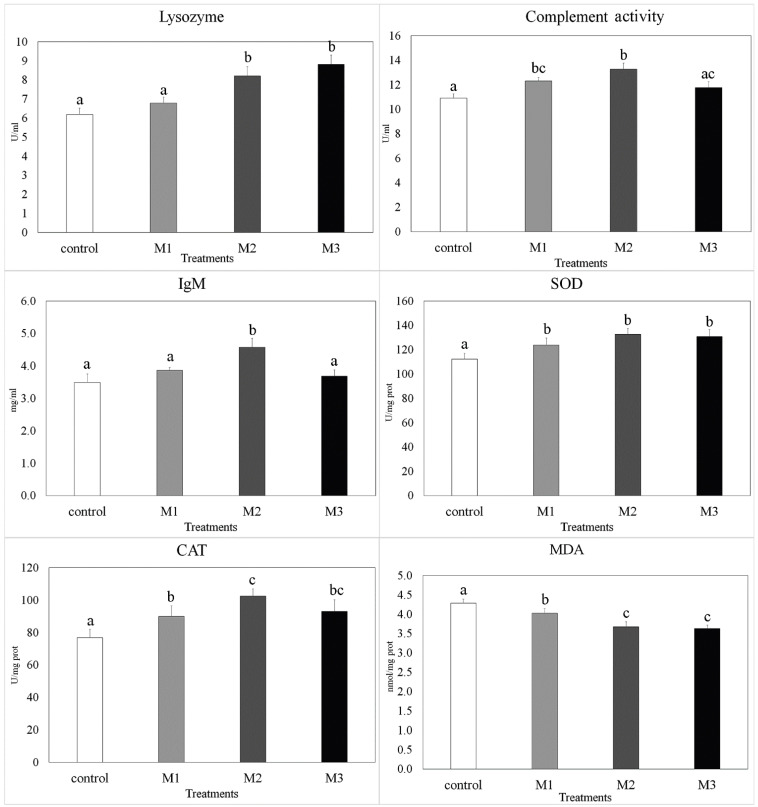
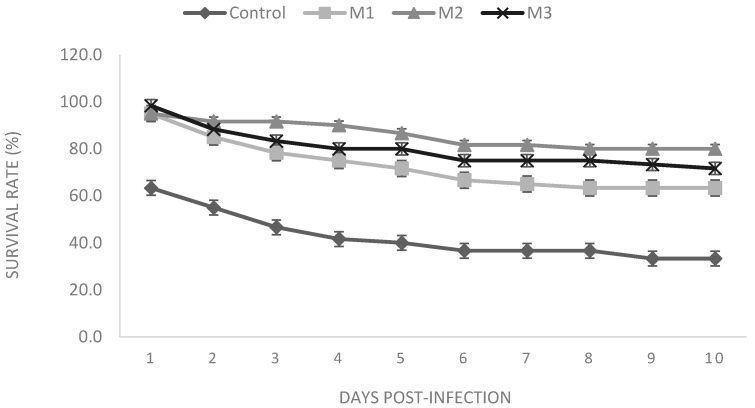
This study evaluated the dietary effects of an ultrasound-assisted extract of Origanum vulgare on the growth, antioxidant and immune responses (serum and mucosal) and resistance of zebrafish (Danio rerio) against Aeromonas hydrophila. Four hundred and forty adult zebrafish were distributed into 12 tanks and fed 4 experimental diets including 0% (control), 0.5% (M1), 1% (M2) and 2% (M3) of the extract per kg-1 diet for eight weeks. Fish were then challenged with A. hydrophila and mortality was recorded for 10 days. Results revealed that the extract exerted potent effects on growth parameters of weight gain and specific growth rate. The feed conversion ratio was significantly lower in fish fed extract-incorporated diets. O. vulgare extract improved antioxidant and immune responses, resulting in less sensitivity to oxidative stress and a higher survival rate when challenged with A. hydrophila. Overall, the greatest effects were observed in individuals with 1% dietary inclusion of the extract. These results suggest that the extract from the plant Origanum vulgare possesses a great potential to be used in the aquaculture industry and that zebrafish is an appropriate model for nutrition studies.
Keywords: Origanum vulgare; bacterial challenge; fish model; innate immunity; medicinal plant extracts; ultrasound-assisted extraction; zebrafish.
Conflict of interest statement
The funders had no role in the design of the study; in the collection, analyses, or interpretation of data; in the writing of the manuscript, or in the decision to publish the results. The contents of the manuscript have not been published previously, they have not been submitted elsewhere for consideration, nor are they in press. All of the authors have seen and approved the manuscript. There are no competing interests, neither financial nor personal, or other relationships with other persons or organizations.
Figures
References
-
- Immanuel G., Vincybai V.C., Sivaram V., Palavesam A., Marian M. Effect of butanolic extracts from terrestrial herbs and seaweeds on the survival, growth and pathogen (Vibrio parahaemolyticus) load on shrimp Penaeus indicus juveniles. Aquaculture. 2004;236:53–65. doi: 10.1016/j.aquaculture.2003.11.033. - DOI
-
- Pandey G., Sharma M. Immunostimulant effect of medicinal plants on fish. Int. Res. J. Pharm. 2012;3:112–114.
-
- Reverter M., Tapissier-Bontemps N., Sarter S., Sasal P., Caruso D. Moving towards more sustainable aquaculture practices: A meta-analysis on the potential of plant-enriched diets to improve fish growth, immunity and disease resistance. Rev. Aquac. 2020:1–19. doi: 10.1111/raq.12485. - DOI
-
- Van Hai N. The use of medicinal plants as immunostimulants in aquaculture: A review. Aquaculture. 2015;446:88–96. doi: 10.1016/j.aquaculture.2015.03.014. - DOI
-
- Elumalai P., Kurian A., Lakshmi S., Faggio C., Esteban M.A., Ringø E. Herbal Immunomodulators in Aquaculture. Rev. Fish. Sci. Aquac. 2020:1–25. doi: 10.1080/23308249.2020.1779651. - DOI
LinkOut - more resources
Full Text Sources
Other Literature Sources
