


Photodynamic and Cold Atmospheric Plasma Combination Therapy Using Polymeric Nanoparticles for the Synergistic Treatment of Cervical Cancer
- PMID: 33504007
- PMCID: PMC7865232
- DOI: 10.3390/ijms22031172
Photodynamic and Cold Atmospheric Plasma Combination Therapy Using Polymeric Nanoparticles for the Synergistic Treatment of Cervical Cancer
Abstract
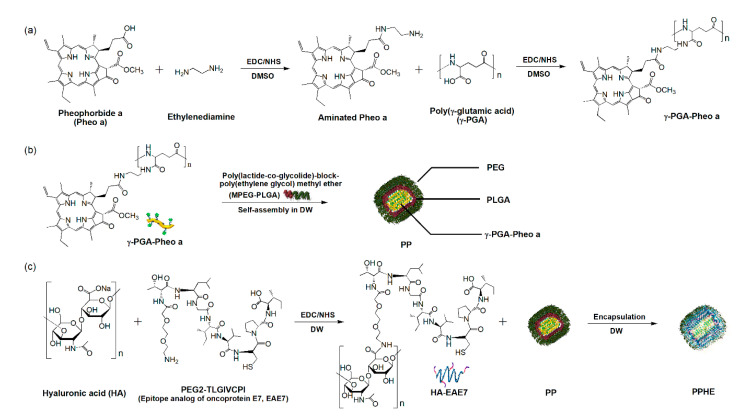
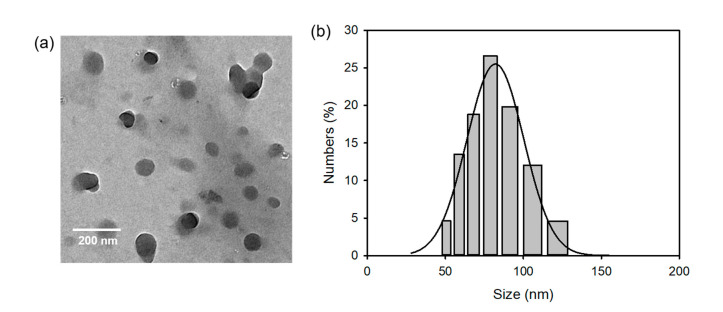
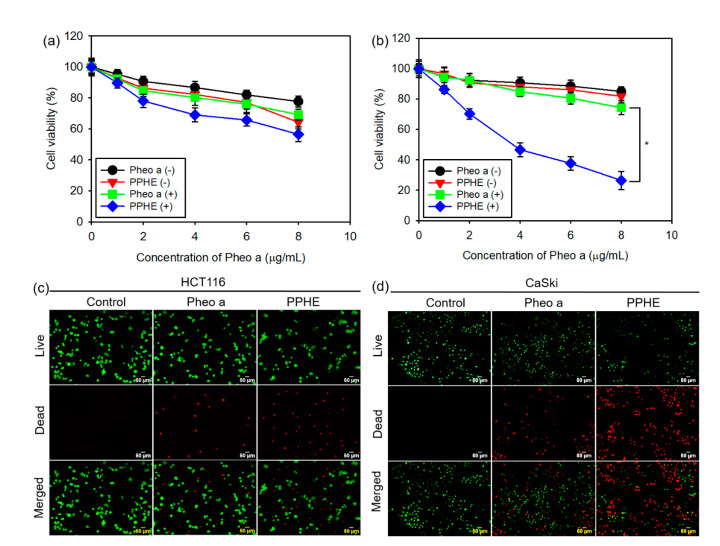
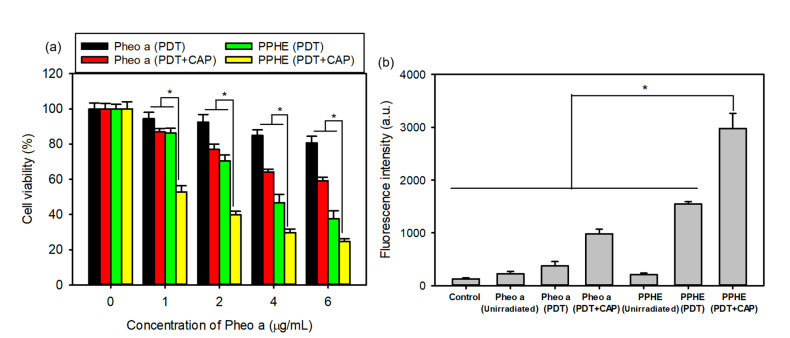
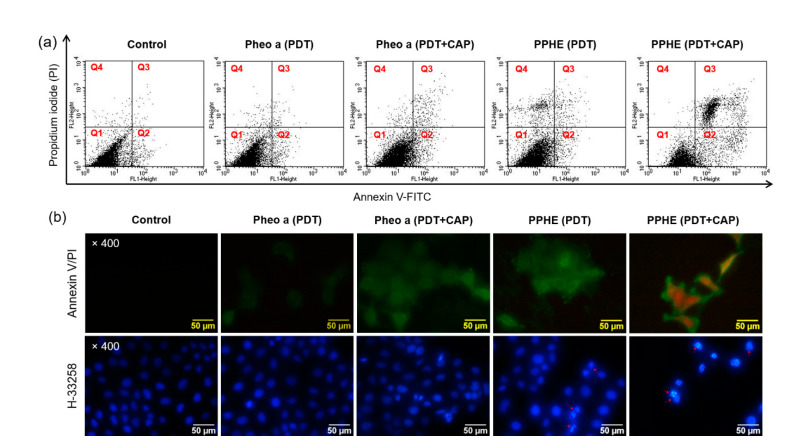
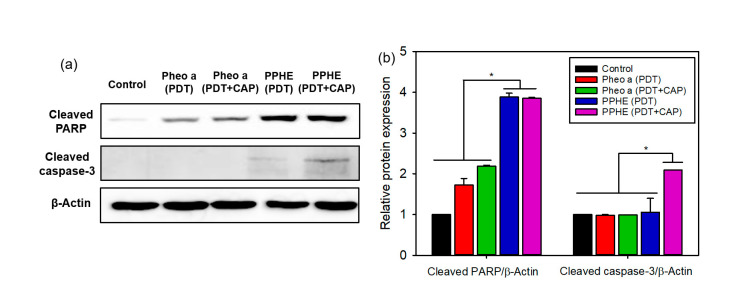
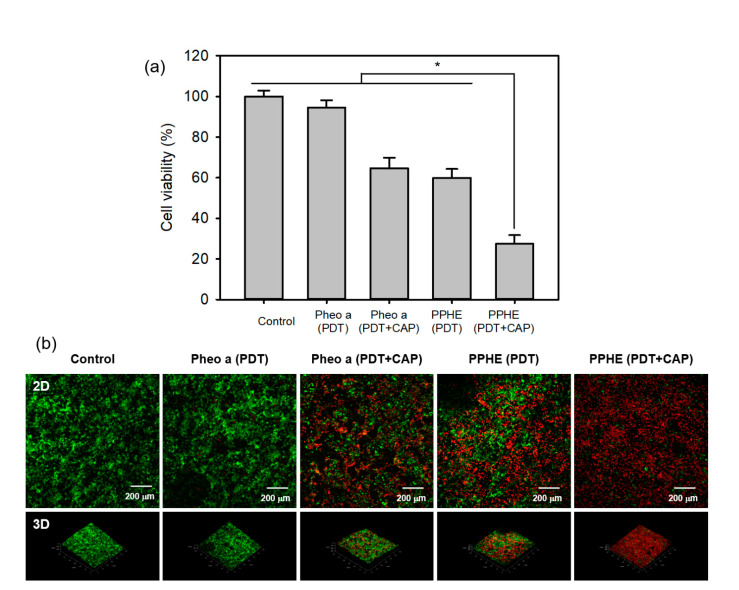
Integrating multi-modal therapies into one platform could show great promise in overcoming the drawbacks of conventional single-modal therapy and achieving improved therapeutic efficacy in cancer. In this study, we prepared pheophorbide a (Pheo a)/targeting ligand (epitope analog of oncoprotein E7, EAE7)-conjugated poly(γ-glutamic acid) (γ-PGA)/poly(lactide-co-glycolide)-block-poly(ethylene glycol) methyl ether (MPEG-PLGA)/hyaluronic acid (PPHE) polymeric nanoparticles via self-assembly and encapsulation method for the photodynamic therapy (PDT)/cold atmospheric plasma (CAP) combinatory treatment of human papillomavirus (HPV)-positive cervical cancer, thereby enhancing the therapeutic efficacy. The synthesized PPHE polymeric nanoparticles exhibited a quasi-spherical shape with an average diameter of 80.5 ± 17.6 nm in an aqueous solution. The results from the in vitro PDT efficacy assays demonstrated that PPHE has a superior PDT activity on CaSki cells due to the enhanced targeting ability. In addition, the PDT/CAP combinatory treatment more effectively inhibited the growth of cervical cancer cells by causing elevated intracellular reactive oxygen species generation and apoptotic cell death. Moreover, the three-dimensional cell culture model clearly confirmed the synergistic therapeutic efficacy of the PDT and the CAP combination therapy using PPHE on CaSki cells. Overall, these results indicate that the PDT/CAP combinatory treatment using PPHE is a highly effective new therapeutic modality for cervical cancer.
Keywords: cervical cancer; cold atmospheric plasma; combination therapy; photodynamic therapy; polymeric nanoparticles.
Conflict of interest statement
The authors declare no conflict of interest.
Figures
References
-
- Gao X., Jin Z., Tna X., Zhang C., Zou C., Zhang W., Ding J., Das B.C., Hitzeroth I.I., Debata P.R., et al. Hyperbranched poly(β-amino ester) based polyplex nanoparticles for delivery of CRISPR/Cas9 system and treatment of HPV infection associated cervical cancer. J. Control. Release. 2020;321:654–668. doi: 10.1016/j.jconrel.2020.02.045. - DOI - PubMed
-
- Alejo M., Alemany L., Clavero O., Quiros B., Vighi S., Seoud M., Cheng-Yang C., Garland S.M., Juanpere N., Lloreta J., et al. On behalf of RIS HPV TT study group. Contribution of human papillomavirus in neuroendocrine tumors from a series of 10,575 invasive cervical cancer cases. Papillomavirus Res. 2018;5:134–142. doi: 10.1016/j.pvr.2018.03.005. - DOI - PMC - PubMed
MeSH terms
Substances
Grants and funding
LinkOut - more resources
Full Text Sources
Other Literature Sources
Medical
Miscellaneous
