. 2021 Jan 27;12(1):624.
doi: 10.1038/s41467-021-20938-6.

Desynchronized liquid crystalline network actuators with deformation reversal capability

Affiliations

Desynchronized liquid crystalline network actuators with deformation reversal capability

Yao-Yu Xiao et al. Nat Commun. .

Abstract

Liquid crystalline network (LCN) actuator normally deforms upon thermally or optically induced order-disorder phase transition, switching once between two shapes (shape 1 in LC phase and shape 2 in isotropic state) for each stimulation on/off cycle. Herein, we report an LCN actuator that deforms from shape 1 to shape 2 and then reverses the deformation direction to form shape 3 on heating or under light only, thus completing the shape switch twice for one stimulation on/off cycle. The deformation reversal capability is obtained with a monolithic LCN actuator whose two sides are made to start deforming at different temperatures and exerting different reversible strains, by means of asymmetrical crosslinking and/or asymmetrical stretching. This desynchronized actuation strategy offers possibilities in developing light-fueled LCN soft robots. In particular, the multi-stage bidirectional shape change enables multimodal, light-driven locomotion from the same LCN actuator by simply varying the light on/off times.


Conflict of interest statement

The authors declare no competing interests.

Figures
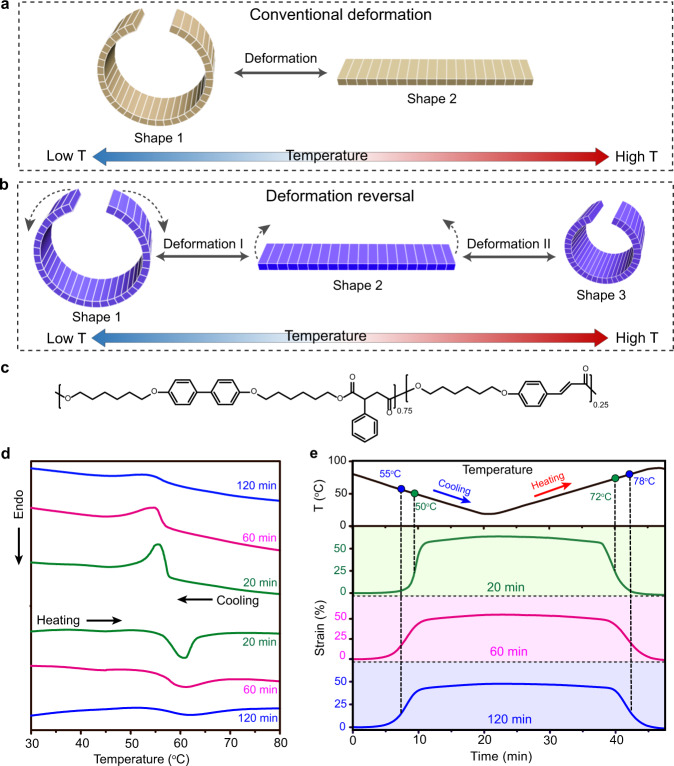
Fig. 1
Fig. 1. Concept of deformation-reversal behavior and crosslinking-determined mechanical response of LCN actuators.
a Conventional shape change with only one deformation direction during one heating (or cooling) process. b Deformation reversal in LCN actuators: by only heating (or cooling), the actuator possesses two deformation stages with contrary shape evolution directions, generating three characteristic shapes with a deformation reversal. c Chemical structure of the polymer used for the LCN actuators. d Differential scanning calorimetry (DSC) curves of the LCN strips with each side photocrosslinked for 20 min (green), 60 min (magenta), and 120 min (blue), recorded in the second heating scan (bottom) and first cooling scan (top). e Thermally induced elongation and contraction under controlled cooling and heating (3 °C min−1), respectively, for LCN strips with each side photocrosslinked for 20 min (green), 60 min (magenta), and 120 min (blue), the strain being measured with the strip length in the isotropic state as the reference length. Note: Unless otherwise stated, the dashed arrow in a drawn cartoon shape indicates the deformation direction leading to the adjacent shape on the right.
Fig. 2
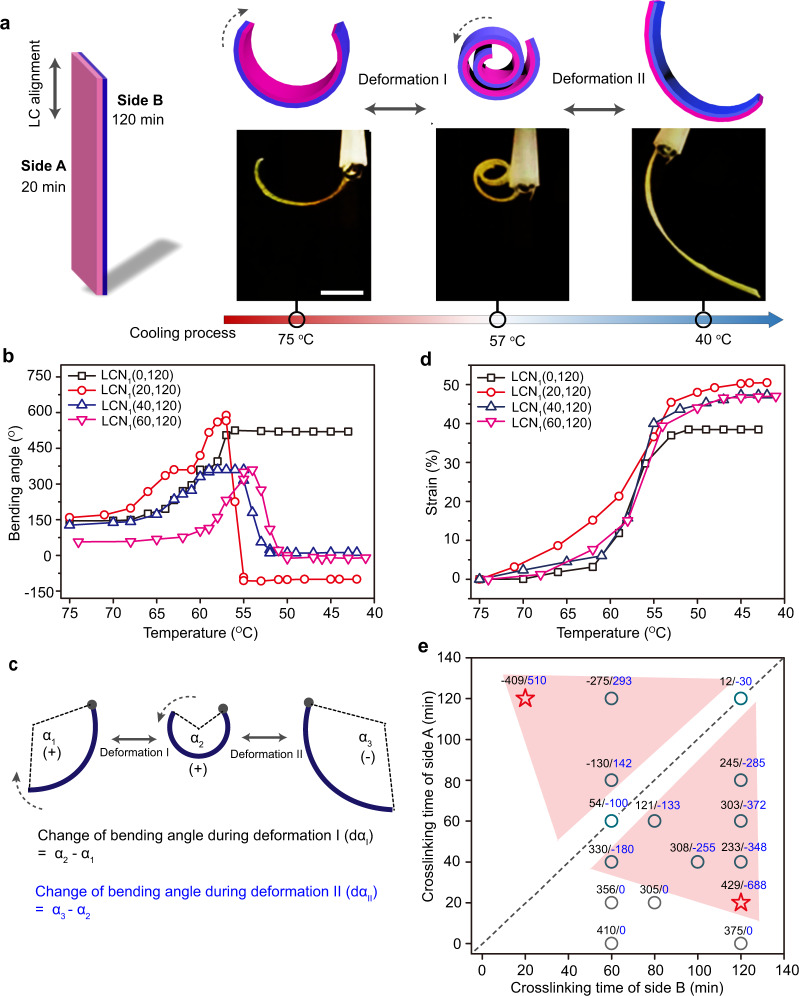
Fig. 2. Deformation reversal based on asymmetrical crosslinking.
a Schematics and photographs (scale bars: 2 mm) of a planar aligned LCN1(20,120) actuator displaying deformation reversal during cooling process (see also Supplementary Movie 1). b Bending angle of LCN1(X,Y) as a function of temperature recorded during cooling. c Schematics showing how to define and determine α1, α2, α3, dαI, and dαII. Note: Bending toward side A is defined as positive while bending toward side B is defined as negative. d Plots of strain (measured with the strip length in the isotropic state as the reference) versus temperature of LCN1(X,Y) actuators. e A deformation-reversal diagram showing the crosslinking-determined bidirectional bending, as revealed by dαI (black) and dαII (blue), for LCN1(X,Y) actuators during one cooling run. The colored regions show the crosslinking conditions required for realizing prominent deformation-reversal behavior.
Fig. 3
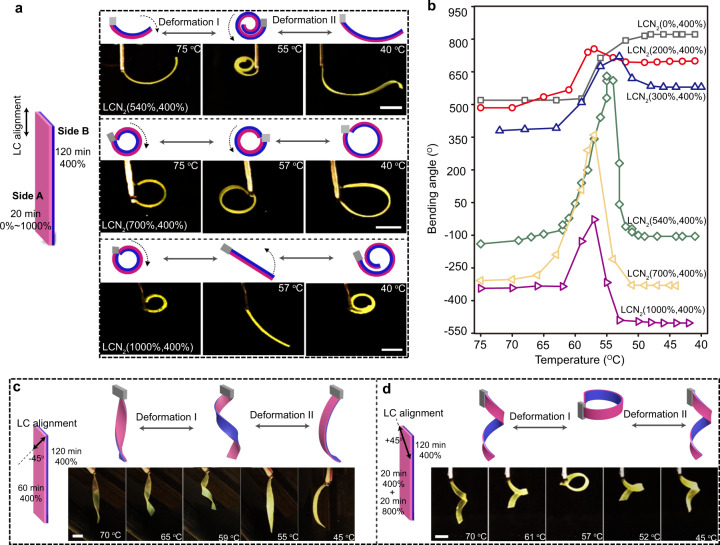
Fig. 3. Tuning of deformation-reversal behavior.
a Schematics and photographs of planar aligned LCN2(540%,400%), LCN2(700%,400%) and LCN2(1000%,400%) actuators displaying diverse deformation-reversal behaviors during cooling (see also Supplementary Movie 2). b Bending angle changes of LCN2(M,N) versus temperature during cooling process. c Schematics and photographs of an asymmetrically crosslinked LCN actuator with the LC director at a −45° angle with respect to the long axis of the strip, displaying twisting-untwisting two-stage deformation during cooling (see also Supplementary Movie 3). d Schematics and photographs of an asymmetrically stretched and crosslinked LCN actuator with the LC director at a +45° angle with respect to the long axis of the strip, displaying untwisting-twisting two-stage deformation during cooling (see also Supplementary Movie 4). Scale bars: 2 mm.
Fig. 4
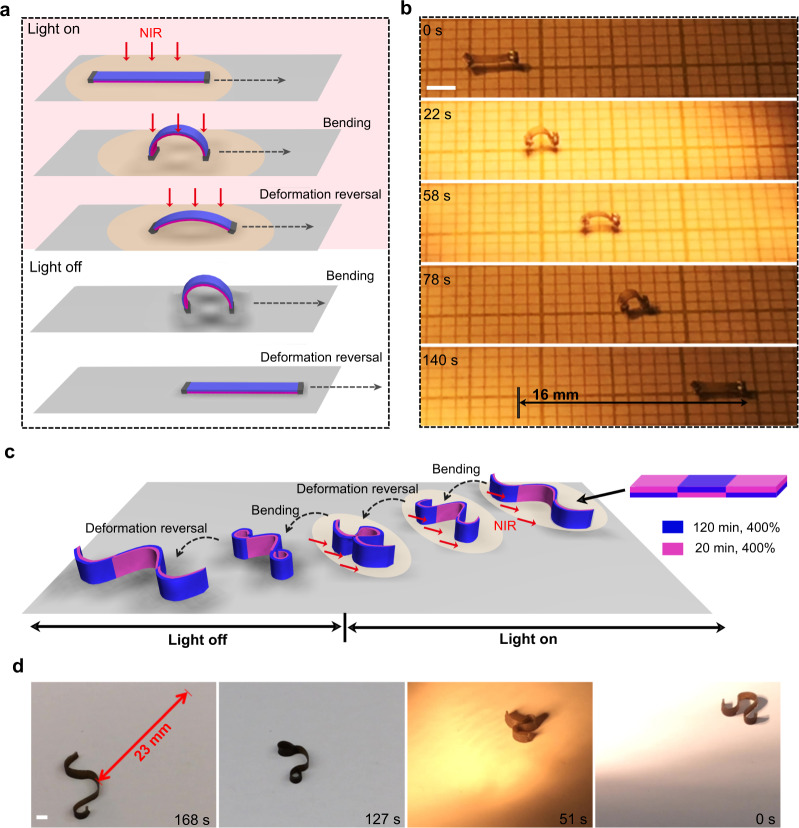
Fig. 4. Light-driven walkers with doubled step numbers.
Schematics (a) and photographs (b) of polydopamine-coated LCN1(20,120) microwalker, placed with one side on the substrate, which can advance two steps through arching up/flattening down in a single on/off irradiation cycle (see also Supplementary Movie 6, scale bar: 2 mm). Schematics (c) and photographs (d) of a patterned, wave-shaped walker with one edge on the substrate, which can move based on deformation reversal-induced four-stage deformation in one light-on/off cycle (see also Supplementary Movie 7, scale bar: 2 mm).
Fig. 5
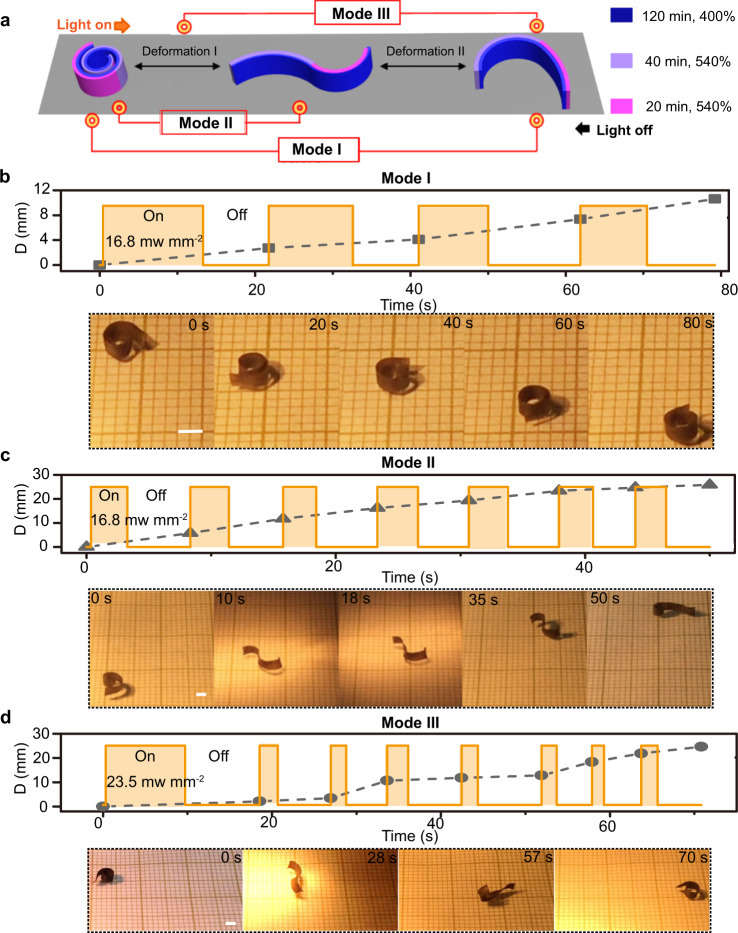
Fig. 5. Multimodal locomotion of a single deformation-reversal LCN actuator.
a Schematics of an actuator prepared to exhibit reversible switching among three different shapes under one light-on/off cycle. b–d Displacement (D) versus time and light irradiation pattern (top) as well as photographs (bottom) showing different locomotion modes for the same actuator: b moving through full two-stage shape change leading to body rotation (Mode I); c walking based on unidirectional stage I deformation (Mode II); and d moving through part of two-stage deformation and imbalanced turning over (Mode III) (see also Supplementary Movie 8). Scale bars: 2 mm.

References

    1. Guin T, et al. Layered liquid crystal elastomer actuators. Nat. Commun. 2018;9:2531. doi: 10.1038/s41467-018-04911-4. - DOI - PMC - PubMed
    1. Ma S, Li X, Huang S, Hu J, Yu H. A light-activated polymer composite enables on-demand photocontrolled motion: transportation at the liquid/air interface. Angew. Chem. Int. Ed. 2019;58:2655–2659. doi: 10.1002/anie.201811808. - DOI - PubMed
    1. Yu H, Ikeda T. Photocontrollable liquid-crystalline actuators. Adv. Mater. 2011;23:2149–2180. doi: 10.1002/adma.201100131. - DOI - PubMed
    1. Ube T, Kawasaki K, Ikeda T. Photomobile liquid-crystalline elastomers with rearrangeable networks. Adv. Mater. 2016;28:8212–8217. doi: 10.1002/adma.201602745. - DOI - PubMed
    1. Lu H-F, Wang M, Chen X-M, Lin B-P, Yang H. Interpenetrating liquid-crystal polyurethane/polyacrylate elastomer with ultrastrong mechanical property. J. Am. Chem. Soc. 2019;141:14364–14369. doi: 10.1021/jacs.9b06757. - DOI - PubMed

LinkOut - more resources