


Effect of alcohol consumption on kidney function: population-based cohort study
- PMID: 33504820
- PMCID: PMC7840672
- DOI: 10.1038/s41598-021-81777-5
Effect of alcohol consumption on kidney function: population-based cohort study
Abstract
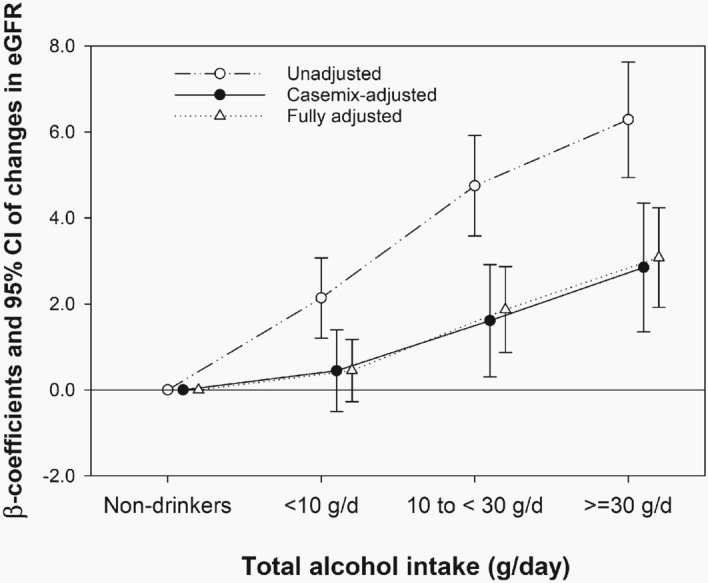
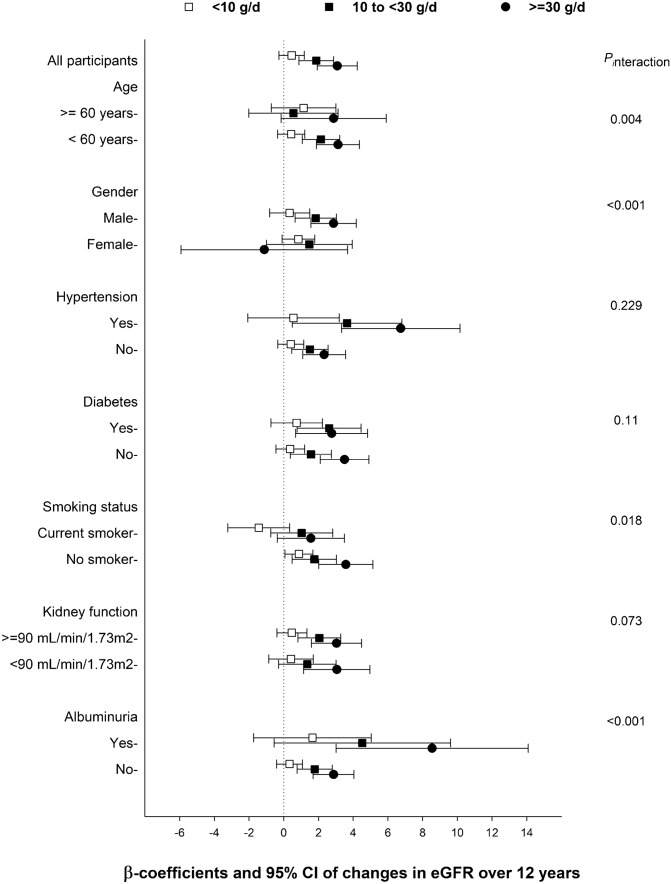
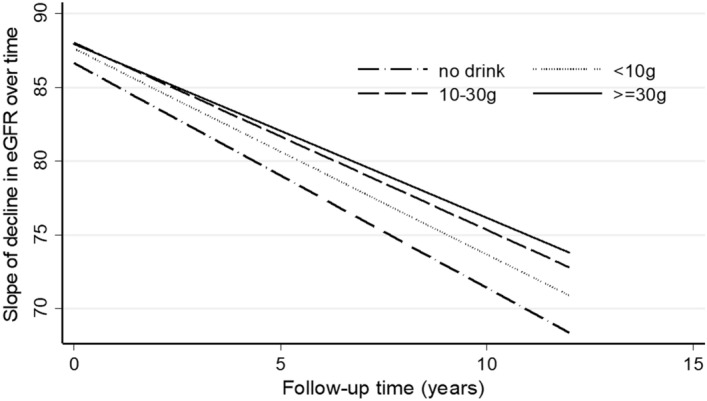
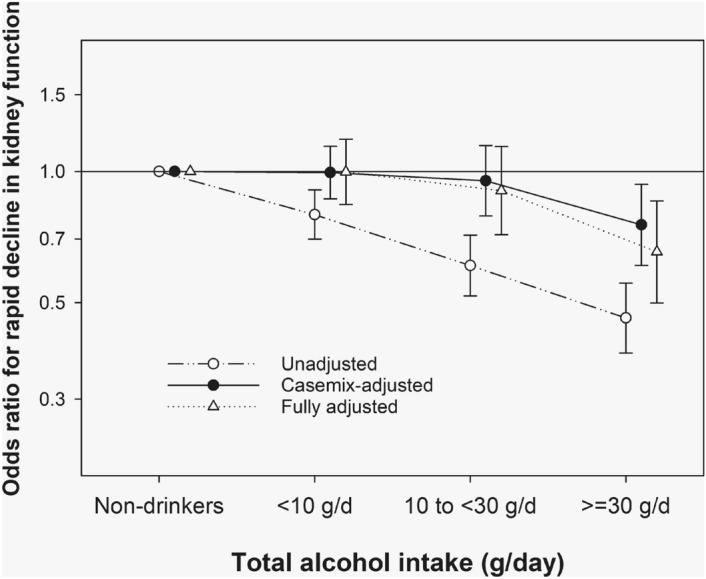
The association between alcohol consumption and kidney function is intriguing, but study results are mixed and controversial. We examined the association of alcohol consumption with the overall change in kidney function over 12 years. We analyzed data from a population-based cohort that was part of the Korean Genome and Epidemiology Study. Primary exposure was total alcohol intake (non-drinkers, 0 to < 10 g/day, 10 to < 30 g/day, and ≥ 30 g/day). Main outcome was decline in kidney function over 12 years. Our study included 5729 participants (mean [SD] age, 51 [8] years; 46% males). Compared to non-drinkers, higher alcohol intake groups had lesser reduction in estimated glomerular filtration rate (eGFR) over 12 years; fully adjusted beta coefficients and 95% confidence intervals were 0.45 (- 0.27, 1.18), 1.87 (0.88, 2.87), and 3.08 (1.93, 4.24) for participants with alcohol intake of < 10, 10 to < 30, and ≥ 30 g/day, respectively. However, this association was attenuated among women, smoker, and age ≥ 60 year. Compared with not drinking, more frequent alcohol consumption and binge drinking were associated with lesser reduction in eGFR. Our findings suggest that alcohol consumption may have a favorable effect on kidney function among the general population.
Conflict of interest statement
The authors declare no competing interests.
Figures
References
-
- (WHO), W. H. O. Global Status Report on Alcohol and Health 2018. (World Health Orgaization, Geneva, 2018).
-
- Health, K. N. I. o. Annual Report 2016. (2016).
MeSH terms
LinkOut - more resources
Full Text Sources
Other Literature Sources
Medical
Research Materials
Miscellaneous
