


Grading Sphero-Cylinder Spectacle Similarity
- PMID: 33505178
- PMCID: PMC7829599
- DOI: 10.2147/OPTO.S289770
Grading Sphero-Cylinder Spectacle Similarity
Abstract
Background: Portable autorefractors can estimate refractive error in remote locations, but sphero-cylinder comparison and donated-spectacle dispensing are not yet simple.
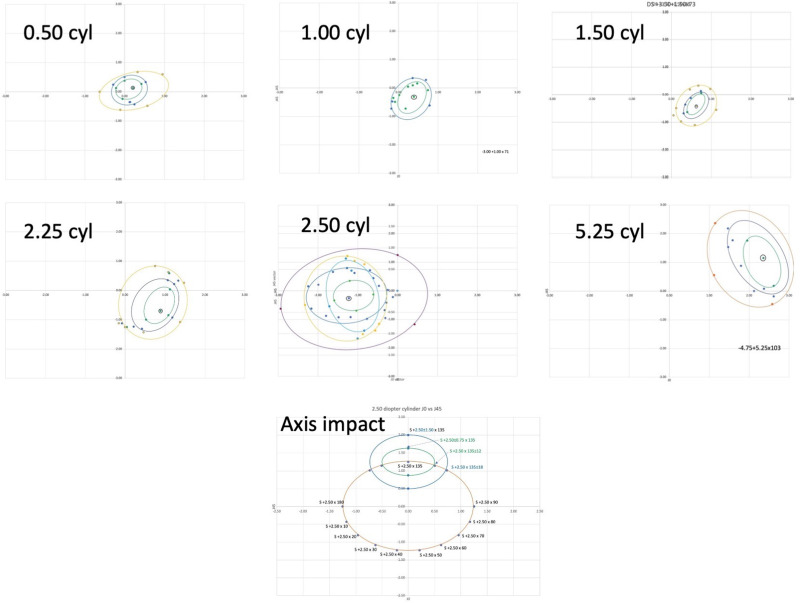
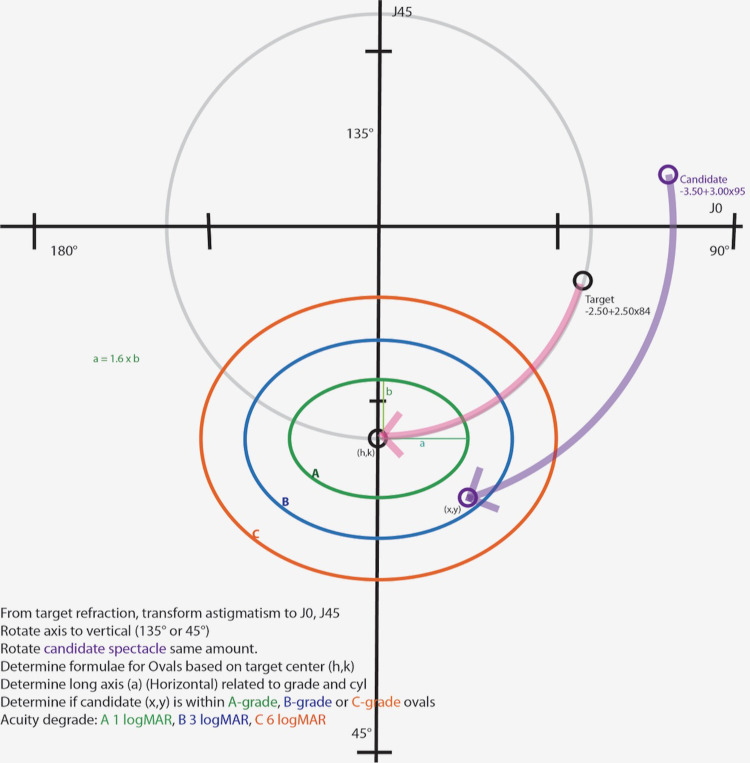
Methods: Normal astigmats determined best corrected acuity, then degraded 1 logMAR (Grade A), 3 logMAR (Grade B), and 6 logMAR (Grade C) to determine limits of astigmatism axis and power at these levels. The cylindrical refraction was vector transformed with J0 on the abscissa and J45 on the ordinate.
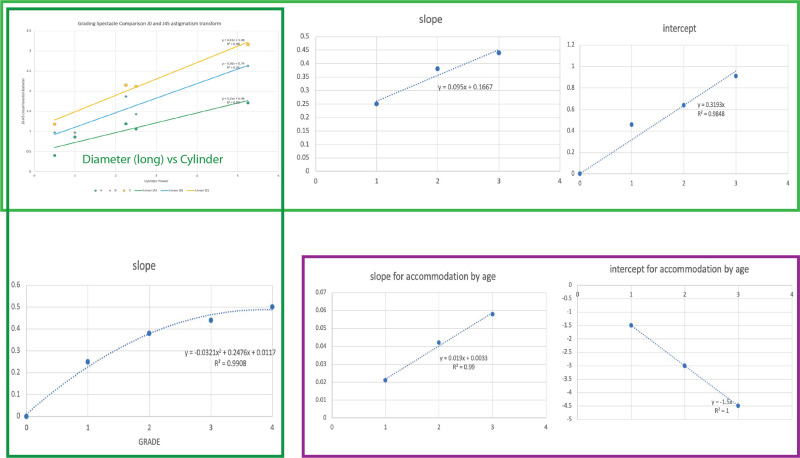
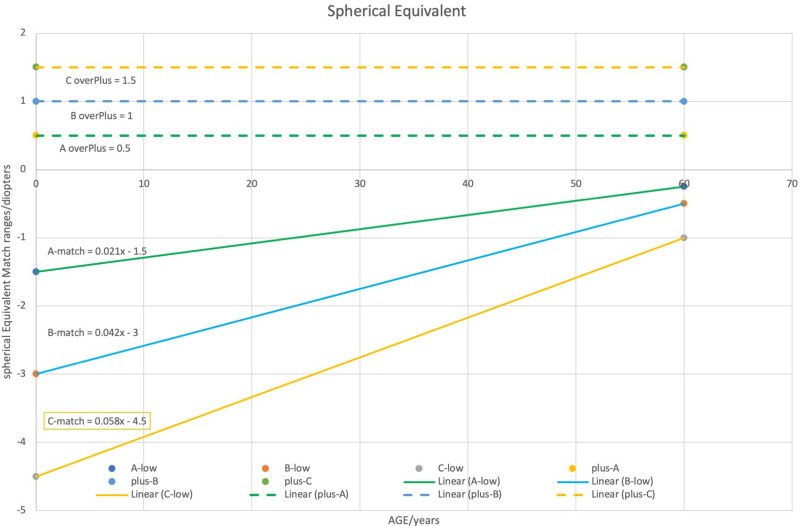
Results: Ten subjects produced multiple refractions at the interfaces of Grades A, B, and C representing ovals on the J0 and J45 coordinates. When rotated, the vertical axis represented 45° or 135°, the horizontal long axis was 1.6× the short axis. The size of the ovals positively correlated with cylinder power. Given a target refraction, the comparability of a candidate lens was demonstrated on our interactive database yielding a simple A, B, C, or worse grade for cylinder, spherical equivalent, and pupillary diameter.
Conclusions/relevance: Inputting a remote autorefraction, pupillary diameter and age as target and a donated spectacle as the candidate with a "B" grade similarity would be expected to attain 20/40 acuity (3 logMAR degrade) if best corrected visual acuity was 20/20. This practical Excel database could facilitate widespread remote lay dispensing of the cylinder as well as spherical spectacles. The grade similarity can also compare refracting tools such as photoscreeners and hand-held autorefractors.
Clinical trials registry: NCT04297969.
Keywords: donated recyled spectacles; forensic optometry; portable autorefraction; remote dispensing; vision screen validation.
© 2021 Arnold et al.
Conflict of interest statement
Drs. Arnold and Smith are board members of PDI Check that makes a vision screening game for the autostereoscopic Nintendo 3DS console with a PDI Check pending patent. Dr. Arnold is also President and a board member of Glacier Medical Software which markets cloud-based NICU monitoring software ROP Check. Dr. Arnold is a non-paid advisor for Adaptica, plusoptiX and Go Check Kids. Dr. Arnold is coordinator of the Alaska Blind Child Discovery which has received discounted vision screen technology from several vendors. Dr. Arnold is also an investigator and protocol developer for the NIH-supported Pediatric Eye Disease Investigator Group (PEDIG). The authors report no other conflicts of interest in this work.
Figures

References
Associated data
LinkOut - more resources
Full Text Sources
Other Literature Sources
Medical
