


Mutational sensitivity of D614G in spike protein of SARS-CoV-2 in Jordan
- PMID: 33506114
- PMCID: PMC7815659
- DOI: 10.1016/j.bbrep.2020.100896
Mutational sensitivity of D614G in spike protein of SARS-CoV-2 in Jordan
Abstract
Background: Spike protein is the surface glycoprotein of the severe acute respiratory syndrome-coronavirus-2 (SARS-CoV-2) necessary for the entry of the virus via the transmembrane receptors of the human respiratory cells causing COVID-19 disease.
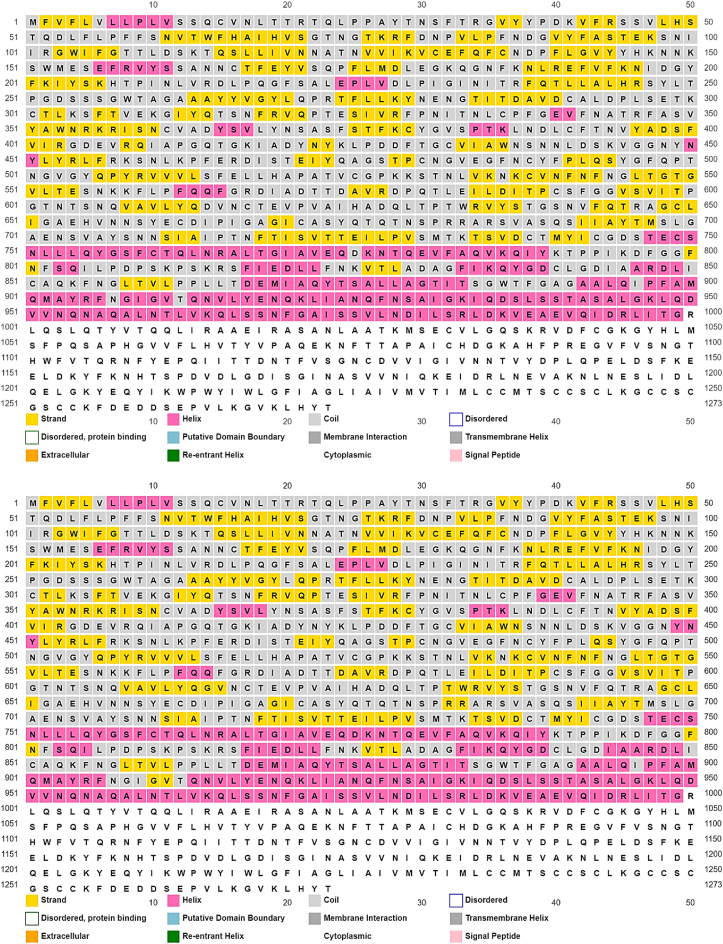
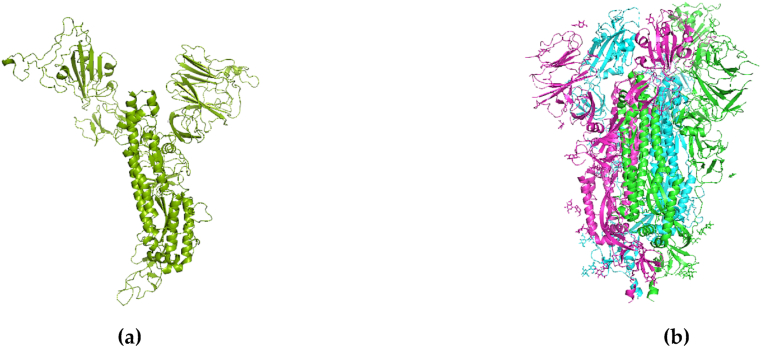
Aim: Here, we aimed to predict the three-dimensional monomer structure of spike protein of SARS-CoV-2 from 20 Jordanian nasopharyngeal samples and to determine the percentage of single amino acid variants (SAV) in the spike protein of SARS-CoV-2.
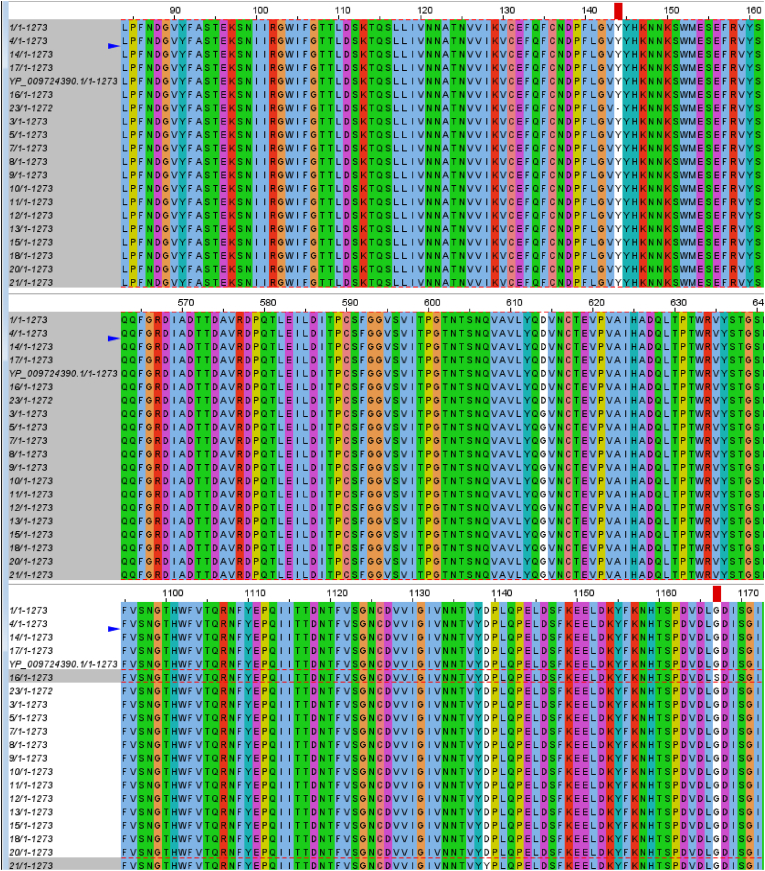
Methods: The output of the Protein Homology/analogY Recognition Engine V 2.0 (Phyre2) found four single amino acid variants in the spike gene.
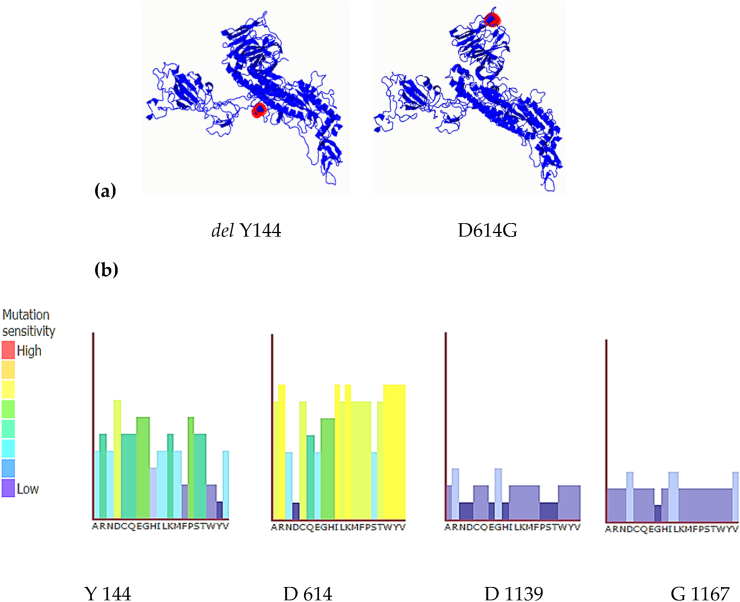
Results: The first variant represented by 5% of samples that showed tyrosine deletion at Y144 located in the N terminal domain. The second and the dominant variant, represented by 62%, showed aspartate a coil amino acid substitution to glycine an extracellular amino acid at D614G located in the spike recognition binding site. The third variant, represented by 5%, showed aspartate substitution to tyrosine at D1139Y, and the fourth variant, represented by 5% glycine substitution to serine at G1167S.
Conclusion: Our results have shown low mutational sensitivity in all variants except to D614G the one with the most likely neutral mutational sensitivity that all variants might not explicitly affect the function of spike glycoprotein. However, D614G might change the viral conformational plasticity and hence a potential viral fitness gain but one must be cautious about drawing any concrete conclusions about the severity of symptoms and viral transmission from genomic data only.
General significance: Studying mutations such as D614G in deep is essential to control the pandemic in terms of immune systems, antibodies, or even vaccines.
Keywords: COVID-19; D614G & Mutation; SARS-CoV-2; Spike.
© 2020 The Authors.
Conflict of interest statement
The authors declare that they have no known competing financial interests or personal relationships that could have appeared to influence the work reported in this paper.
Figures
References
-
- Lan J., Ge J., Yu J., Shan S., Zhou H., Fan S. Structure of the SARS-CoV-2 spike receptor-binding domain bound to the ACE2 receptor. Nature. 2020 Mar 30:1–6. - PubMed
LinkOut - more resources
Full Text Sources
Other Literature Sources
Miscellaneous
