. 2021 Jan 28;14(1):14.
doi: 10.1186/s12284-021-00455-2.

Analysis of Rice Transcriptome Reveals the LncRNA/CircRNA Regulation in Tissue Development

Affiliations

Analysis of Rice Transcriptome Reveals the LncRNA/CircRNA Regulation in Tissue Development

Run Zhou et al. Rice (N Y). .

Abstract

Background: Long non-coding RNAs (lncRNAs) and circular RNAs (circRNAs) can play important roles in many biological processes. However, no study of the influence of epigenetics factors or the 3D structure of the genome in their regulation is available in plants.

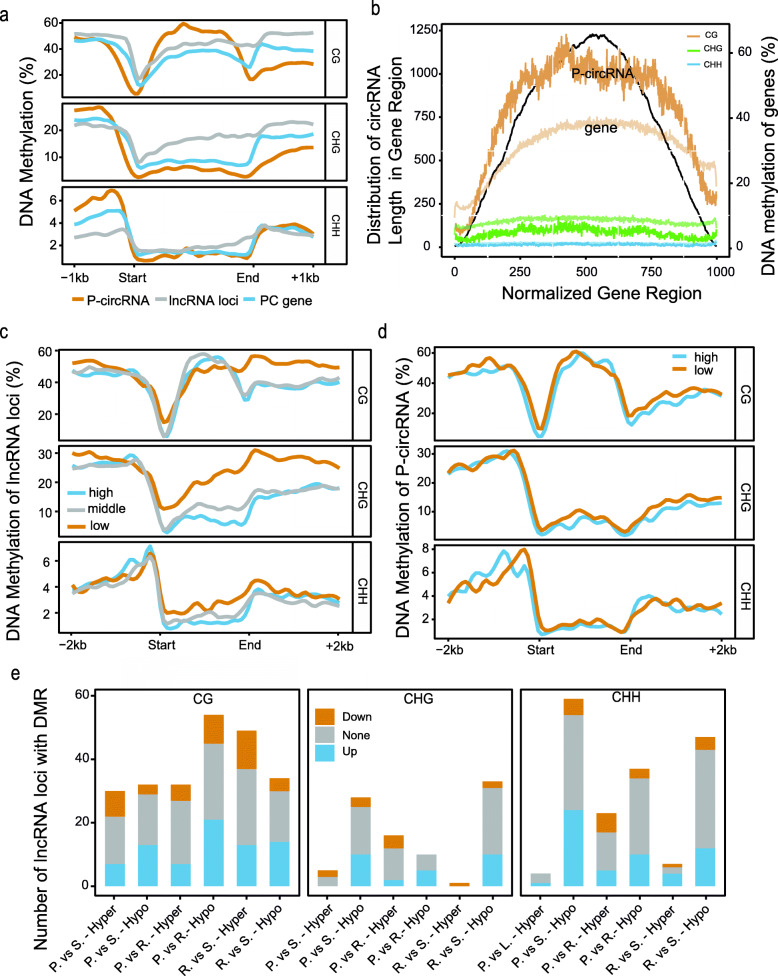
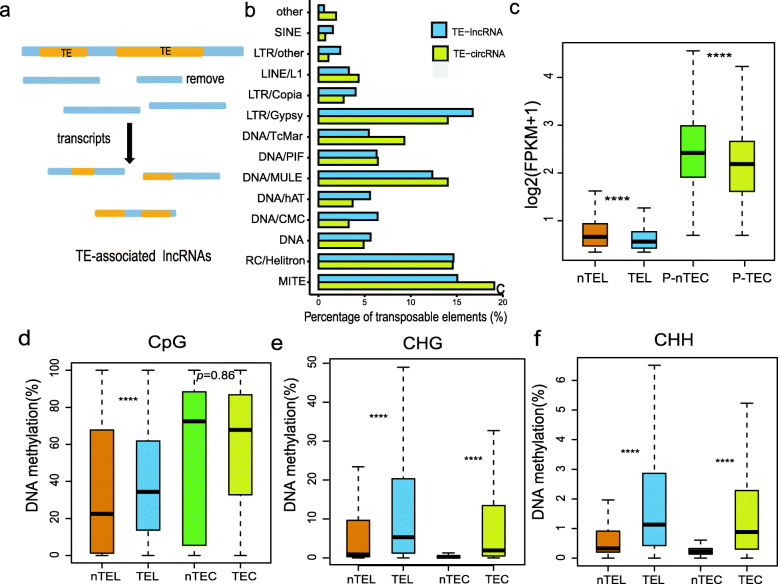
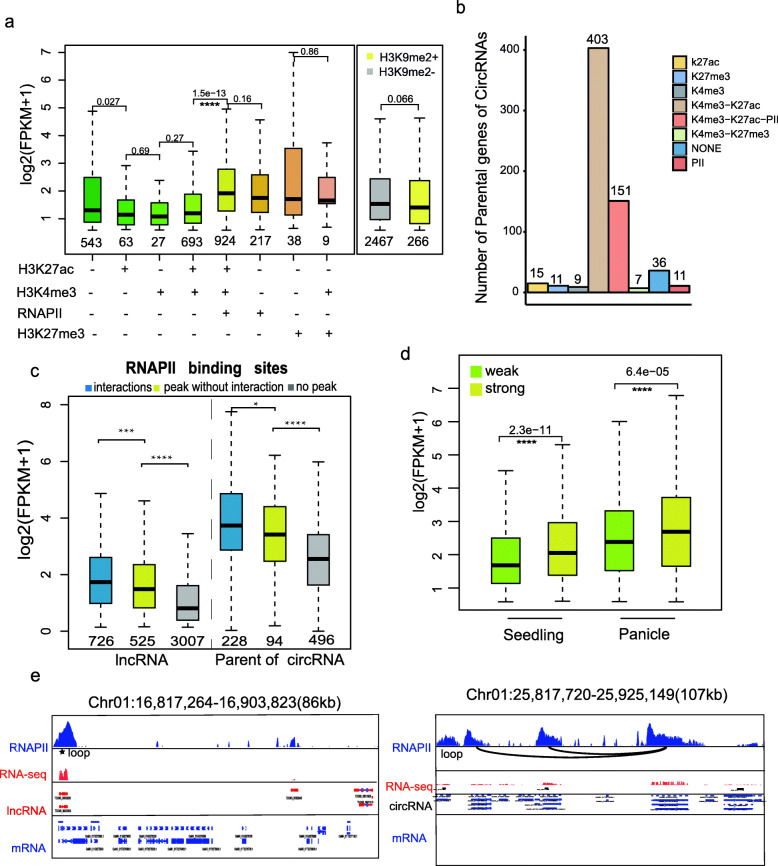
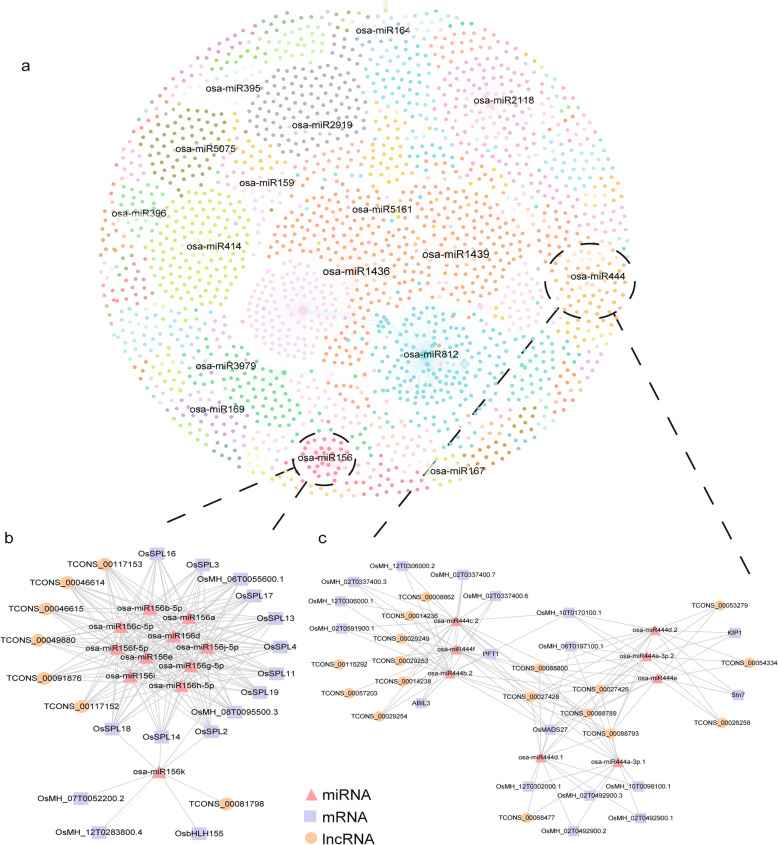
Results: In the current analysis, we identified a total of 15,122 lncRNAs and 7902 circRNAs in three tissues (root, leaf and panicle) in the rice varieties Minghui 63, Zhenshan 97 and their hybrid Shanyou 63. More than 73% of these lncRNAs and parental genes of circRNAs (P-circRNAs) are shared among Oryza sativa with high expression specificity. We found that, compared with protein-coding genes, the loci of these lncRNAs have higher methylation levels and the loci of circRNAs tend to locate in the middle of genes with high CG and CHG methylation. Meanwhile, the activated lncRNAs and P-circRNAs are mainly transcribed from demethylated regions containing CHH methylation. In addition, ~ 53% lncRNAs and ~ 15% P-circRNAs are associated with transposable elements (TEs), especially miniature inverted-repeat transposable elements and RC/Helitron. We didn't find correlation between the expression of lncRNAs and histone modifications; however, we found that the binding strength and interaction of RNAPII significantly affects lncRNA expression. Interestingly, P-circRNAs tend to combine active histone modifications. Finally, we found that lncRNAs and circRNAs acting as competing-endogenous RNAs have the potential to regulate the expression of genes, such as osa-156 l-5p (related to yield) and osa-miR444a-3p (related to N/P metabolism) confirmed through dual-luciferase reporter assays, with important roles in the growth and development of rice, laying a foundation for future rice breeding analyses.

Conclusions: In conclusion, our study comprehensively analyzed the important regulatory roles of lncRNA/circRNA in the tissue development of Indica rice from multiple perspectives.

Keywords: 3D genome; Circular RNAs (circRNAs); Competing endogenous RNAs (ceRNAs); DNA methylation; Epigenetic; Long non-coding RNAs (lncRNAs).


Conflict of interest statement

The authors declare that they have no competing interests.

Figures
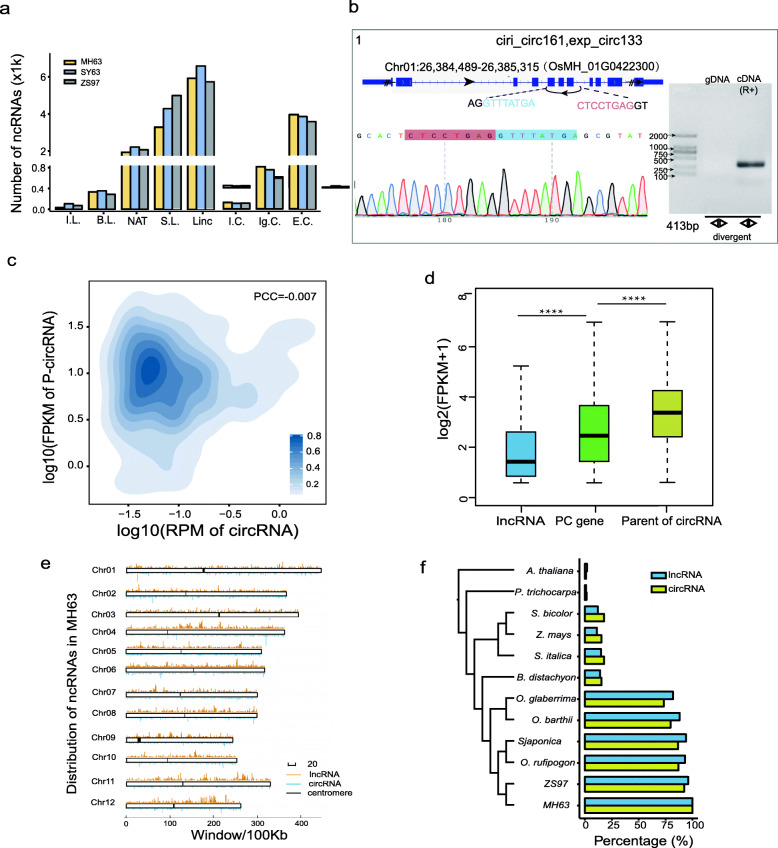
Fig. 1
Fig. 1
Characteristics and comparative analysis of lncRNAs, circRNAs and mRNAs in rice. a Classification of the lncRNAs and circRNAs in MH63, SY63 and ZS97. From left to right: Intronic lncRNAs, Bidirectional lncRNAs, lncNAT, Sense lncRNAs, lincRNA, Intronic circRNA, Intergenic circRNA and Exonic circRNA. b An example of CircRNA that was successfully amplified and sequenced for the validation. R+ represents sample with RNase R treatment. The black dotted line represents the splice site. c The relationship between the expression of circRNAs (RPM) and their parental genes (FPKM) in panicle of MH63. d Comparison of expression (FPKM) between lncRNA loci, PC genes and circRNA parental genes in MH63 (**** indicates p-value< 0.0001). e Distribution of the number of lncRNAs and circRNAs in the chromosomes of MH63. f The phylogenetic tree and conservation ratio of lncRNAs and circRNAs aligned to other plant genomes
Fig. 2
Fig. 2
DNA methylation of lncRNA loci and P-circRNAs in MH63. a CG, CHG and CHH methylation densities in the parental genes of circRNAs (orange), lncRNAs locus (grey) and PC genes (cornflower blue) and their 1 kb up/down flanking regions. b Distribution of the positions of circRNAs (black) and DNA methylation (orange for CG, green for CHG and blue for CHH) in the P-circRNAs normalized into 1 kb length. DNA methylation levels of all PC genes were used as controls (light color represents PC genes). DNA methylation densities in the 2 kb up/down flanking regions of the TSS and TES of (c) lncRNAs and (d) circRNAs were categorized to low (first quantile, orange line) and high expression (three quantile, cornflower blue line). e Histogram showed the number of lncRNA loci containing hyper- and hypo-methylation on DMRs in body. LncRNAs were classified into groups as the same as a. DNA methylation (CG, CHG and CHH) profile of non-differently expressed (None, grey), upregulated (Up, orange), and downregulated (Down, cornflower blue) lncRNA loci in MH63. P. vs. S. referred to the comparison between panicle and seedling. P. vs. R. referred to the comparison between panicle and root. R. vs S. referred to the comparison between root and seedling
Fig. 3
Fig. 3
Transposable elements associated with lncRNAs and circRNAs in MH63. a Representation of TE-associated lncRNAs. b Distribution of TEs of the TE-associated lncRNAs and circRNAs. c Comparison of the expression (FPKM) in TE-associated (TEL) and non-TE-associated (nTEL) lncRNAs, and in the parental genes of TE-associated (P-TEC) and non-TE-associated (P-nTEC) circRNAs. Comparison of (d) CG, (e) CHG and (f) CHH DNA methylations between TE-associated and non-TE-associated lncRNAs (TEL, nTEL) and circRNAs (nTEC, TEC), respectively
Fig. 4
Fig. 4
Comprehensive epigenome map of lncRNA and parental genes of circRNA in MH63 seedling. a The expression changes of lncRNA loci marked by different histone modifications and RNAPII. b Numbers of P-circRNA marked by different histone markers and RNAPII. (c) Comparison of the number and expression (FPKM) of lncRNAs and P-circRNAs in three types, i.e., those have interactions with RNAPII binding sites and have a peak, those have a peak but no interaction and no peak. d Expression levels of lncRNA loci marked by RNAPII with weak (Green) and strong intensity (yellow). e Example of one lncRNA (up) and circRNA (down) that have RNAPII binding site (blue), their expression (red) and interactions (loop)
Fig. 5
Fig. 5
ceRNA network in MH63. a ceRNA network in which each color represents the different interactions of a miRNA. b osa-miR156 and (c) osa-miR444 miRNA families (red) ceRNA networks with lncRNAs (orange) and mRNAs (blue)

References

    1. Altschul SF, Gish W, Miller W, Myers EW, Lipman DJ. Basic local alignment search tool. J Mol Biol. 1990;215(3):403–410. doi: 10.1016/S0022-2836(05)80360-2. - DOI - PubMed
    1. Bolger AM, Lohse M, Usadel B. Trimmomatic: a flexible trimmer for Illumina sequence data. Bioinformatics. 2014;30(15):2114–2120. doi: 10.1093/bioinformatics/btu170. - DOI - PMC - PubMed
    1. Castresana J. Selection of conserved blocks from multiple alignments for their use in phylogenetic analysis. Mol Biol Evol. 2000;17(4):540–552. doi: 10.1093/oxfordjournals.molbev.a026334. - DOI - PubMed
    1. Cesana M, Cacchiarelli D, Legnini I, Santini T, Sthandier O, Chinappi M, Tramontano A, Bozzoni I. A long noncoding RNA controls muscle differentiation by functioning as a competing endogenous RNA. Cell. 2011;147(2):358–369. doi: 10.1016/j.cell.2011.09.028. - DOI - PMC - PubMed
    1. Chen I, Chen CY, Chuang TJ. Biogenesis, identification, and function of exonic circular RNAs. Wiley Interdiscip Rev RNA. 2015;6(5):563–579. doi: 10.1002/wrna.1294. - DOI - PMC - PubMed

LinkOut - more resources