


Characterization of chemotherapy-induced peripheral neuropathy using patient-reported outcomes and quantitative sensory testing
- PMID: 33507480
- PMCID: PMC8406379
- DOI: 10.1007/s10549-020-06079-2
Characterization of chemotherapy-induced peripheral neuropathy using patient-reported outcomes and quantitative sensory testing
Abstract
Purpose: Chemotherapy-induced peripheral neuropathy (CIPN) is a common, debilitating side effect in cancer survivors. This study aimed to assess the characteristics of quantitative sensory testing (QST) and its correlation with patient-reported outcomes (PROs) in cancer patients with and without CIPN.
Methods: We conducted a cross-sectional analysis using baseline data from two clinical trials in solid tumor cancer survivors with no CIPN symptoms rated < 2 on a 0-10 Numerical Rating Scale (NRS) or moderate-to-severe CIPN rated ≥ 4 on the NRS. We collected PROs (NRS, Neuropathic Pain Scale, and Functional Assessment of Cancer Therapy-Gynecologic Oncology Group/Neurotoxicity subscale at baseline. QST [Tactile Threshold (TT), Vibration Threshold (VT), Thermal Threshold (THT)] measurements were used to assess sensory fiber function; they were compared between patients with and without CIPN using Wilcoxon rank-sum tests. We used Spearman correlation coefficients to estimate associations between PROs and QST in all patients.
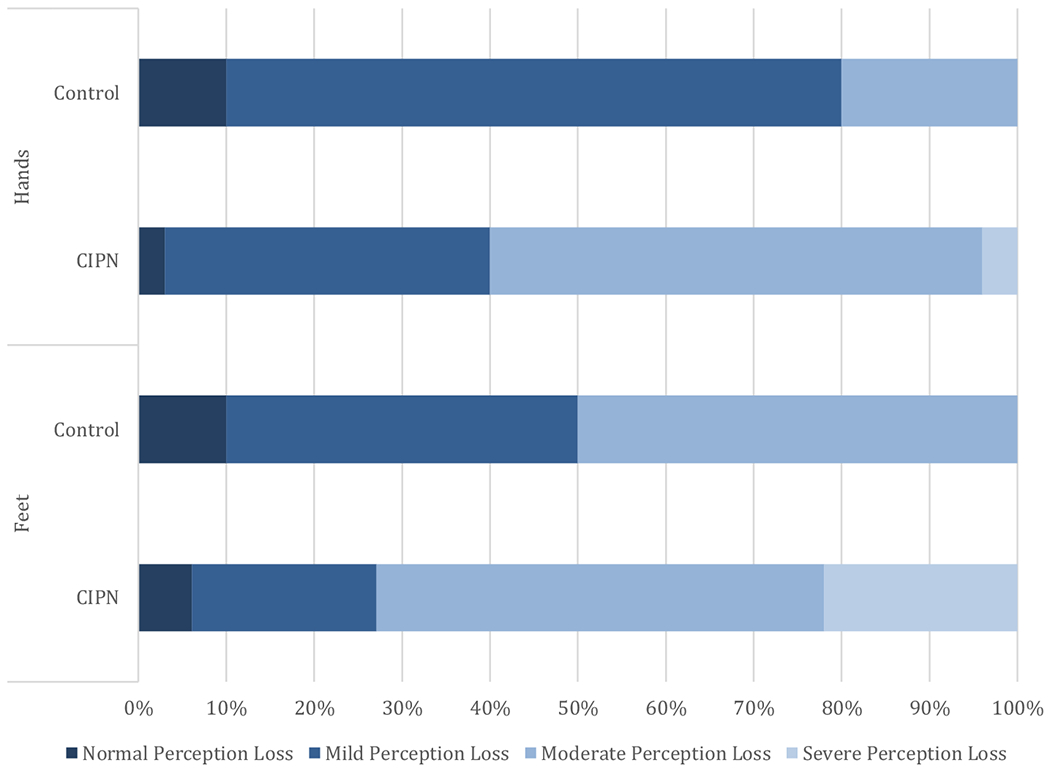
Results: Among 116 participants with CIPN (median NRS 5.00) and 10 participants without CIPN (median NRS 0.00), the median (interquartile range) TT was 3.84 (3.47, 4.12) and 3.53 (3.00, 3.84) in feet, respectively (p = 0.043). The median VT was 17.90 (9.42, 26.95) and 7.73 (5.94, 11.11) in feet, respectively (p = 0.001). Thermal cool threshold was 30.00 °C (28.90, 30.57) and 30.67 °C (30.57, 30.93), respectively (p = 0.007). Correlation coefficients between PROs and QST measures ranged between 0.02 and 0.50 in absolute magnitude.
Conclusion: Patients with moderate-to-severe CIPN had significantly impaired tactile, vibratory, and thermal thresholds compared to patients without CIPN. QST correlates with PROs, suggesting CIPN symptom severity may correspond to sensory fiber functionality. QST may be incorporated into future CIPN research.
Keywords: Cancer survivors; Chemotherapy; Neuropathy; Patient-reported outcome measures; Quantitative sensory testing.
Figures
References
-
- Mols F, Beijers T, Lemmens V, van den Hurk CJ, Vreugdenhil G, van de Poll-Franse LV (2013) Chemotherapy-induced neuropathy and its association with quality of life among 2- to 11-year colorectal cancer survivors: results from the population-based PROFILES registry. J Clin Oncol 31 (21):2699–2707. doi: 10.1200/JCO.2013.49.1514 - DOI - PubMed
MeSH terms
Substances
Grants and funding
LinkOut - more resources
Full Text Sources
Other Literature Sources
Medical
Miscellaneous
