


Allergic Reactions Including Anaphylaxis After Receipt of the First Dose of Moderna COVID-19 Vaccine - United States, December 21, 2020-January 10, 2021
- PMID: 33507892
- PMCID: PMC7842812
- DOI: 10.15585/mmwr.mm7004e1
Allergic Reactions Including Anaphylaxis After Receipt of the First Dose of Moderna COVID-19 Vaccine - United States, December 21, 2020-January 10, 2021
Abstract
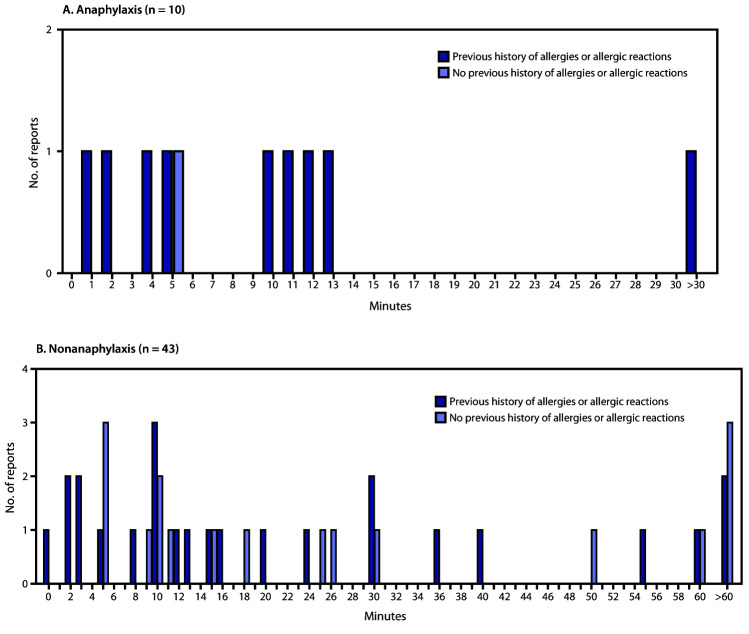
As of January 20, 2021, a total of 24,135,690 cases of coronavirus disease 2019 (COVID-19) and 400,306 associated deaths had been reported in the United States (https://covid.cdc.gov/covid-data-tracker/#cases_casesper100klast7days). On December 18, 2020, the Food and Drug Administration (FDA) issued an Emergency Use Authorization (EUA) for Moderna COVID-19 vaccine administered as 2 doses, 1 month apart to prevent COVID-19. On December 19, 2020, the Advisory Committee on Immunization Practices (ACIP) issued an interim recommendation for use of Moderna COVID-19 vaccine (1). As of January 10, 2021, a reported 4,041,396 first doses of Moderna COVID-19 vaccine had been administered in the United States, and reports of 1,266 (0.03%) adverse events after receipt of Moderna COVID-19 vaccine were submitted to the Vaccine Adverse Event Reporting System (VAERS). Among these, 108 case reports were identified for further review as possible cases of severe allergic reaction, including anaphylaxis. Anaphylaxis is a life-threatening allergic reaction that occurs rarely after vaccination, with onset typically within minutes to hours (2). Among these case reports, 10 cases were determined to be anaphylaxis (a rate of 2.5 anaphylaxis cases per million Moderna COVID-19 vaccine doses administered), including nine in persons with a documented history of allergies or allergic reactions, five of whom had a previous history of anaphylaxis. The median interval from vaccine receipt to symptom onset was 7.5 minutes (range = 1-45 minutes). Among eight persons with follow-up information available, all had recovered or been discharged home. Among the remaining case reports that were determined not to be anaphylaxis, 47 were assessed to be nonanaphylaxis allergic reactions, and 47 were considered nonallergic adverse events. For four case reports, investigators have been unable to obtain sufficient information to assess the likelihood of anaphylaxis. This report summarizes the clinical and epidemiologic characteristics of case reports of allergic reactions, including anaphylaxis and nonanaphylaxis allergic reactions, after receipt of the first dose of Moderna COVID-19 vaccine during December 21, 2020-January 10, 2021, in the United States. CDC has issued updated interim clinical considerations for use of mRNA COVID-19 vaccines currently authorized in the United States (3) and interim considerations for preparing for the potential management of anaphylaxis (4).
Figures
Comment in
-
COVID-19: use intersectional analyses to close gaps in outcomes and vaccination.Nature. 2021 Mar;591(7849):202. doi: 10.1038/d41586-021-00577-z. Nature. 2021. PMID: 33658677 No abstract available.
References
-
- CDC. COVID-19 vaccination: clinical considerations. Interim clinical considerations for use of mRNA COVID-19 vaccines currently authorized in the United States. Atlanta, GA: US Department of Health and Human Services, CDC; 2020. https://www.cdc.gov/vaccines/covid-19/info-by-product/clinical-considera...
-
- CDC. COVID-19 vaccination: clinical considerations. Interim considerations: preparing for the potential management of anaphylaxis after COVID-19 vaccination. Atlanta, GA: US Department of Health and Human Services, CDC; 2020. https://www.cdc.gov/vaccines/covid-19/clinical-considerations/managing-a...
MeSH terms
Substances
LinkOut - more resources
Full Text Sources
Other Literature Sources
Medical
Research Materials
