


Immune cell engagers in solid tumors: promises and challenges of the next generation immunotherapy
- PMID: 33508733
- PMCID: PMC7841318
- DOI: 10.1016/j.esmoop.2020.100046
Immune cell engagers in solid tumors: promises and challenges of the next generation immunotherapy
Abstract
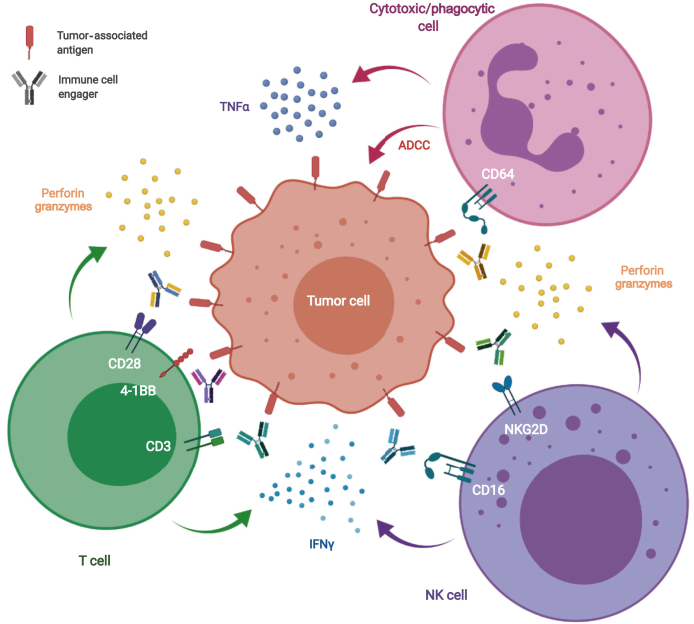
In the landscape of cancer immunotherapy, immune cell engagers (ICEs) are rapidly emerging as a feasible and easy-to-deliver alternative to adoptive cell therapy for the antitumor redirection of immune effector cells. Even if in hematological malignancies this class of new therapeutics already hit the clinic, the development of ICEs in solid tumors still represents a challenge. Considering that ICEs are a rapidly expanding biotechnology in cancer therapy, we designed this review as a primer for clinicians, focusing on the major obstacles for the clinical implementation and the most translatable approaches proposed to overcome the limitations in solid tumors.
Keywords: BiTEs; T cell redirection; immune cell engagers; immunotherapy; solid tumors.
Copyright © 2020 The Authors. Published by Elsevier Ltd.. All rights reserved.
Conflict of interest statement
Disclosure MDN holds a patent application as an inventor on bispecific antibodies for use in cancer immunotherapy (US patent application number 15/740560). The remaining authors have no potential conflicts of interest that might be relevant to the contents of this manuscript.
Figures
References
-
- Fucà G., de Braud F., Di Nicola M. Immunotherapy-based combinations: an update. Curr Opin Oncol. 2018;30(5):345–351. - PubMed
Publication types
MeSH terms
LinkOut - more resources
Full Text Sources
Other Literature Sources
Medical
