Drug-induced Hyperthermic Syndromes in Psychiatry
- PMID: 33508784
- PMCID: PMC7851465
- DOI: 10.9758/cpn.2021.19.1.1
Drug-induced Hyperthermic Syndromes in Psychiatry
Abstract
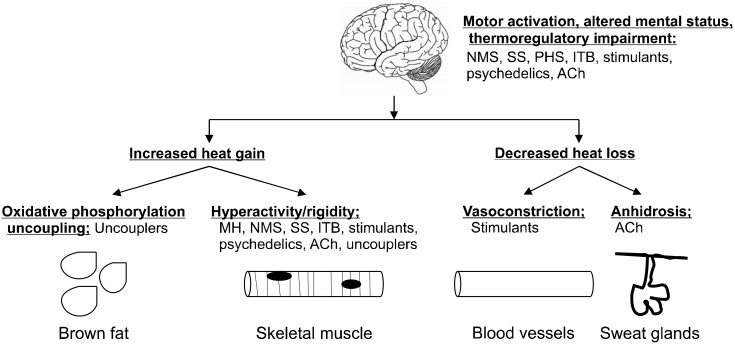
Hyperthermia, or extreme elevations in body temperature, can be life-threatening and may be caused by prescription drugs or illegal substances acting at a number of different levels of the neuraxis. Several psychotropic drug classes and combinations have been associated with a classic clinical syndrome of hyperthermia, skeletal muscle hyper-metabolism, rigidity or rhabdomyolysis, autonomic dysfunction and altered mental status ranging from catatonic stupor to coma. It is critical for clinicians to have a high index of suspicion for these relatively uncommon drug-induced adverse effects and to become familiar with their management to prevent serious morbidity and mortality. Although these syndromes look alike, they are triggered by quite different mechanisms, and apart from the need to withdraw or restore potential triggering drugs and provide intensive medical care, specific treatments may vary. Clinical similarities have led to theoretical speculations about common mechanisms and shared genetic predispositions underlying these syndromes, suggesting that there may be a common "thermic stress syndrome" triggered in humans and animal models by a variety of pharmacological or environmental challenges.
Keywords: Antipsychotic agents; Induced hyperthermia; Malignant hyperthermia; Neuroleptic malignant syndrome; Serotonin syndrome; Substance use disorders.
Conflict of interest statement
Stanley N. Caroff served as consultant to Neurocrine Biosciences, Teva Pharmaceuticals, and received research grants from Neurocrine Biosciences, Osmotica Pharmaceuticals and Eagle Pharmaceuticals. Charles B. Watson and Henry Rosenberg report no conflicts or disclosures.
Figures
References
-
- Knochel JP, Reed G. Disorders of heat regulation. In: Narins RG, editor. Clinical disorders of fluid and electrolyte metabolism. 5th ed. McGraw-Hill; New York: 1994.
Publication types
LinkOut - more resources
Full Text Sources
Other Literature Sources