


Mitochondrial metabolism-mediated redox regulation in cancer progression
- PMID: 33509708
- PMCID: PMC8113029
- DOI: 10.1016/j.redox.2021.101870
Mitochondrial metabolism-mediated redox regulation in cancer progression
Abstract
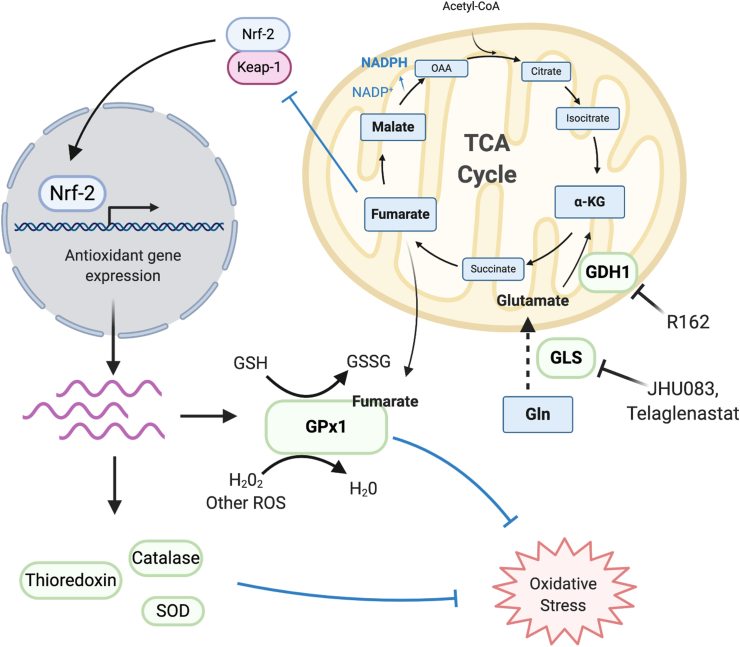
Cancer cells display abnormal metabolic activity as a result of activated oncogenes and loss of tumor suppressor genes. The Warburg Effect is a common metabolic feature of cancer that involves a preference for aerobic glycolysis over oxidative phosphorylation to generate ATP and building blocks for biosynthesis. However, emerging evidence indicates that mitochondrial metabolic pathways are also reprogrammed in cancer and play vital roles in bioenergetics, biosynthesis, and managing redox homeostasis. The mitochondria act a central hub for metabolic pathways that generate ATP and building blocks for lipid, nucleic acid and protein biosynthesis. However, mitochondrial respiration is also a leading source of reactive oxygen species that can damage cellular organelles and trigger cell death if levels become too high. In general, cancer cells are reported to have higher levels of reactive oxygen species than their non-cancerous cells of origin, and therefore must employ diverse metabolic strategies to prevent oxidative stress. However, mounting evidence indicates that the metabolic profiles between proliferative and disseminated cancer cells are not the same. In this review, we will examine mitochondrial metabolic pathways, such as glutaminolysis, that proliferative and disseminated cancer cells utilize to control their redox status.
Keywords: Cancer progression; Glutaminolysis; Mitochondria metabolism; Redox homeostasis.
Copyright © 2021 The Author(s). Published by Elsevier B.V. All rights reserved.
Conflict of interest statement
The authors have no conflicts of interest to declare.
Figures
References
-
- Weber G.F. Metabolism in cancer metastasis. Int. J. Canc. 2016;138(9):2061–2066. - PubMed
Publication types
MeSH terms
Substances
Grants and funding
LinkOut - more resources
Full Text Sources
Other Literature Sources
Medical
