Social Determinants of Health and Race Disparities in Kidney Transplant
- PMID: 33509963
- PMCID: PMC7863655
- DOI: 10.2215/CJN.04860420
Social Determinants of Health and Race Disparities in Kidney Transplant
Abstract
Background and objectives: Black patients have a higher incidence of kidney failure but lower rate of deceased- and living-donor kidney transplantation compared with White patients, even after taking differences in comorbidities into account. We assessed whether social determinants of health (e.g., demographics, cultural, psychosocial, knowledge factors) could account for race differences in receiving deceased- and living-donor kidney transplantation.
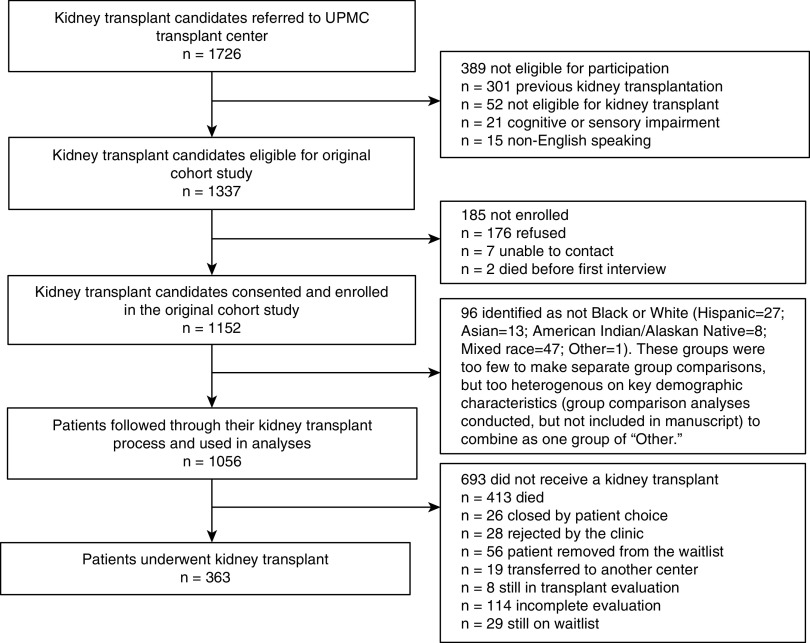
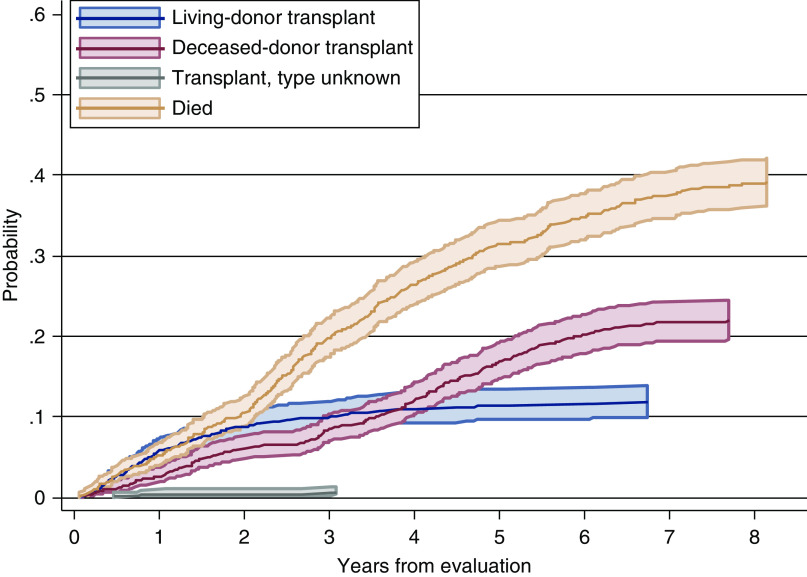
Design, setting, participants, & measurements: Via medical record review, we prospectively followed 1056 patients referred for kidney transplant (2010-2012), who completed an interview soon after kidney transplant evaluation, until their kidney transplant. We used multivariable competing risk models to estimate the cumulative incidence of receipt of any kidney transplant, deceased-donor transplant, or living-donor transplant, and the factors associated with each outcome.
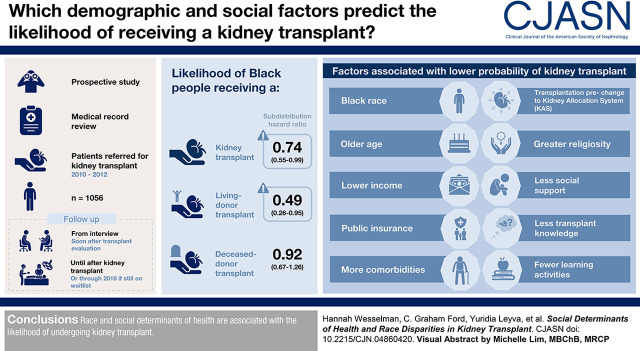
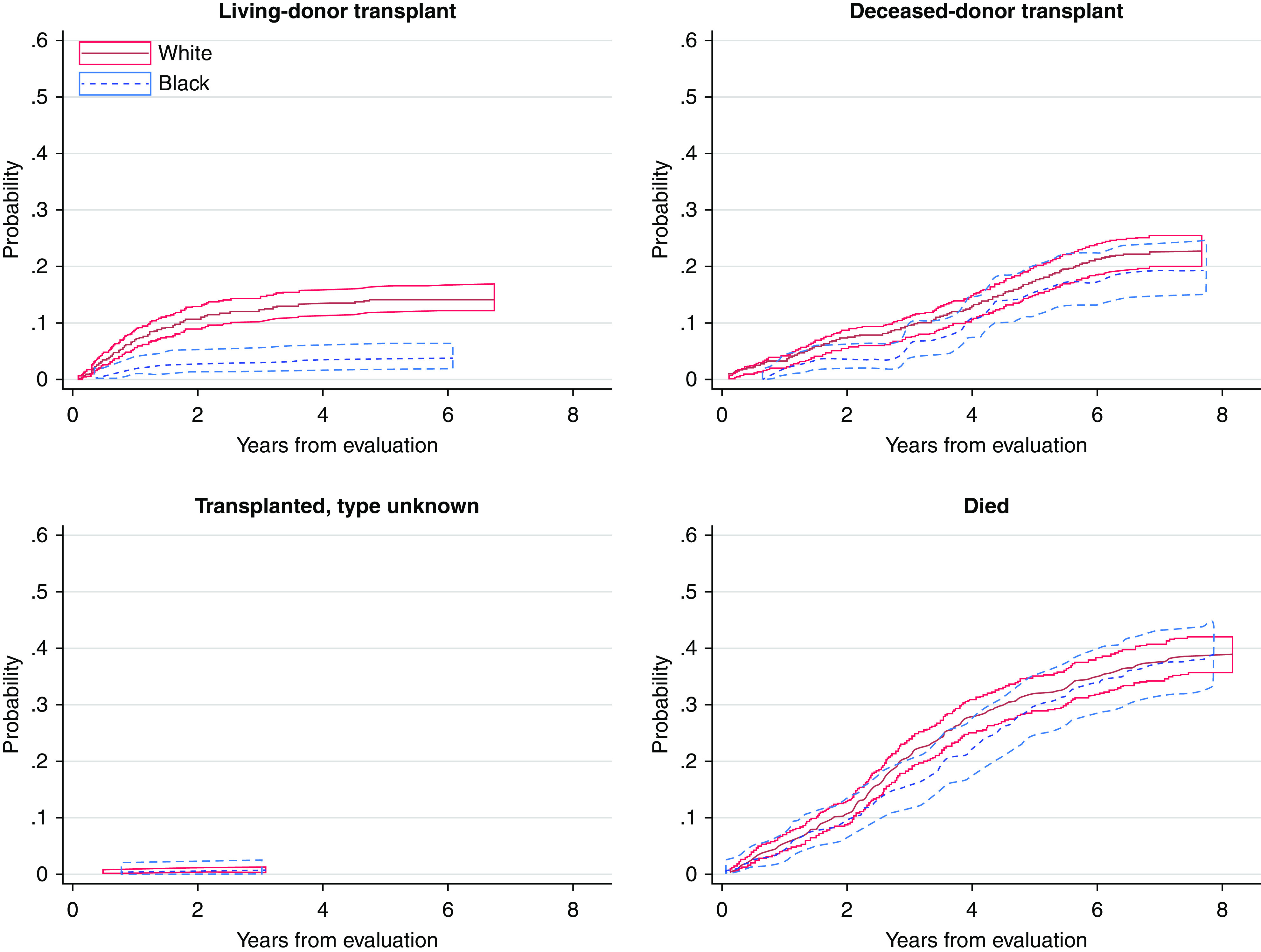
Results: Even after accounting for social determinants of health, Black patients had a lower likelihood of kidney transplant (subdistribution hazard ratio, 0.74; 95% confidence interval, 0.55 to 0.99) and living-donor transplant (subdistribution hazard ratio, 0.49; 95% confidence interval, 0.26 to 0.95), but not deceased-donor transplant (subdistribution hazard ratio, 0.92; 95% confidence interval, 0.67 to 1.26). Black race, older age, lower income, public insurance, more comorbidities, being transplanted before changes to the Kidney Allocation System, greater religiosity, less social support, less transplant knowledge, and fewer learning activities were each associated with a lower probability of any kidney transplant. Older age, more comorbidities, being transplanted before changes to the Kidney Allocation System, greater religiosity, less social support, and fewer learning activities were each associated with a lower probability of deceased-donor transplant. Black race, older age, lower income, public insurance, higher body mass index, dialysis before kidney transplant, not presenting with a potential living donor, religious objection to living-donor transplant, and less transplant knowledge were each associated with a lower probability of living-donor transplant.
Conclusions: Race and social determinants of health are associated with the likelihood of undergoing kidney transplant.
Keywords: disparities; kidney transplantation; social determinants of health.
Copyright © 2021 by the American Society of Nephrology.
Figures
Comment in
-
Barriers to Kidney Transplantation in Racial/Ethnic Minorities.Clin J Am Soc Nephrol. 2021 Feb 8;16(2):177-178. doi: 10.2215/CJN.19371220. Epub 2021 Jan 28. Clin J Am Soc Nephrol. 2021. PMID: 33509964 Free PMC article. No abstract available.
References
-
- United States Renal Data System : 2018 USRDS Annual Data Report: Epidemiology of kidney disease in the United States, Bethesda, MD, National Institutes of Health, National Institute of Diabetes and Digestive and Kidney Diseases, 2018
-
- Powe NR, Melamed ML: Racial disparities in the optimal delivery of chronic kidney disease care. Med Clin North Am 89: 475–488, 2005 - PubMed
-
- Chakkera HA, O’Hare AM, Johansen KL, Hynes D, Stroupe K, Colin PM, Chertow GM: Influence of race on kidney transplant outcomes within and outside the Department of Veterans Affairs. J Am Soc Nephrol 16: 269–277, 2005 - PubMed
Publication types
MeSH terms
Grants and funding
LinkOut - more resources
Full Text Sources
Other Literature Sources
Medical