


Fecal Microbiota Transplantation: A New Therapeutic Attempt from the Gut to the Brain
- PMID: 33510784
- PMCID: PMC7826222
- DOI: 10.1155/2021/6699268
Fecal Microbiota Transplantation: A New Therapeutic Attempt from the Gut to the Brain
Abstract
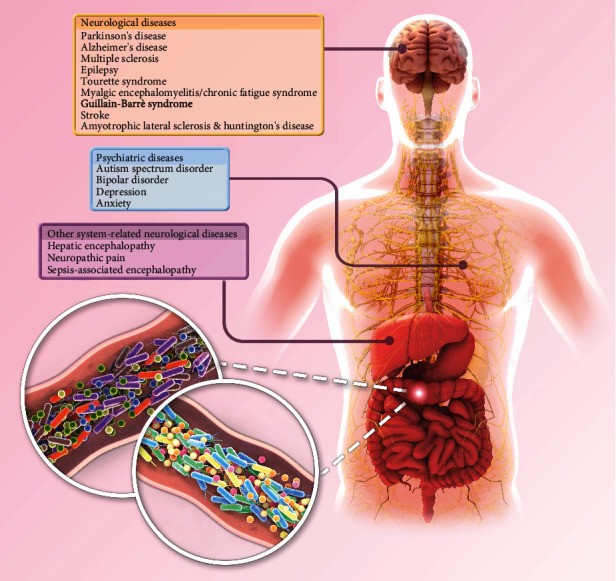
Gut dysbacteriosis is closely related to various intestinal and extraintestinal diseases. Fecal microbiota transplantation (FMT) is a biological therapy that entails transferring the gut microbiota from healthy individuals to patients in order to reconstruct the intestinal microflora in the latter. It has been proved to be an effective treatment for recurrent Clostridium difficile infection. Studies show that the gut microbiota plays an important role in the pathophysiology of neurological and psychiatric disorders through the microbiota-gut-brain axis. Therefore, reconstruction of the healthy gut microbiota is a promising new strategy for treating cerebral diseases. We have reviewed the latest research on the role of gut microbiota in different nervous system diseases as well as FMT in the context of its application in neurological, psychiatric, and other nervous system-related diseases (Parkinson's disease, Alzheimer's disease, multiple sclerosis, epilepsy, autism spectrum disorder, bipolar disorder, hepatic encephalopathy, neuropathic pain, etc.).
Copyright © 2021 Hao-Ming Xu et al.
Conflict of interest statement
The authors declare no competing financial interests.
Figures
References
-
- Keshavarzian A., Green S. J., Engen P. A., et al. Colonic bacterial composition in Parkinson's disease. Movement Disorders. 2015;30(10):1351–1360. - PubMed
-
- Liu P., Wu L., Peng G., et al. Altered microbiomes distinguish Alzheimer's disease from amnestic mild cognitive impairment and health in a Chinese cohort. Brain, Behavior, and Immunity. 2019;80:633–643. - PubMed
Publication types
LinkOut - more resources
Full Text Sources
Other Literature Sources
