


Unfolded protein response in colorectal cancer
- PMID: 33514437
- PMCID: PMC7844992
- DOI: 10.1186/s13578-021-00538-z
Unfolded protein response in colorectal cancer
Abstract
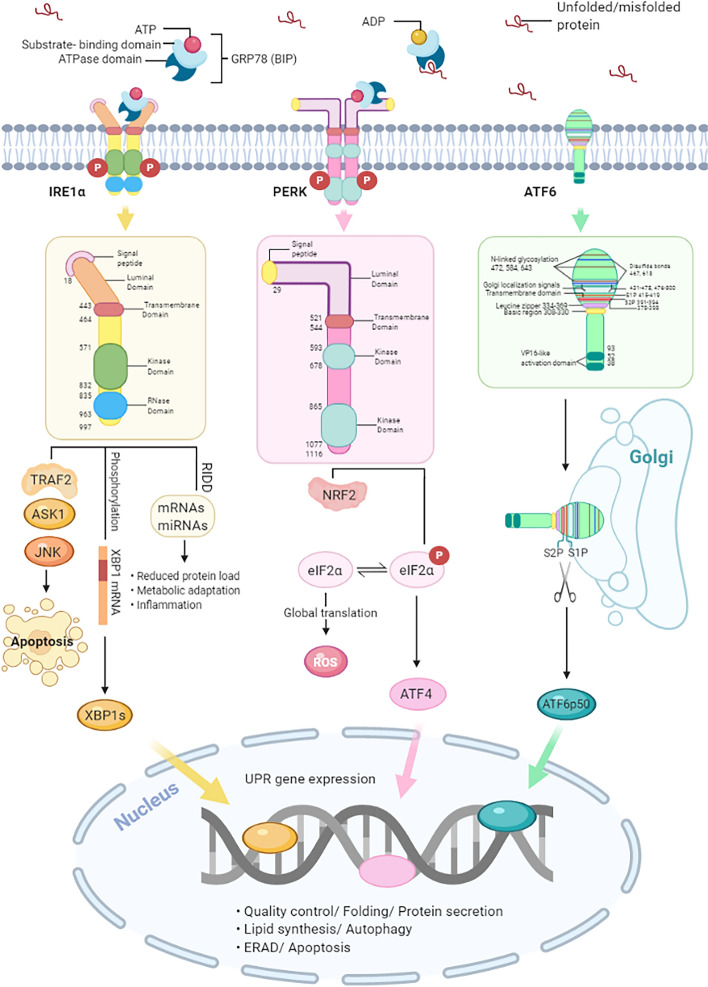
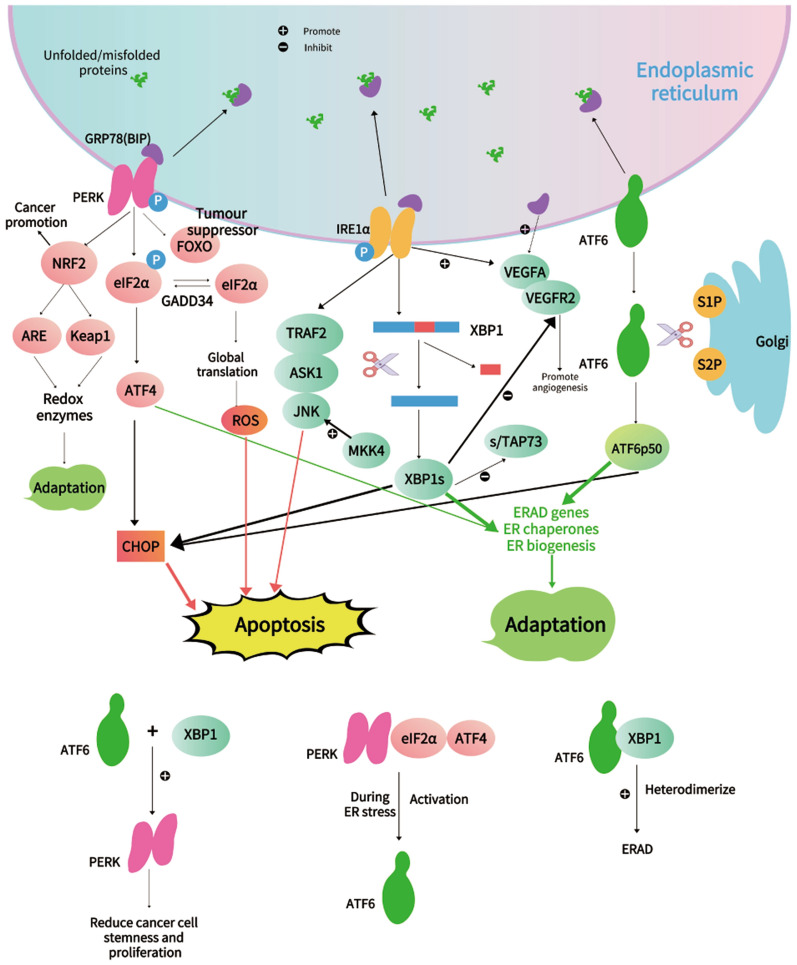
Colorectal cancer (CRC) is a gastrointestinal malignancy originating from either the colon or the rectum. A growing number of researches prove that the unfolded protein response (UPR) is closely related to the occurrence and progression of colorectal cancer. The UPR has three canonical endoplasmic reticulum (ER) transmembrane protein sensors: inositol requiring kinase 1 (IRE1), pancreatic ER eIF2α kinase (PERK), and activating transcription factor 6 (ATF6). Each of the three pathways is closely associated with CRC development. The three pathways are relatively independent as well as interrelated. Under ER stress, the activated UPR boosts the protein folding capacity to maximize cell adaptation and survival, whereas sustained or excessive ER triggers cell apoptosis conversely. The UPR involves different stages of CRC pathogenesis, promotes or hinders the progression of CRC, and will pave the way for novel therapeutic and diagnostic approaches. Meanwhile, the correlation between different signal branches in UPR and the switch between the adaptation and apoptosis pathways still need to be further investigated in the future.
Keywords: Activating transcription factor 6; Colorectal cancer; Inositol requiring kinase 1; Pancreatic ER eIF2α kinase; Unfolded protein response.
Conflict of interest statement
There are no conflicts of interest/competing to disclose.
Figures
References
Publication types
Grants and funding
- 08-894/China Medical Board, CMB
- 202010226016/National College Students Innovation and Entrepreneurship Training Program
- 2014B15/the Scientific Foundation of the First Affiliated Hospital of Harbin Medical University
- UNPYSCT-2018070/the University Nursing Program for Young Scholars with Creative Talents in Heilongjiang Province
- LBH-Q18089/the Heilongjiang Postdoctoral Scientific Research Developmental Fund
LinkOut - more resources
Full Text Sources
Other Literature Sources
