


Identification of DNA repair-related genes predicting pathogenesis and prognosis for liver cancer
- PMID: 33516217
- PMCID: PMC7847017
- DOI: 10.1186/s12935-021-01779-1
Identification of DNA repair-related genes predicting pathogenesis and prognosis for liver cancer
Abstract
Background: Liver cancer (LC) is one of the most fatal cancers throughout the world. More efficient and sensitive gene signatures that could accurately predict survival in LC patients are vitally needed to promote a better individualized and effective treatment.
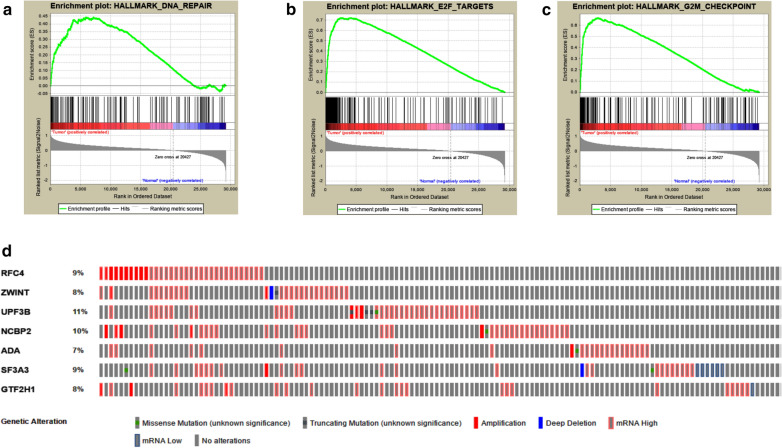
Material/methods: 422 LC and adjacent normal tissues with both RNA-Seq and clinical data in TCGA were embedded in our study. Gene set enrichment analysis (GSEA) was applied to identify genes and hallmark gene sets that are more valuable for liver cancer therapy. Cox regression analysis was used to identify genes related to overall survival (OS) and build the prediction model. cBioPortal database was used to examine the alterations of the panel mRNA signature. ROC curves and Kaplan-Meier curves were used to validate the prediction model. Besides, the expression of the genes in the model were validated using quantitative real-time PCR in clinical tissue specimens.
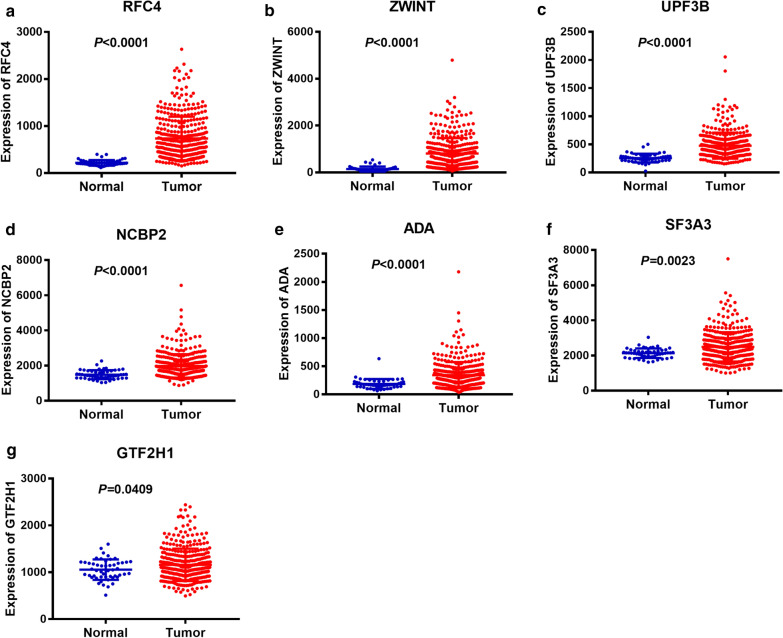
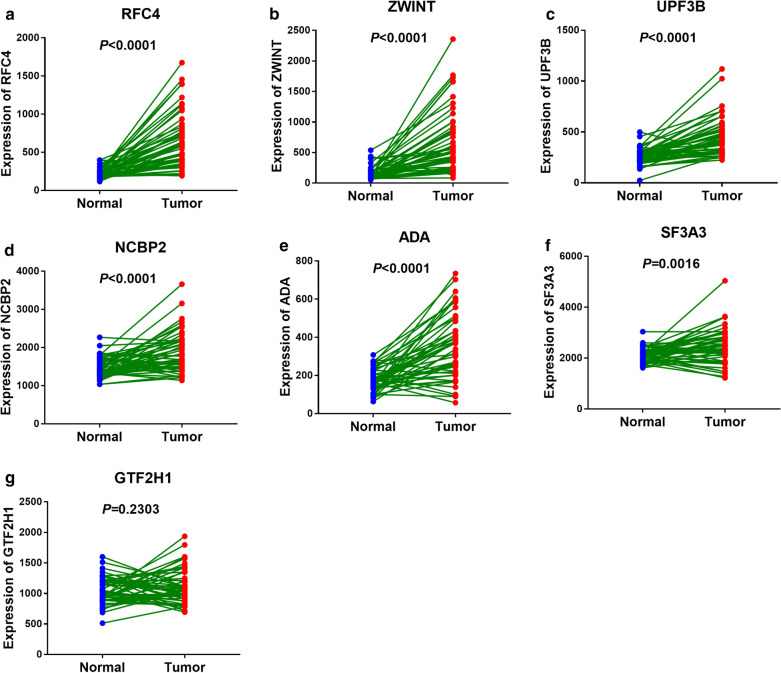
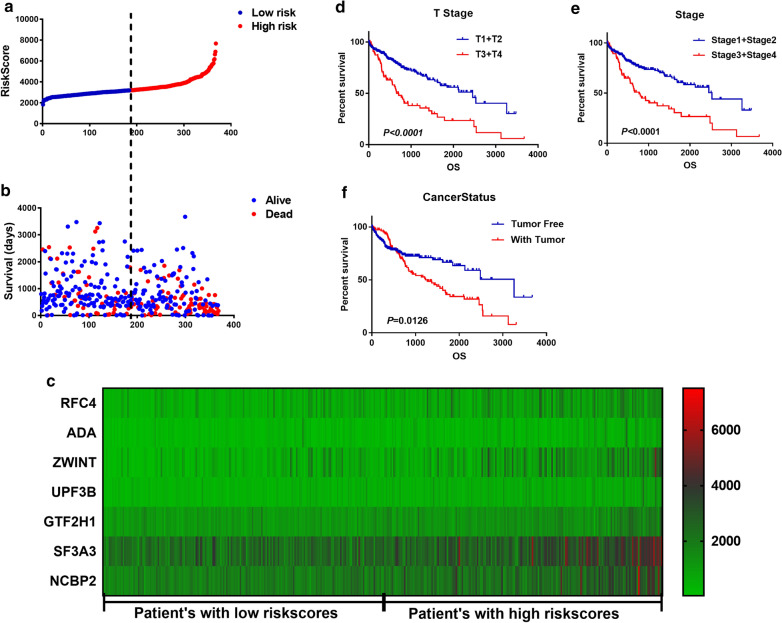
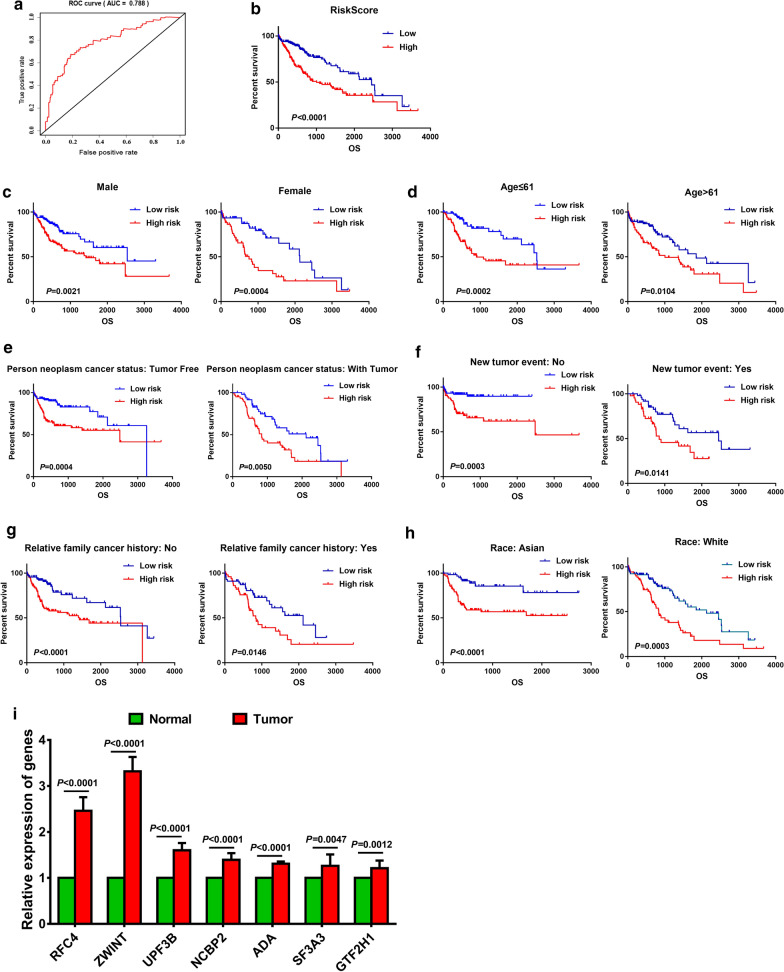
Results: The panel of DNA repair-related mRNA signature consisted of seven mRNAs: RFC4 (replication factor C subunit 4), ZWINT (ZW10 interacting kinetochore protein), UPF3B (UPF3B regulator of nonsense mediated mRNA decay), NCBP2 (nuclear cap binding protein subunit 2), ADA (adenosine deaminase), SF3A3 (splicing factor 3a subunit 3) and GTF2H1 (general transcription factor IIH subunit 1). On-line analysis of cBioPortal database found that the expression of the panel mRNA has a wide variation ranging from 7 to 10%. All the mRNAs were significantly upregulated in LC tissues compared to normal tissues (P < 0.05). The risk model is closely related to the OS of LC patients. The hazard ratio (HR) is 2.184 [95% CI (confidence interval) 1.523-3.132] and log-rank P-value < 0.0001. For clinical specimen validation, we found that all of the genes in the model upregulated in liver cancer tissues versus normal liver tissues, which was consistent with the results predicted.
Conclusions: Our study demonstrated a mRNA signature including seven mRNA for prognosis prediction of LC. This panel gene signature provides a new criterion for accurate diagnosis and therapeutic target of LC.
Keywords: Biomarker; Liver cancer; Prognosis; TCGA; mRNA.
Conflict of interest statement
The authors declare that they have no competing interests.
Figures
References
-
- Bray F, Ferlay J, Soerjomataram I, et al. Global cancer statistics 2018: GLOBOCAN estimates of incidence and mortality worldwide for 36 cancers in 185 countries. CA Cancer J Clin. 2018;68(6):394–424. - PubMed
LinkOut - more resources
Full Text Sources
Other Literature Sources
Research Materials
Miscellaneous
