


Study on the interactive effect of deoxynivalenol and Clostridium perfringens on the jejunal health of broiler chickens
- PMID: 33518310
- PMCID: PMC7936164
- DOI: 10.1016/j.psj.2020.10.061
Study on the interactive effect of deoxynivalenol and Clostridium perfringens on the jejunal health of broiler chickens
Abstract
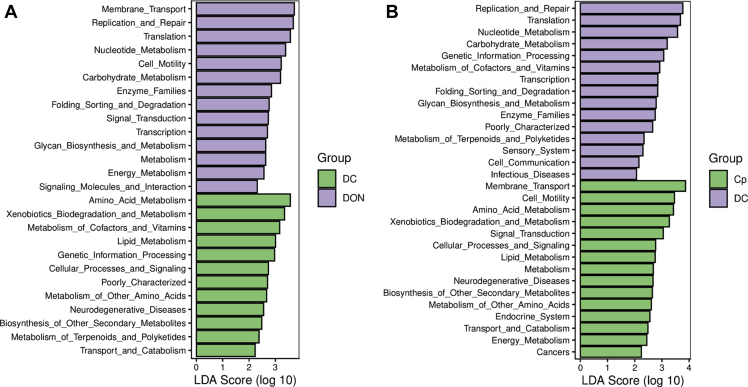
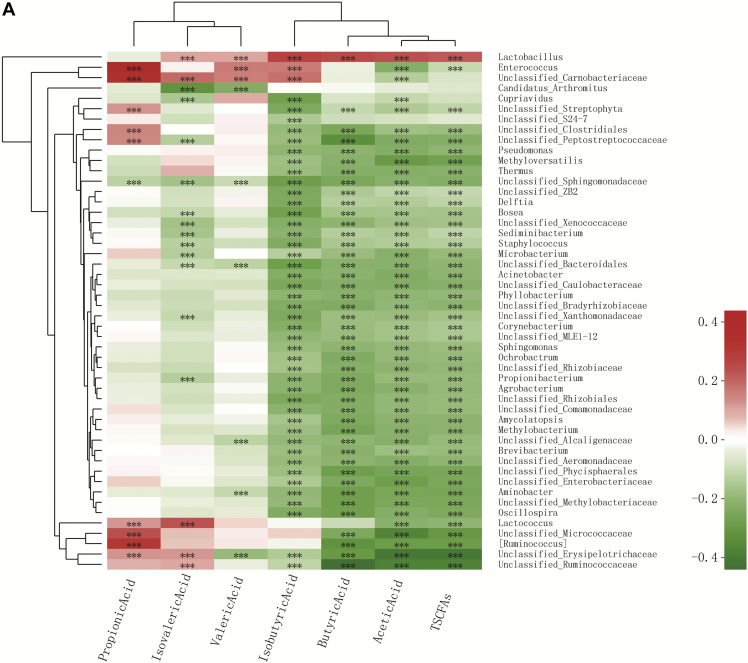
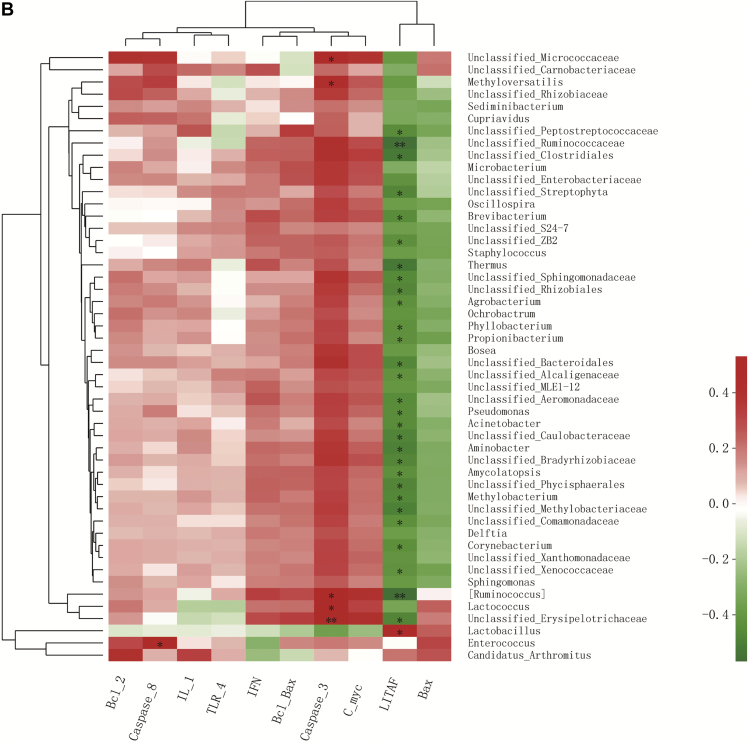
With global warming and ban on antibiotics, it occurs occasionally that deoxynivalenol (DON) together with Clostridium perfringens impairs the gut health of broiler chickens. However, the interactive effect of DON and C. perfringens on intestinal health is still unknown. A total of 120 one-day-old Arbor Acres broilers were randomly distributed to 4 groups. Birds were gavaged with C. perfringens (8 × 10⁸ CFU/d per bird) or sterile medium and fed a DON diet (0 or 5 mg of DON per kg diet) to investigate the interactive effects. The main effect analysis showed that DON diet significantly downregulated (P < 0.05) the mRNA expression of mucin-2, B-cell lymphoma-2-associated X, and cysteinyl aspartate-specific proteinase-3 of jejunal mucosa; decreased (P < 0.05) the indexes of ACE, Chao1, Shannon, and Simpson; and also decreased the relative abundance of the phylum Bacteroidete and the genera Lactococcus in jejunal contents of broilers chickens. Meanwhile, C. perfringens significantly increased (P < 0.05) crypt depth; decreased (P < 0.05) the ratio of villi height to crypt depth, the activity of jejunal diamine oxidase, and the relative abundance of Lactococcus; and upregulated (P < 0.05) the relative expression of B-cell lymphoma-2 and cysteinyl aspartate-specific proteinase-8. Furthermore, the interactions between DON and C. perfringens were most significant (P < 0.05) in the mRNA expression of lipopolysaccharide-induced TNF factor (LITAF) and TLR-4, the abundance of the genera Lactococcus in jejunal contents, and butyric acid concentrations in cecal contents of birds. Finally, Spearman correlation analysis suggested that the most negative correlations (P < 0.05) with the abundance of the genera except Lactobacillus were observed within the mRNA expression of LITAF. The abundance of Lactococcus had a positive correlation (P < 0.05) with the expression of Caspase-3. Most genera except Lactobacillus negatively correlated (P < 0.05) with acetic acid, butyric acid, and total short-chain fatty acids. In conclusion, dietary deoxynivalenol and C. perfringens challenge had a harmful effect on the jejunal health and should be carefully monitored in broiler production.
Keywords: Clostridium perfringens; broiler chicken; deoxynivalenol; jejunal health; microbiota.
Copyright © 2020 The Authors. Published by Elsevier Inc. All rights reserved.
Figures
References
-
- Alvarez-Diaz S., Dillon C.P., Lalaoui N., Tanzer M.C., Rodriguez D.A., Lin A., Lebois M., Hakem R., Josefsson E.C., O’Reilly L.A. The pseudokinase MLKL and the kinase RIPK3 have distinct roles in autoimmune disease caused by loss of death-receptor-induced apoptosis. Immunity. 2016;45:513–526. - PMC - PubMed
-
- Antonissen G., Van Immerseel F., Pasmans F., Ducatelle R., Haesebrouck F., Timbermont L., Verlinden M., Janssens G.P.J., Eeckhaut V., Eeckhout M., De Saeger S., Hessenberger S., Martel A., Croubels S. The mycotoxin deoxynivalenol predisposes for the development of Clostridium perfringens-induced necrotic enteritis in broiler chickens. PLoS One. 2014;9:e108775. - PMC - PubMed
-
- Antonissen G., Croubels S., Pasmans F., Ducatelle R., Eeckhaut V., Devreese M., Verlinden M., Haesebrouck F., Eeckhout M., De Saeger S., Antlinger B., Novak B., Martel A., Van Immerseel F. Fumonisins affect the intestinal microbial homeostasis in broiler chickens, predisposing to necrotic enteritis. Vet. Res. 2015;46:98. - PMC - PubMed
-
- Awad W.A., Zentek J. The feed contaminant deoxynivalenol affects the intestinal barrier permeability through inhibition of protein synthesis. Arch. Toxicol. 2015;89:961–965. - PubMed
-
- Awad W.A., Ruhnau D., Hess C., Doupovec B., Schatzmayr D., Hess M. Feeding of deoxynivalenol increases the intestinal paracellular permeability of broiler chickens. Arch. Toxicol. 2019;93:2057–2064. - PubMed
MeSH terms
Substances
LinkOut - more resources
Full Text Sources
Other Literature Sources
Medical
Research Materials
Miscellaneous
