


Historical overview and new directions in bioarchaeological trace element analysis: a review
- PMID: 33520004
- PMCID: PMC7810633
- DOI: 10.1007/s12520-020-01262-4
Historical overview and new directions in bioarchaeological trace element analysis: a review
Abstract
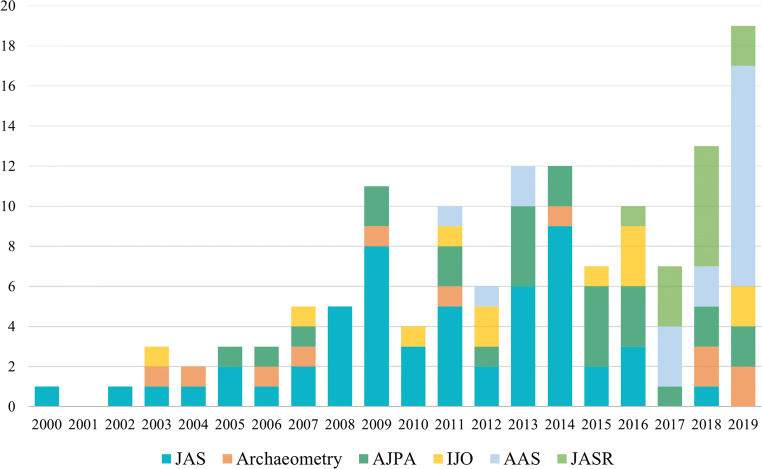
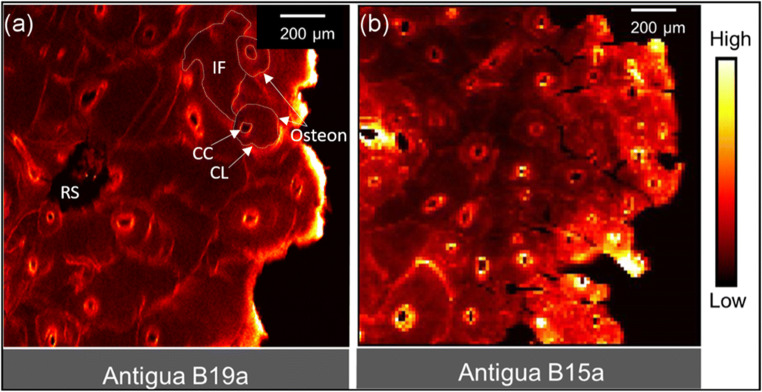
Given their strong affinity for the skeleton, trace elements are often stored in bones and teeth long term. Diet, geography, health, disease, social status, activity, and occupation are some factors which may cause differential exposure to, and uptake of, trace elements, theoretically introducing variability in their concentrations and/or ratios in the skeleton. Trace element analysis of bioarchaeological remains has the potential, therefore, to provide rich insights into past human lifeways. This review provides a historical overview of bioarchaeological trace element analysis and comments on the current state of the discipline by highlighting approaches with growing momentum. Popularity for the discipline surged following preliminary studies in the 1960s to 1970s that demonstrated the utility of strontium (Sr) as a dietary indicator. During the 1980s, Sr/Ca ratio and multi-element studies were commonplace in bioarchaeology, linking trace elements with dietary phenomena. Interest in using trace elements for bioarchaeological inferences waned following a period of critiques in the late 1980s to 1990s that argued the discipline failed to account for diagenesis, simplified complex element uptake and regulation processes, and used several unsuitable elements for palaeodietary reconstruction (e.g. those under homeostatic regulation, those without a strong affinity for the skeleton). In the twenty-first century, trace element analyses have been primarily restricted to Sr and lead (Pb) isotope analysis and the study of toxic trace elements, though small pockets of bioarchaeology have continued to analyse multiple elements. Techniques such as micro-sampling, element mapping, and non-traditional stable isotope analysis have provided novel insights which hold the promise of helping to overcome limitations faced by the discipline.
Supplementary information: The online version contains supplementary material available at 10.1007/s12520-020-01262-4.
Keywords: Bioarchaeology; Diagenesis; Element mapping; Micro-sampling; Non-traditional stable isotope analysis; Trace element analysis.
© The Author(s) 2021.
Conflict of interest statement
Conflict of interestThe authors declare they have no conflicts of interest.
Figures

References
-
- Ahlgren L, Christoffersson JO, Mattsson S. Lead and barium in archaeological Roman skeletons measured by nondestructive X-ray fluorescence analysis. Adv X-Ray Anal. 1980;24:377–382. doi: 10.1154/S0376030800007606. - DOI
-
- Álvarez-Fernández N, Martínez Cortizas A, López-Costas O. Atmospheric mercury pollution deciphered through archaeological bones. J Archaeol Sci. 2020;119:105159. doi: 10.1016/j.jas.2020.105159. - DOI
-
- Arnay-De-La-Rosa M, González-Reimers E, Yanes Y, Romanek CS, Noakes JE, Galindo-Martín L. Paleonutritional and paleodietary survey on prehistoric humans from Las Cañadas del Teide (Tenerife, Canary Islands) based on chemical and histological analysis of bone. J Archaeol Sci. 2011;38(4):884–895. doi: 10.1016/j.jas.2010.11.018. - DOI
Publication types
LinkOut - more resources
Full Text Sources
Other Literature Sources
Research Materials
Miscellaneous