


Catalytic hydrogen atom transfer to alkenes: a roadmap for metal hydrides and radicals
- PMID: 33520153
- PMCID: PMC7810138
- DOI: 10.1039/d0sc04112b
Catalytic hydrogen atom transfer to alkenes: a roadmap for metal hydrides and radicals
Abstract
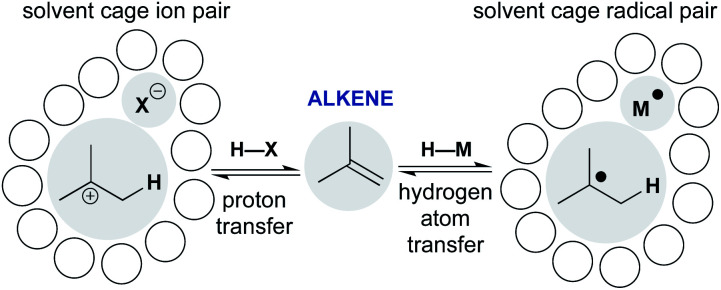
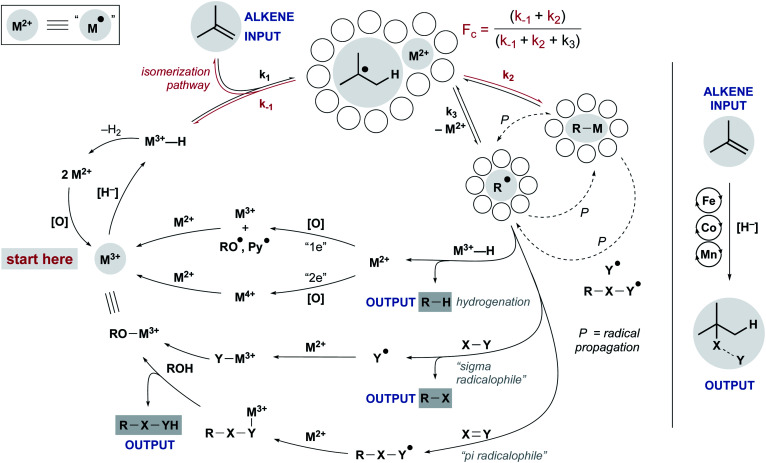
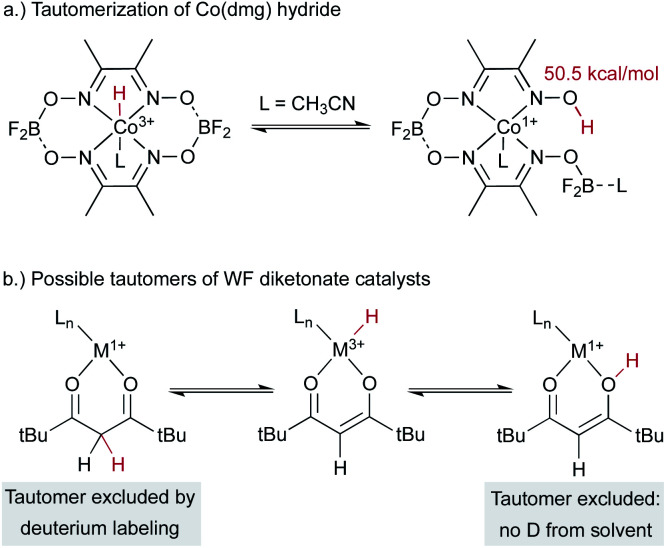
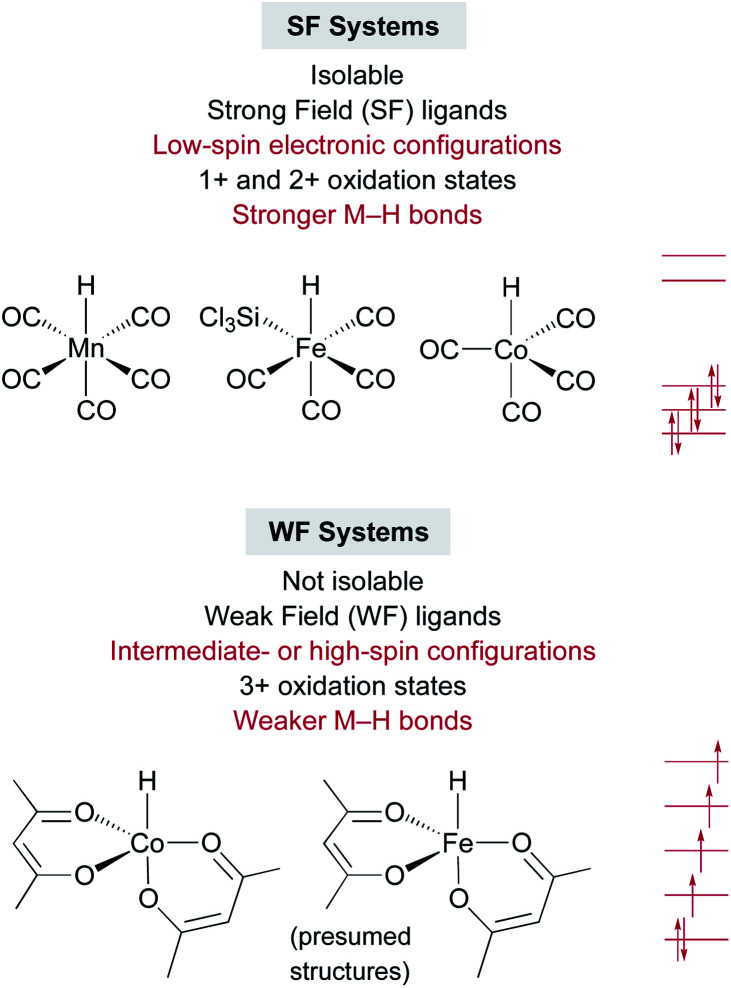
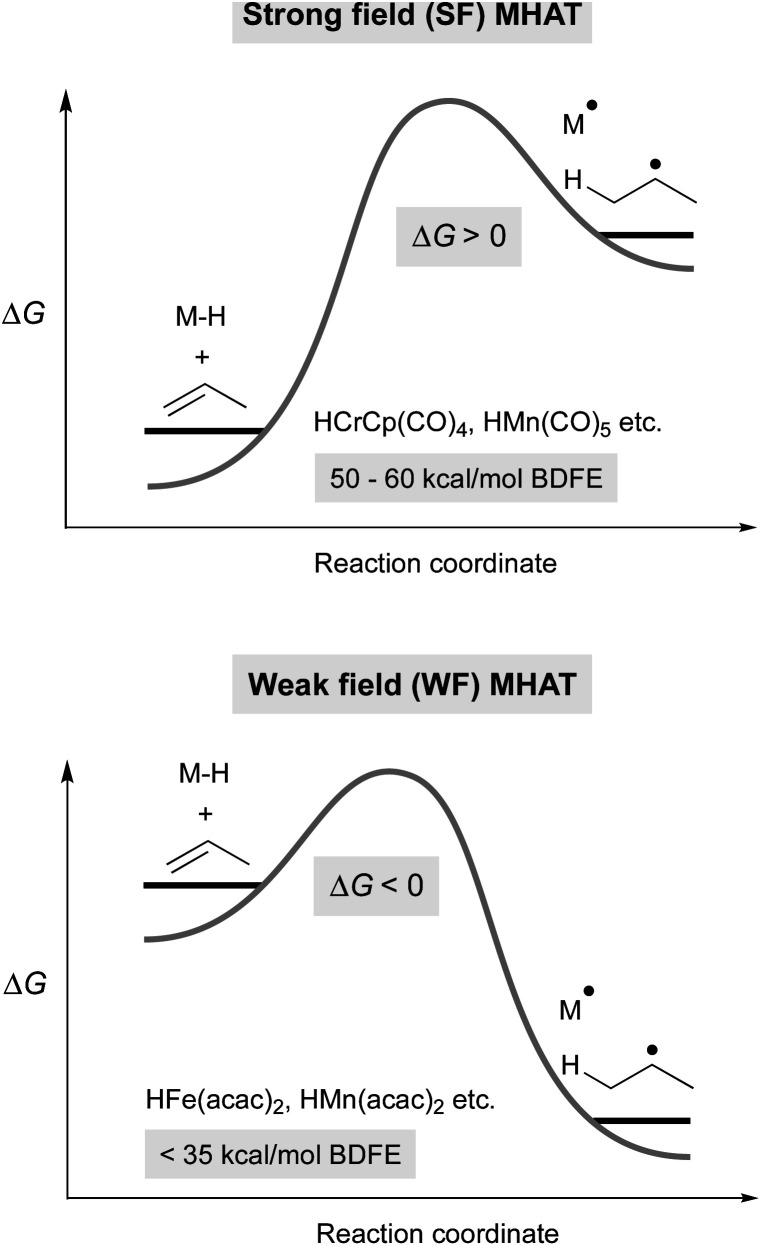
Hydrogen atom transfer from a metal hydride (MHAT) has emerged as a powerful, if puzzling, technique in chemical synthesis. In catalytic MHAT reactions, earth-abundant metal complexes generate stabilized and unstabilized carbon-centered radicals from alkenes of various substitution patterns with robust chemoselectivity. This perspective combines organic and inorganic perspectives to outline challenges and opportunities, and to propose working models to assist further developments. We attempt to demystify the putative intermediates, the basic elementary steps, and the energetic implications, especially for cage pair formation, collapse and separation. Distinctions between catalysts with strong-field (SF) and weak-field (WF) ligand environments may explain some differences in reactivity and selectivity, and provide an organizing principle for kinetics that transcends the typical thermodynamic analysis. This blueprint should aid practitioners who hope to enter and expand this exciting area of chemistry.
This journal is © The Royal Society of Chemistry 2020.
Figures

References
-
- Hartwig J. F., Organotransition Metal Chemistry, University Science Books, Sausalito, CA, 2010.
-
- Holland P. L. Acc. Chem. Res. 2015;48:1696–1702. - PubMed
Publication types
Grants and funding
LinkOut - more resources
Full Text Sources
