


CAR T-Cell Therapy: Adverse Events and Management
- PMID: 33520343
- PMCID: PMC7521123
- DOI: 10.6004/jadpro.2019.10.4.11
CAR T-Cell Therapy: Adverse Events and Management
Abstract
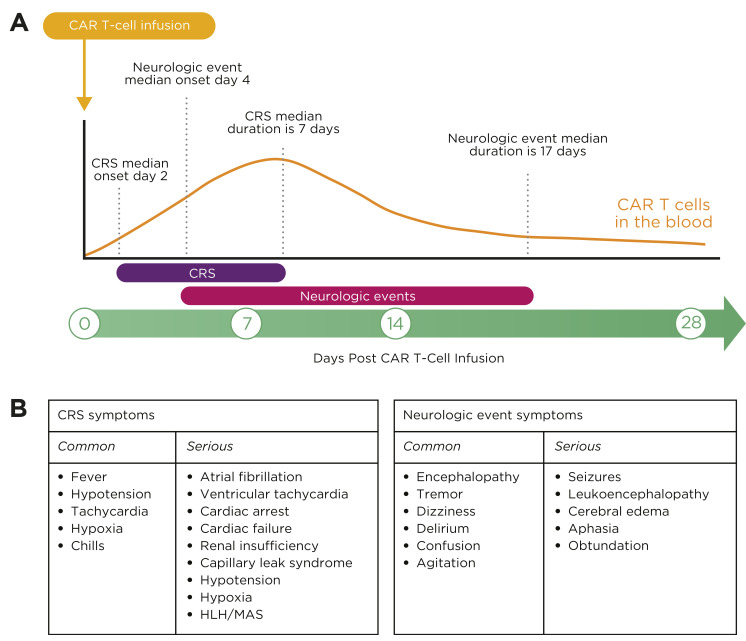
Chimeric antigen receptor (CAR) T-cell therapy is an exciting innovation in the treatment of cancer. However, CAR T-cell therapies have been associated with unique adverse events (AEs), including cytokine release syndrome (CRS) and neurologic events (also known as CAR T-cell-related encephalopathy syndrome [CRES] or, most recently, immune effector cell-associated neurotoxicity syndrome [ICANS]). Cytopenias and infection have also been observed. These AEs are treatable and reversible with appropriate treatment strategies but can become severe if not managed early. Therefore, it is essential for the advanced practitioner caring for patients undergoing these therapies to have a thorough understanding of the associated AEs, in particular their grading and management. Cytokine release syndrome and neurologic events can range in severity from low-grade symptoms that require supportive care only to a high-grade syndrome that can become life-threatening. While several grading and management recommendations have been used in clinical trials, until recently, there were no consistent grading and management guidelines. Here we provide the most recent recommendations, which have the ultimate goal of maintaining the benefits of CAR T-cell therapy, while minimizing life-threatening AEs. Improved understanding and management of AEs associated with CAR T-cell therapy will provide broader access to this innovative and potentially curative technology.
© 2019 Harborside™.
Conflict of interest statement
This manuscript was sponsored by Kite, a Gilead Company. Ms. Adkins has served as a consultant for Kite, a Gilead Company, and Juno Therapeutics.
Figures

References
-
- Kite Pharma Inc (2017). Yescarta (axicabtagene ciloleucel) package insert. Retrieved from https://www.yescarta.com/files/yescarta-pi.pdf
Publication types
LinkOut - more resources
Full Text Sources
Other Literature Sources