


Synthetic biology industry: data-driven design is creating new opportunities in biotechnology
- PMID: 33523172
- PMCID: PMC7289019
- DOI: 10.1042/ETLS20190040
Synthetic biology industry: data-driven design is creating new opportunities in biotechnology
Abstract
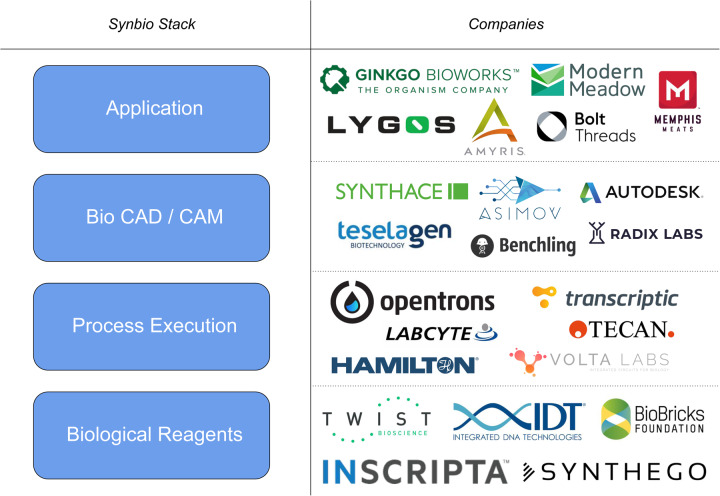
Synthetic biology is a rapidly emerging interdisciplinary research field that is primarily built upon foundational advances in molecular biology combined with engineering design. The field considers living systems as programmable at the genetic level and has been defined by the development of new platform technologies. This has spurned a rapid growth in start-up companies and the new synthetic biology industry is growing rapidly, with start-up companies receiving ∼$6.1B investment since 2015 and a global synthetic biology market value estimated to be $14B by 2026. Many of the new start-ups can be grouped within a multi-layer 'technology stack'. The 'stack' comprises a number of technology layers which together can be applied to a diversity of new biotechnology applications like consumer biotechnology products and living therapies. The 'stack' also enables new commercial opportunities and value chains similar to the software design and manufacturing revolution of the 20th century. However, the synthetic biology industry is at a crucial point, as it now requires recognisable commercial successes in order for the industry to expand and scale, in terms of investment and companies. However, such expansion may directly challenge the ethos of synthetic biology, in terms of open technology sharing and democratisation, which could unintentionally lead to multi-national corporations and technology monopolies similar to the existing biotechnology/biopharma industry.
Keywords: biotechnology; industry; synthetic biology.
© 2019 The Author(s).
Conflict of interest statement
The Author declares financial interests in LabGenius Ltd and Tierra Biosciences Inc.
Figures
References
-
- The Power of Synthetic Biology: 25 Thought Leaders Opine (2019) https://www.synthego.com/blog/synthetic-biology-applications
LinkOut - more resources
Full Text Sources