. 2021 Feb;1(2):e16.
doi: 10.1002/cpz1.16.

Methods for Rapid Protein Depletion in C. elegans using Auxin-Inducible Degradation

Affiliations

Methods for Rapid Protein Depletion in C. elegans using Auxin-Inducible Degradation

Nikita S Divekar et al. Curr Protoc. 2021 Feb.

Erratum in

Abstract

Numerous methods have been developed in model systems to deplete or inactivate proteins to elucidate their functional roles. In Caenorhabditis elegans, a common method for protein depletion is RNA interference (RNAi), in which mRNA is targeted for degradation. C. elegans is also a powerful genetic organism, amenable to large-scale genetic screens and CRISPR-mediated genome editing. However, these approaches largely lead to constitutive inhibition, which can make it difficult to study proteins essential for development or to dissect dynamic cellular processes. Thus, there have been recent efforts to develop methods to rapidly inactivate or deplete proteins to overcome these barriers. One such method that is proving to be exceptionally powerful is auxin-inducible degradation. In order to apply this approach in C. elegans, a 44-amino acid degron tag is added to the protein of interest, and the Arabidopsis ubiquitin ligase TIR1 is expressed in target tissues. When the plant hormone auxin is added, it mediates an interaction between TIR1 and the degron-tagged protein of interest, which triggers ubiquitination of the protein and its rapid degradation via the proteasome. Here, we have outlined multiple methods for inducing auxin-mediated depletion of target proteins in C. elegans, highlighting the versatility and power of this method. © 2021 Wiley Periodicals LLC. Basic Protocol 1: Long-term auxin-mediated depletion on plates Support Protocol: Preparation of NGM and NGM-auxin plates Basic Protocol 2: Rapid auxin-mediated depletion via soaking Basic Protocol 3: Acute auxin-mediated depletion in isolated embryos Basic Protocol 4: Assessing auxin-mediated depletion.

Keywords: AID; C. elegans; auxin; degron; protein degradation.


Figures

Figure 1:
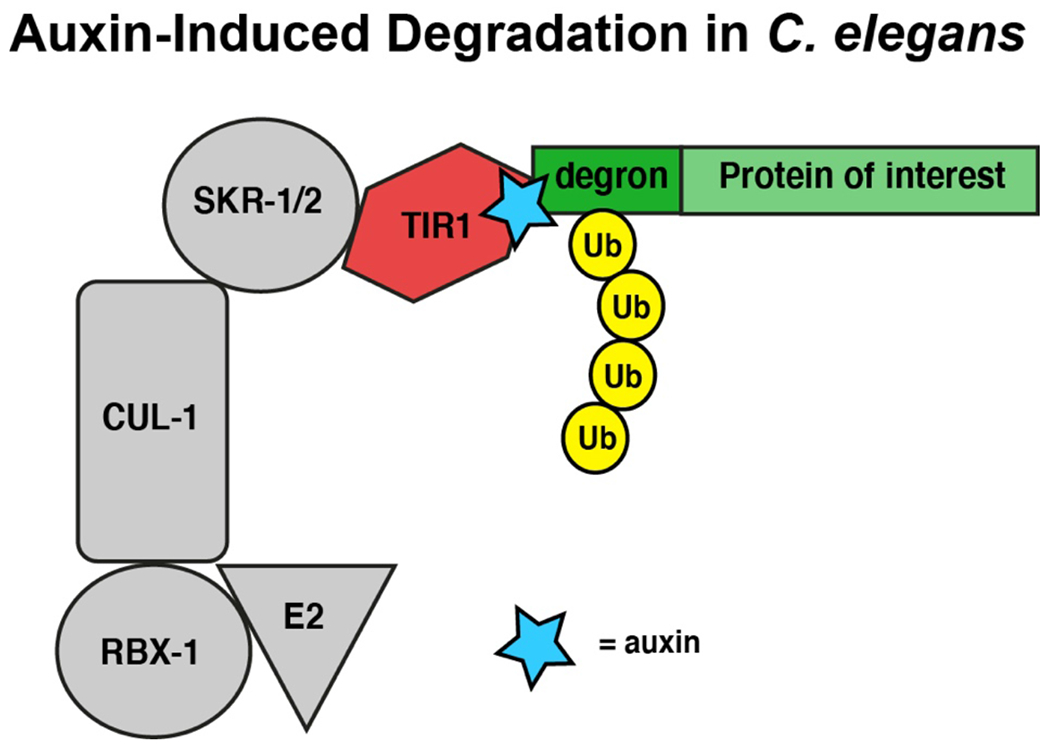
Figure 1:. Auxin-inducible degradation.
In tissues that express Arabidopsis TIR1 ubiquitin ligase transgene (red) via a tissue specific promoter, addition of auxin (blue) acts like glue to mediate the interaction between TIR1 and the degron-tagged endogenous protein (green). As a result, TIR1 engages machinery in the ubiquitin ligation pathway (grey) and the degron-tagged protein is modified by ubiquitin (yellow). This ubiquitination process targets the degron-tagged protein to the proteasome for degradation and protein function is eliminated. Tissues that do not express TIR1 continue to express the degron-tagged protein at wild-type levels. Eliminating auxin from the system can restore degron-tagged protein expression levels in tissues expressing TIR1 to wild-type levels over time. Therefore, this method provides a rapid and reversible method to eliminate protein expression in specific tissues.
Figure 2:
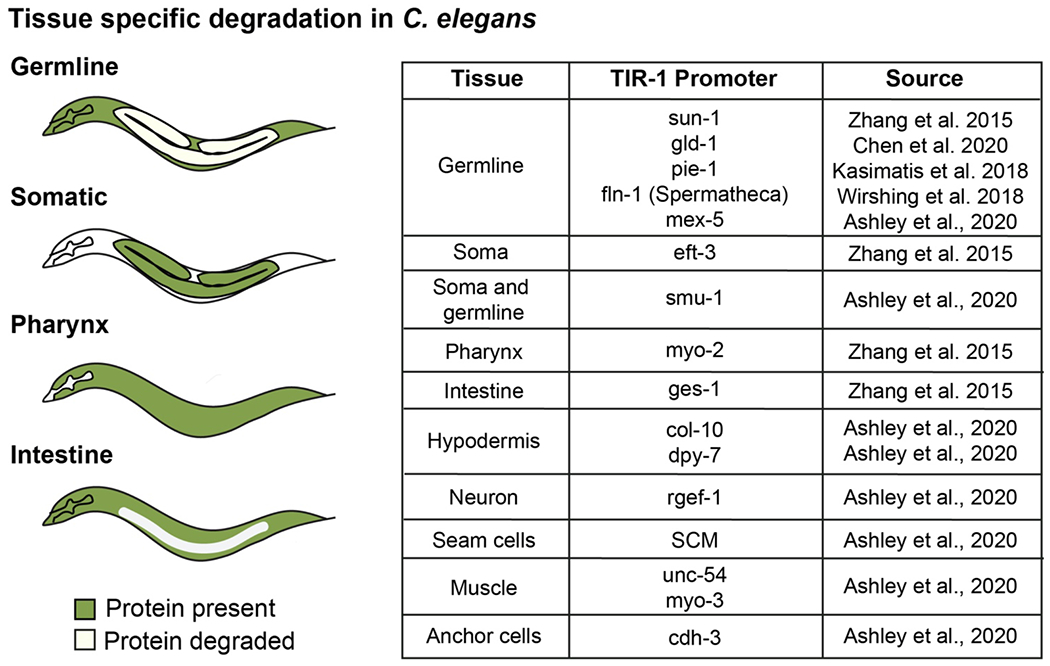
Figure 2:. Tissue specific protein degradation in C. elegans.
Expression of TIR1 in specific tissues can allow tissue specific degradation of proteins. Some examples of tissue specific degradation upon addition of auxin are diagrammed in C. elegans, wherein green represents regions where the degron-tagged protein continues to be expressed and white represents regions where the degron-tagged protein is degraded due to expression of TIR1 in that tissue. The table highlights some of the tissues in which TIR1 has been successfully expressed, as well as the corresponding tissue-specific promoters that have been used and developed in the field for degron studies thus far (Ashley et al., 2020; J. Chen et al., 2020; Kasimatis et al., 2018; Wirshing & Cram, 2018; Zhang et al., 2015).
Figure 3:
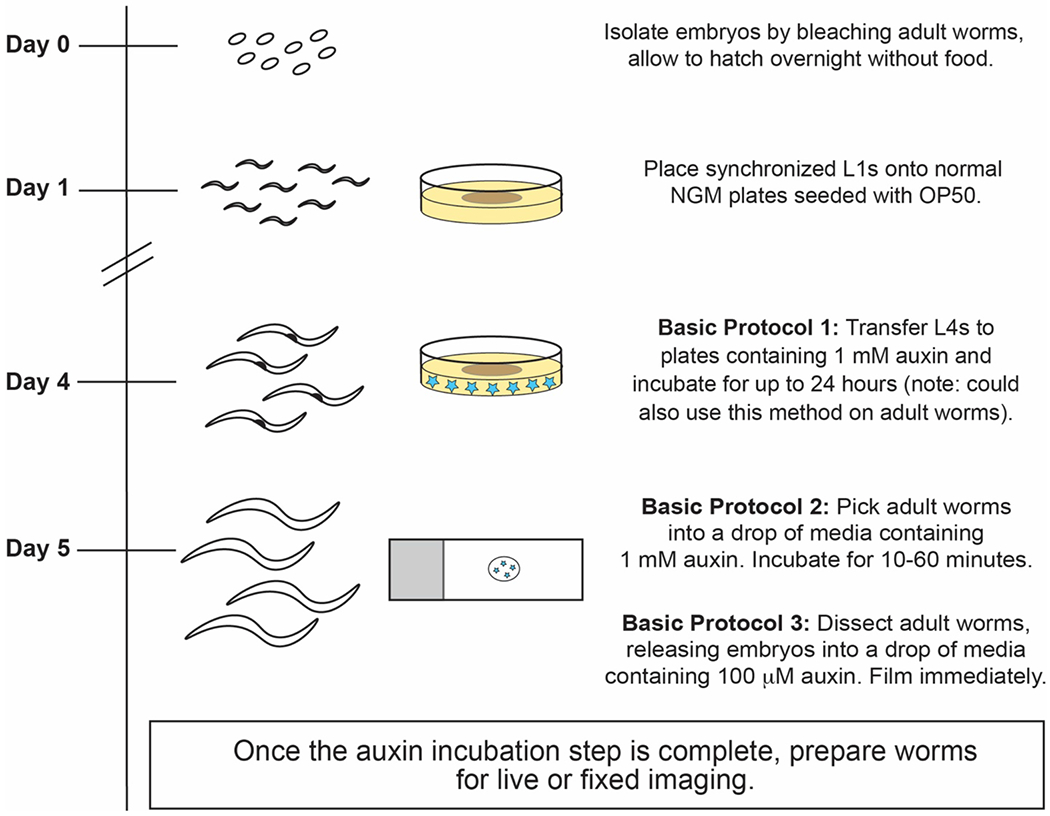
Figure 3:. Schematic of the presented auxin-mediated depletion protocols.
After bleaching adult worms to isolate embryos, synchronized hatched L1s can be placed on regular NGM food plates until they reach the desired stage. For Basic Protocol 1, L4-stage or adult worms (approximately on Day 4-5, depending on growth temperature) can be placed on auxin-NGM plates to initiate depletion; depletion in this method occurs on the scale of hours. For faster protein depletion, worms that are fed on regular NGM plates until adulthood can be soaked in auxin-containing media for up to an hour (Basic Protocol 2) or dissected into auxin-containing media to analyze isolated embryos (Basic Protocol 3) before proceeding with experiments.
Figure 4:
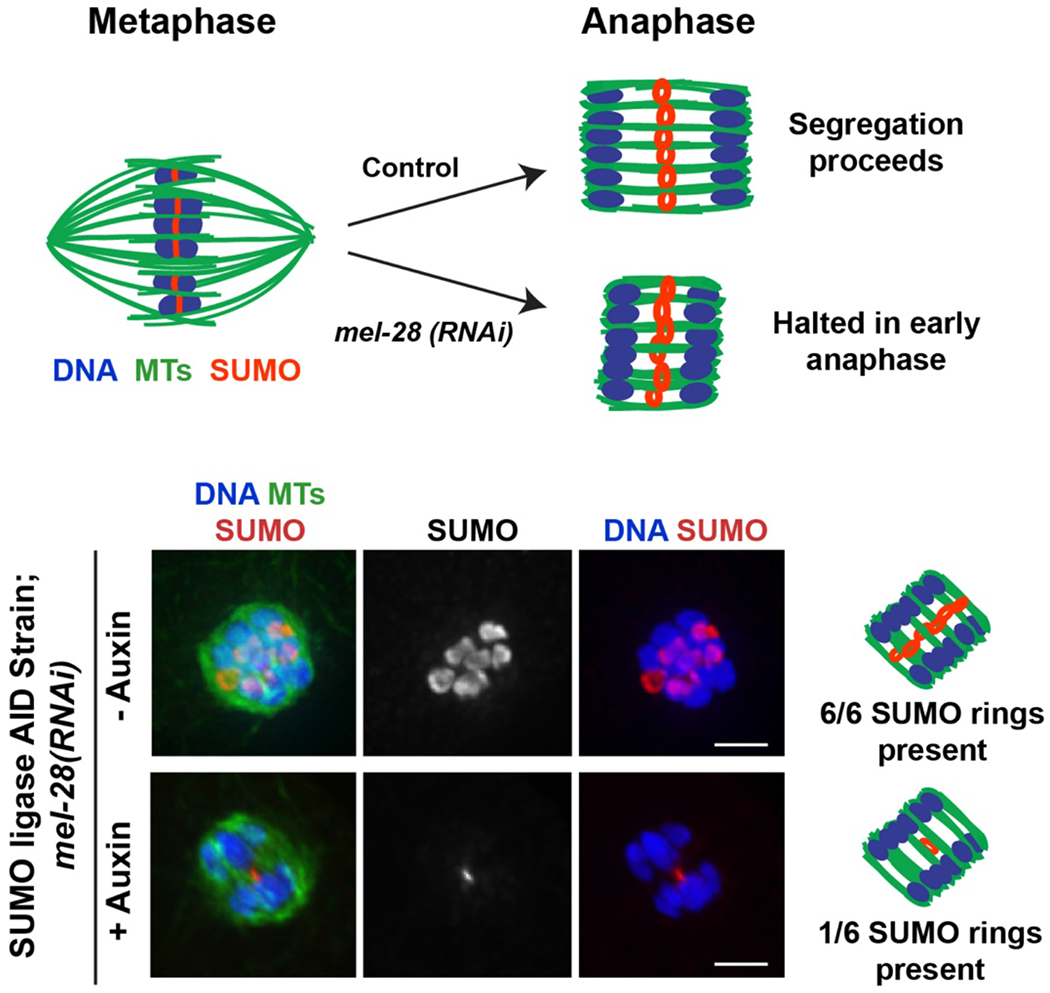
Figure 4:. Combining RNAi with short term auxin-mediated depletion.
Studying the role of proteins during transient processes such as chromosome segregation is made easier by combining RNAi with the short term degron approach (Basic Protocol 2). As an example, we present depletion of a specific protein during anaphase in oocyte meiosis, modified from a recent study (Davis-Roca et al., 2018). In C. elegans oocytes, a ring complex with a modification known as SUMO (red) forms at the center of each of the six bivalents (blue) (Pelisch et al., 2017; Wignall & Villeneuve, 2009). In anaphase, these rings are left behind in the center of the spindle (green) (Davis-Roca et al., 2018; Davis-Roca et al., 2017; Dumont et al., 2010; Mullen & Wignall, 2017; Muscat et al., 2015). Knocking down the protein MEL-28 arrests spindles at early anaphase (Hattersley et al., 2016), making it possible to study the effects of depleting proteins at this particular stage (diagrams at top). In the example immunofluorescence images (bottom), short term auxin treatment was used to deplete the SUMO conjugating enzyme GEI-17 during this early anaphase arrest, induced by depleting MEL-28 using RNAi (protocol in (Davis-Roca et al., 2018)). MEL-28 depletion alone causes segregation to halt at a stage where all 6 SUMO rings are stabilized (top row of images). In contrast, 20 minutes of auxin treatment via soaking (to deplete GEI-17) results in fewer SUMOylated rings in the anaphase spindle. This suggests that the SUMO conjugating enzyme GEI-17 plays a role in stabilizing the ring complex during anaphase. Scale bar = 2μm.

References

    1. Altun ZF, & Hall DH (2009). Introduction. WormAtlas, doi: 10.3908/wormatlas.1.1. - DOI
    1. Armenti ST, Lohmer LL, Sherwood DR, & Nance J (2014). Repurposing an endogenous degradation system for rapid and targeted depletion of C. elegans proteins. Development, 141(23), 4640–4647. doi: 10.1242/dev.115048 - DOI - PMC - PubMed
    1. Ashley G, Duong T, Levenson MT, Martinez MAQ, Hibshman JD, Saeger HN, … Ward JD (2020). Expanding the Caenorhabditis elegans auxin-inducible degron system toolkit with internal expression and degradation controls and improved modular constructs for CRISPR/Cas9-mediated genome editing. BioRxiv, 10.1101/2020.05.12.090217. - DOI
    1. Chen J, Mohammad A, Pazdernik N, Huang H, Bowman B, Tycksen E, & Schedl T (2020). GLP-1 Notch-LAG-1 CSL control of the germline stem cell fate is mediated by transcriptional targets lst-1 and sygl-1. PLoS genetics, 16(3), e1008650. doi: 10.1371/journal.pgen.1008650 - DOI - PMC - PubMed
    1. Chen RP, Gaynor AS, & Chen W (2019). Synthetic biology approaches for targeted protein degradation. Biotechnol Adv, 37(8), 107446. doi: 10.1016/j.biotechadv.2019.107446 - DOI - PubMed

LinkOut - more resources